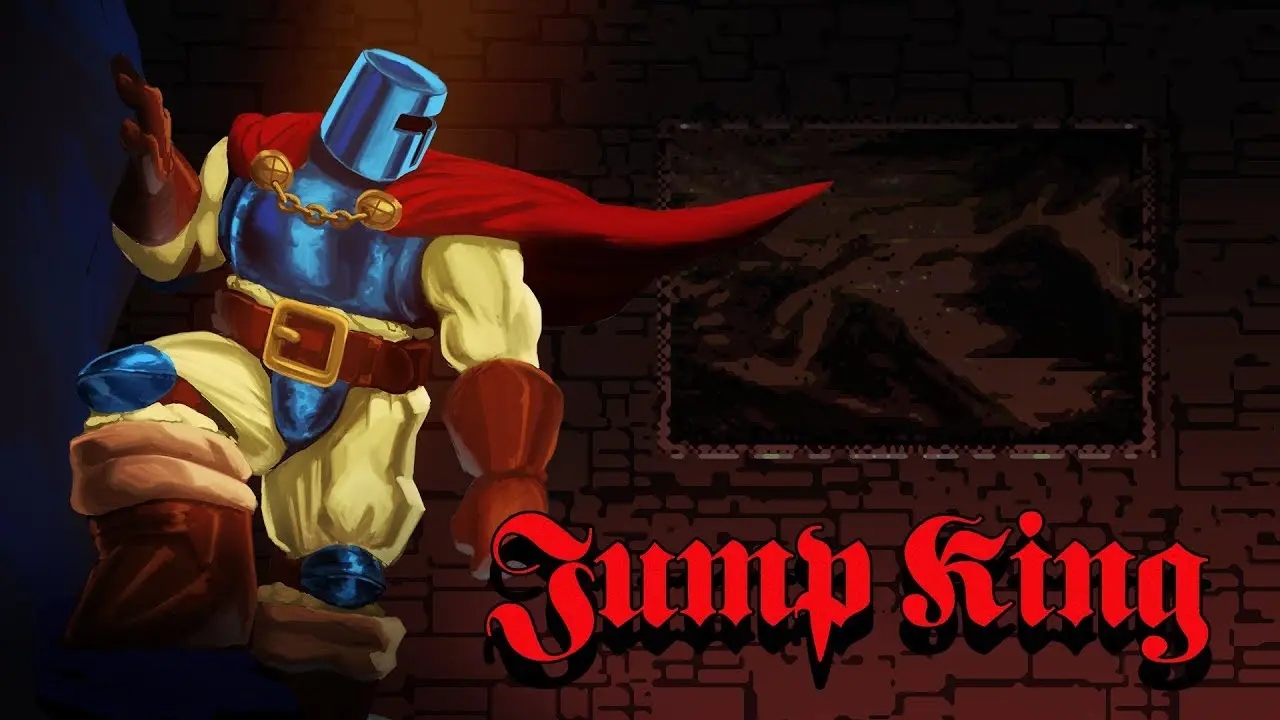
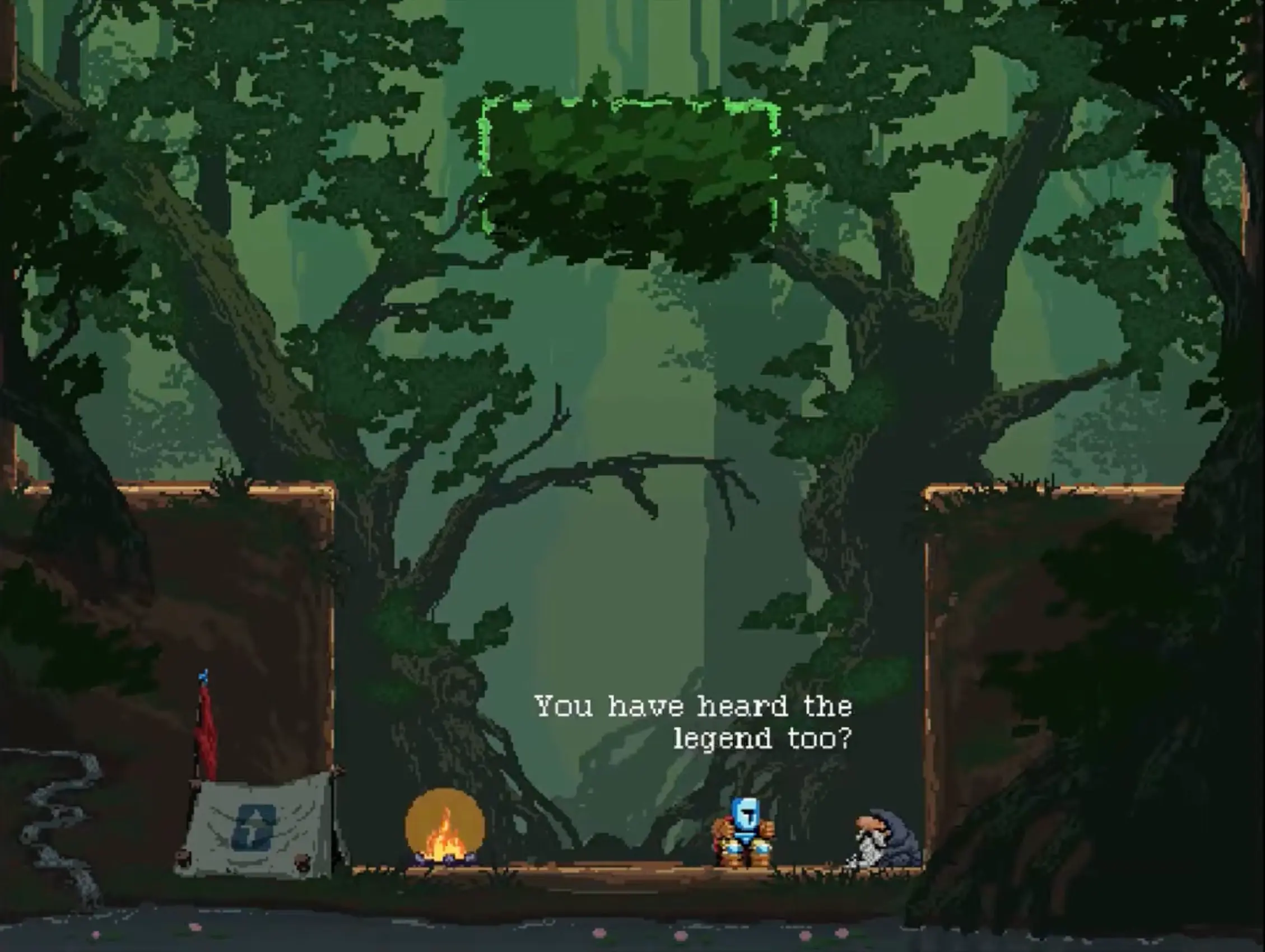
Jump King is not merely a video game; it is a profound psychological experiment disguised as a pixelated retro platformer. Released in 2019 by the indie studio Nexile, the game proudly markets itself under the deceptively simple banner of a 'Tactical Leaping Adventure.' However, this sterile description completely belies the sheer, unadulterated agony and ecstatic triumph that lies encoded within its digital DNA. You assume the role of an unnamed, bulky knight in armor, standing at the absolute bottom of an impossibly tall, vertical labyrinth. Your singular motivation? A crude legend whispered by a cynical, pipe-smoking old man in the starting area: there is a 'Smoking Hot Babe' waiting at the very top. It is a hilariously juvenile, tongue-in-cheek premise that perfectly sets the stage for one of the most grueling, emotionally demanding, and ultimately rewarding experiences in the modern gaming landscape.
In an era where most mainstream titles are desperate to coddle the player—offering generous autosaves, instantaneous checkpoints, and dynamic difficulty adjustments to ensure a smooth ride—Jump King gleefully sprints in the exact opposite direction. It violently strips away every conceivable safety net, leaving you with nothing but your own timing, your own spatial judgment, and your own rapidly fracturing sanity. To boot up Jump King is to willingly step into an arena of pain. It is a game that looks you dead in the eye and asks exactly how much you are willing to suffer for the sake of a single, pixel-perfect victory. It is the myth of Sisyphus rendered in 16-bit graphics, where pushing the boulder up the hill is replaced by hurling your own heavily armored body into the unforgiving sky, fully knowing that the inevitable fall will break your heart a thousand times over.
About the Game: The Architecture of Absolute Consequence
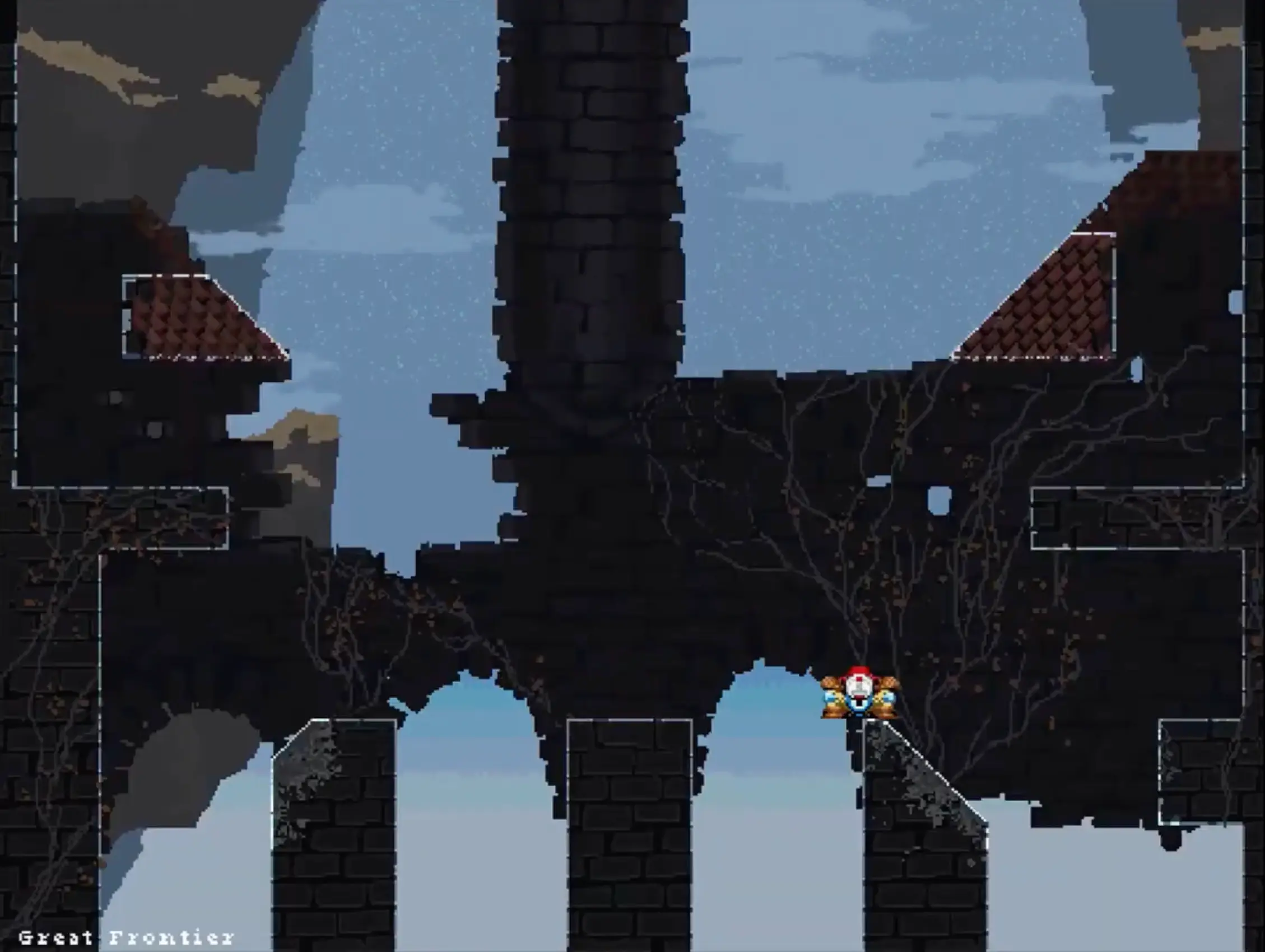
Often categorized alongside infamous titles like Getting Over It with Bennett Foddy, Jump King belongs to a niche but fiercely beloved genre of games built fundamentally around the concept of high-stakes, perpetual risk. The architecture of the game's world is entirely vertical and seamlessly interconnected. There are no levels in the traditional sense, no loading screens to break the tension between zones, and most crucially, absolutely no checkpoints. Every single screen you ascend is a hard-won victory that must be celebrated, but it is also a precarious new height from which you can—and will—plummet. The game's defining and most terrifying characteristic is its complete and utter lack of randomness. The game's physics engine is rigidly, unapologetically, and flawlessly consistent.
When you fall, you cannot blame a glitch, a random enemy spawn, or an unfair game mechanic. You can only point the finger at yourself. You held the jump button for a microsecond too long, you released it a fraction of a second too early, or you completely failed to account for the bouncing trajectory of a slanted roof. This absolute, unflinching fairness is exactly what makes the game so uniquely infuriating and utterly addictive. It creates an incredibly intimate gameplay loop of deep frustration followed by intense self-improvement. You are never actually fighting the game; you are fighting your own impatience, your own frayed nerves, and your own overconfidence. Jump King demands nothing less than perfection from its players, and in doing so, it forces you to achieve a state of zen-like focus. It transforms blind rage into a cold, calculated determination, punishing tilted, angry playstyles while rewarding the patient, methodical climber.
Story: A Mythic Quest Stripped to the Bone
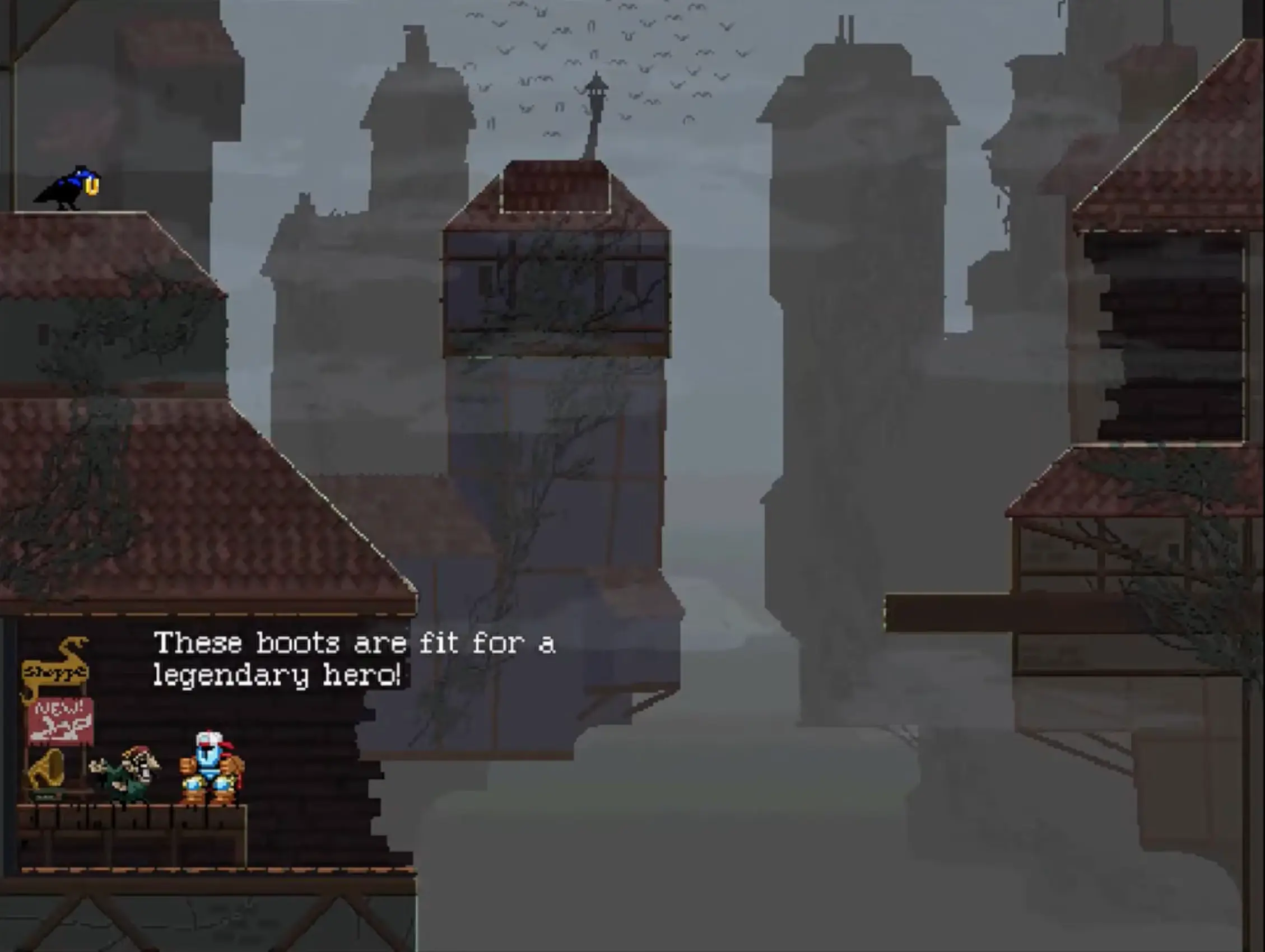
The narrative of Jump King is as delightfully minimalist as its control scheme. There are no sprawling cutscenes, no lore codexes to read, and no complex character arcs to follow. The story is purely environmental and experiential. You are a knight. You want to reach the top. That is the entirety of the textual narrative, yet the subtext is incredibly rich. As you ascend through the various biomes—from the mundane Redcrown Woods to the surreal, star-lit heights of the upper atmosphere—you occasionally encounter bizarre, enigmatic NPCs. There is a merchant who offers useless trinkets, a hermit who offers cryptic advice, and various other denizens who seem to exist purely to mock your inevitable failures.
These characters serve as Greek choruses to your suffering, their dialogue rarely changing, yet taking on entirely new, mocking contexts depending on whether you are ascending past them for the first time, or violently crashing down past them for the fiftieth. The true story of Jump King is the one that happens outside the screen. It is the meta-narrative of the player's own journey from wide-eyed optimism to crushing despair, to bitter anger, and finally, to a state of enlightened mastery. The 'Smoking Hot Babe' at the top ceases to be a literal goal within the first hour of gameplay; instead, she becomes a profound metaphysical symbol. She represents the summit of the mountain, the completion of the ordeal, and the ultimate validation of the countless hours of suffering you have endured. The lore is written in the sweat on your palms and the dents in your keyboard.
Gameplay: The Weight of the Spacebar
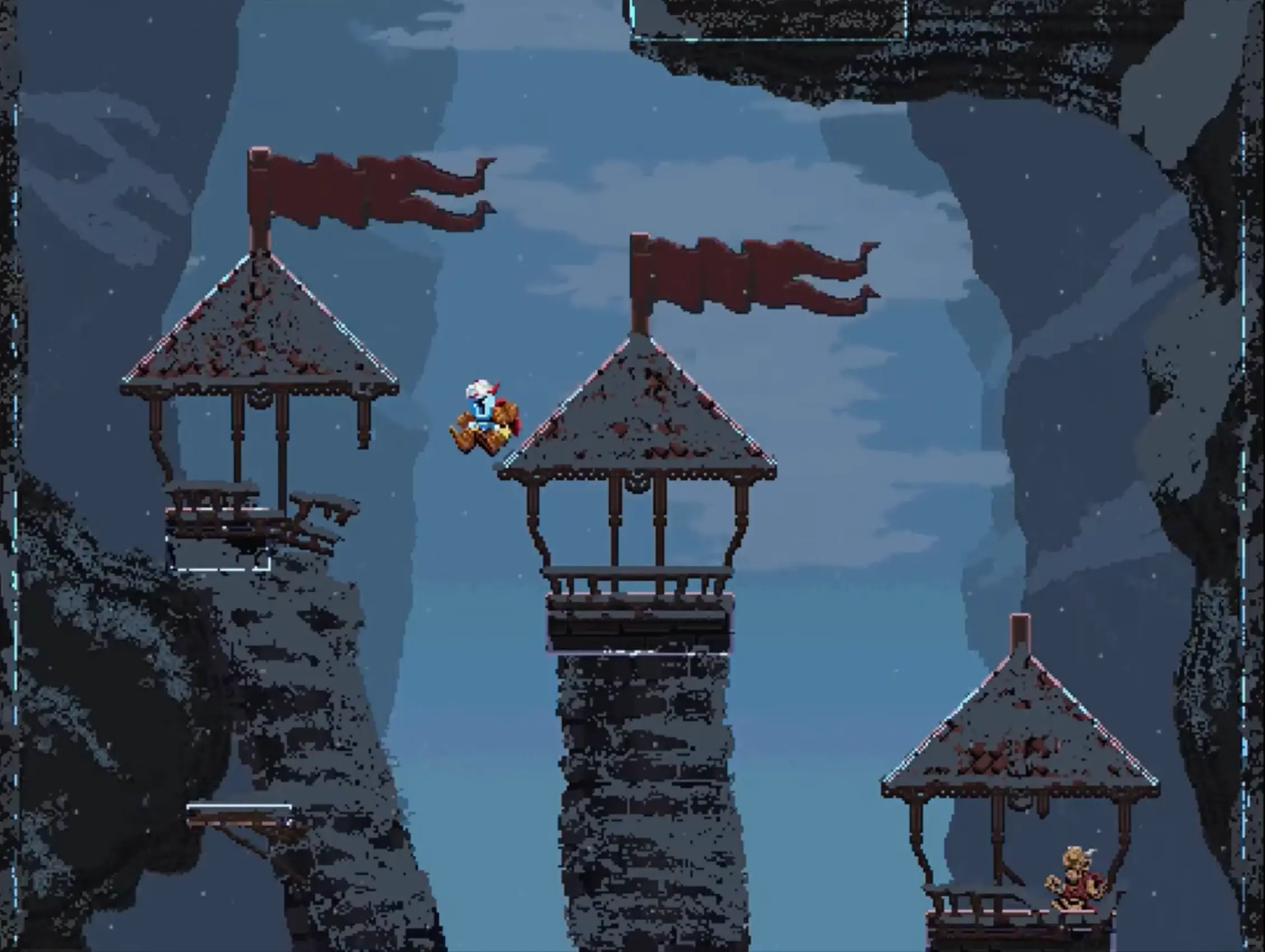
Mechanically, Jump King is a masterclass in extreme minimalism. You can move left and right. You can jump. That is it. There is no double jump, no wall grab, and no dash. The true genius of the gameplay lies in the jump mechanic itself. You hold the jump button to charge your leap, and you release it to execute. The longer you hold it, the higher you jump, up to a hard cap. However—and this is the crux of the game's sadistic brilliance—once your feet leave the ground, you lose all agency. There is absolutely no mid-air control. You cannot alter your trajectory, you cannot cancel the jump, and you cannot brake. You become a captive passenger to your own ballistic physics.
This simple mechanic turns every single input into a terrifying commitment. You must precisely memorize the timing required for a 'max jump,' a 'half jump,' and every micro-variation in between. The game constantly introduces new environmental hazards to completely destroy the muscle memory you just spent hours building. You will encounter deep snow that severely limits your walking speed and jump height. You will encounter slippery ice that carries your momentum, forcing you to jump while sliding out of control. You will face fierce, howling winds in the upper areas that violently push you off course while you are mid-air. The tension is palpable; your heart will genuinely hammer in your chest as you prepare for a blind leap into the unknown, knowing that missing a platform by a single pixel could send you tumbling down through five previous screens, erasing an hour of meticulous progress in five seconds of agonizing freefall. It is a game of millimeters, milliseconds, and monumental stakes.
Atmosphere & Themes: The Deafening Sound of Failure
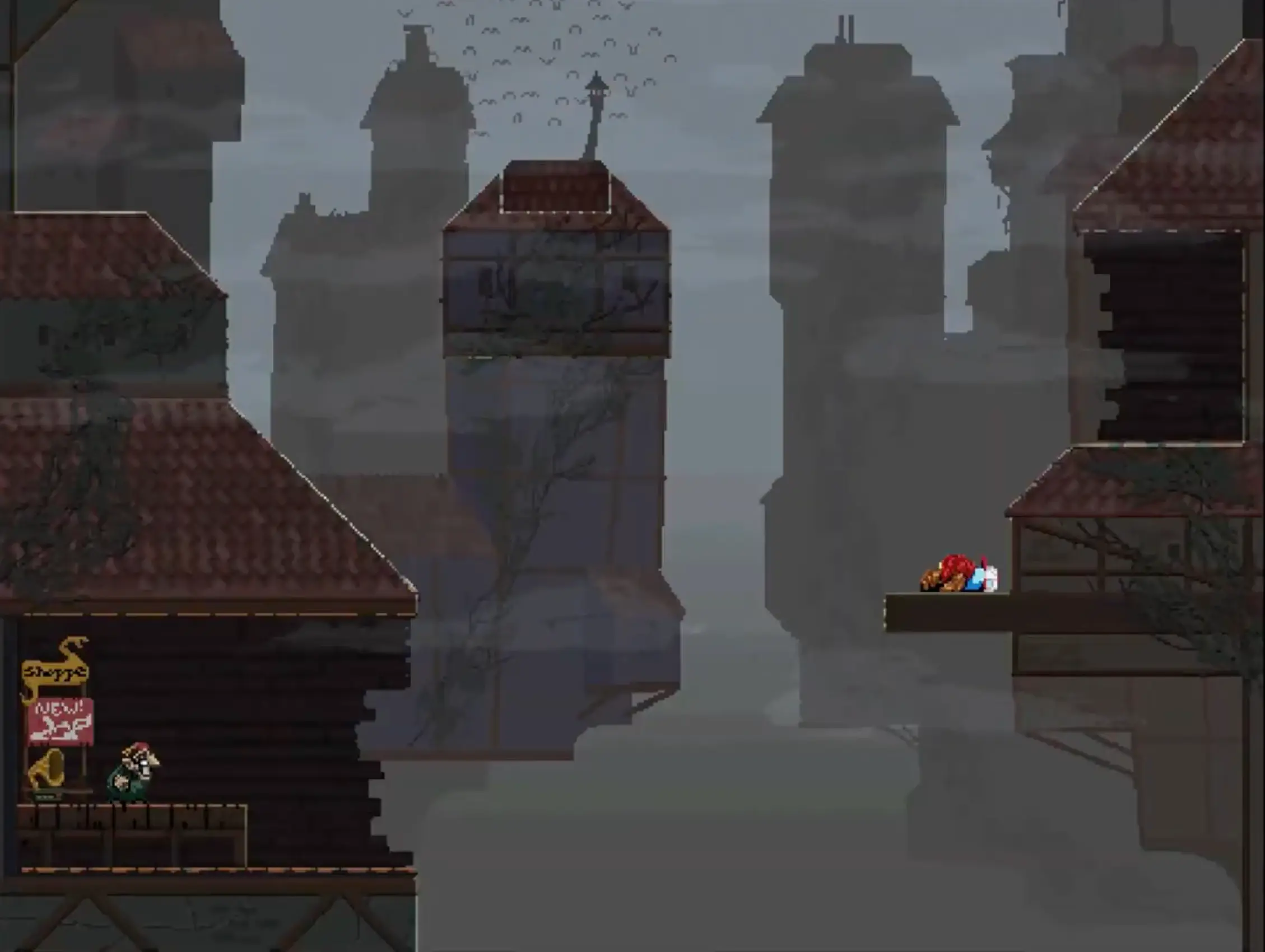
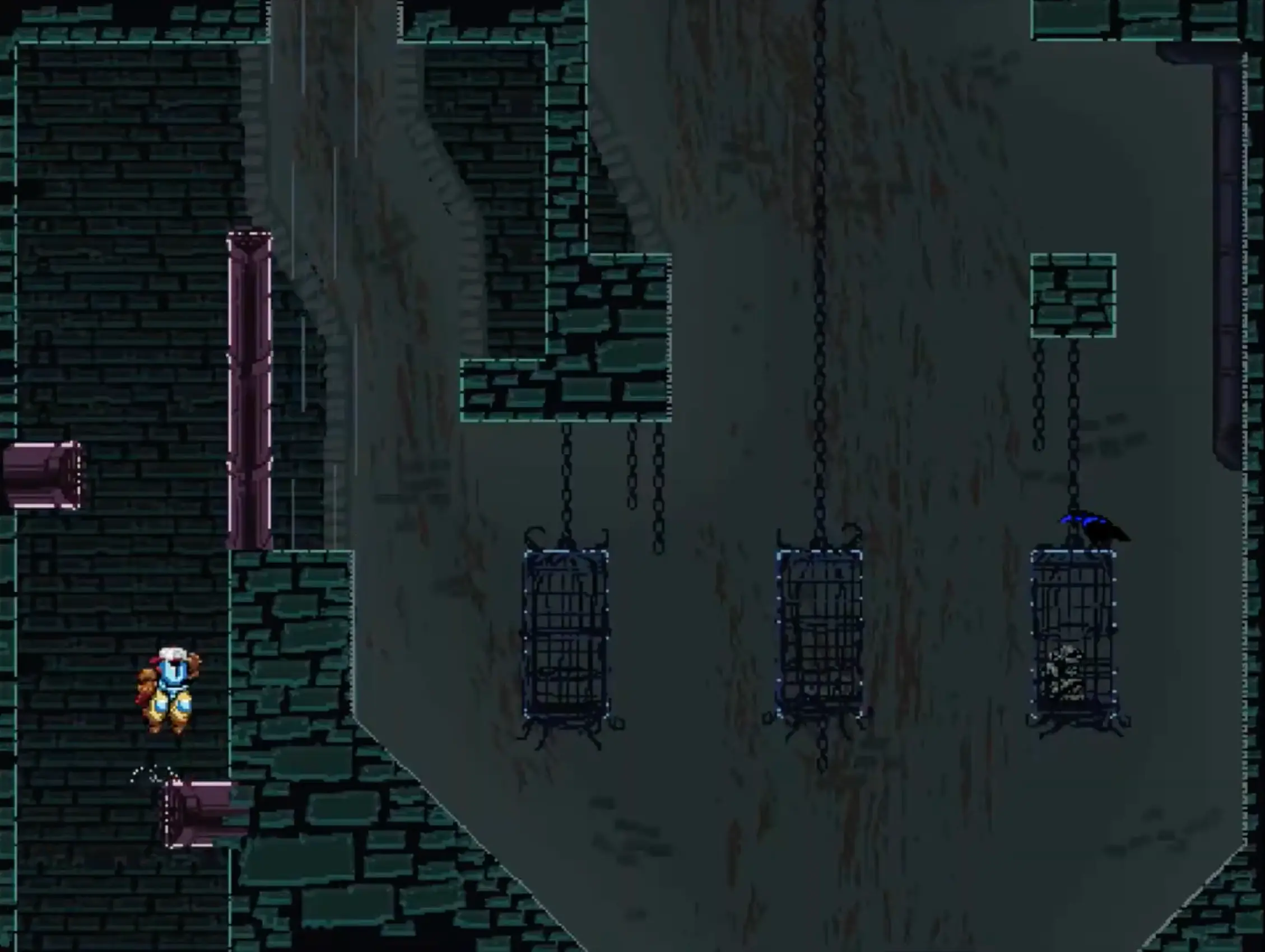
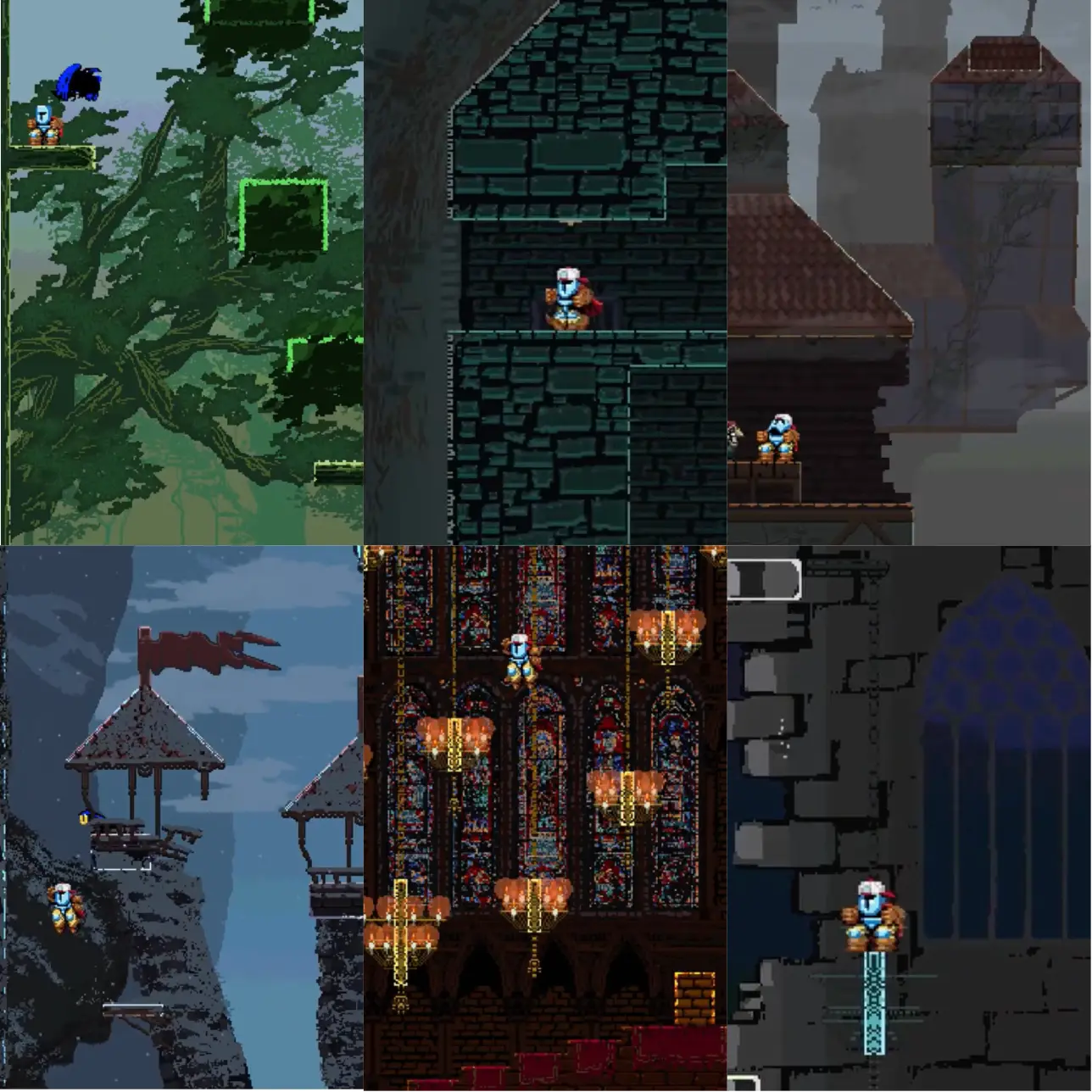
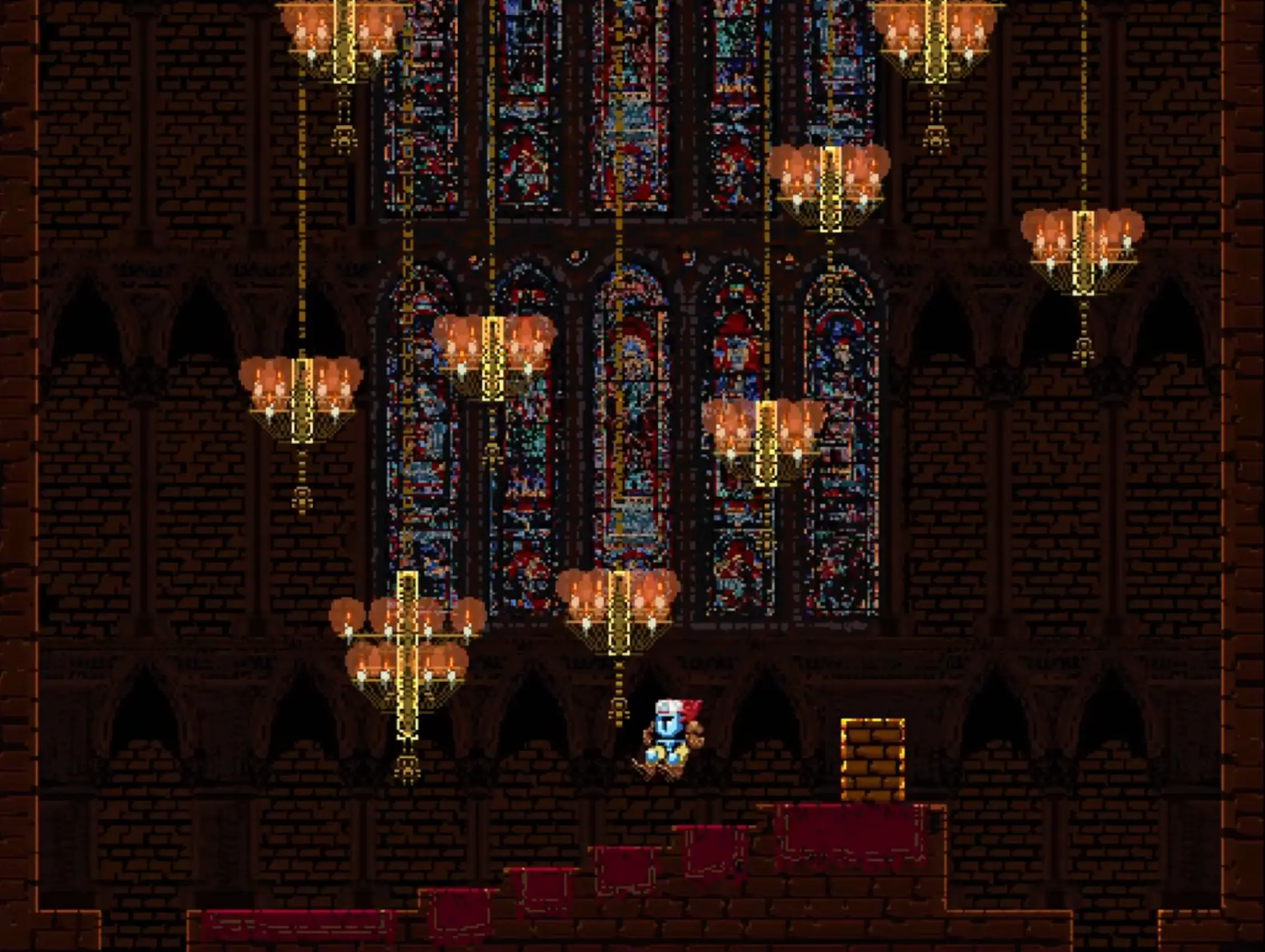
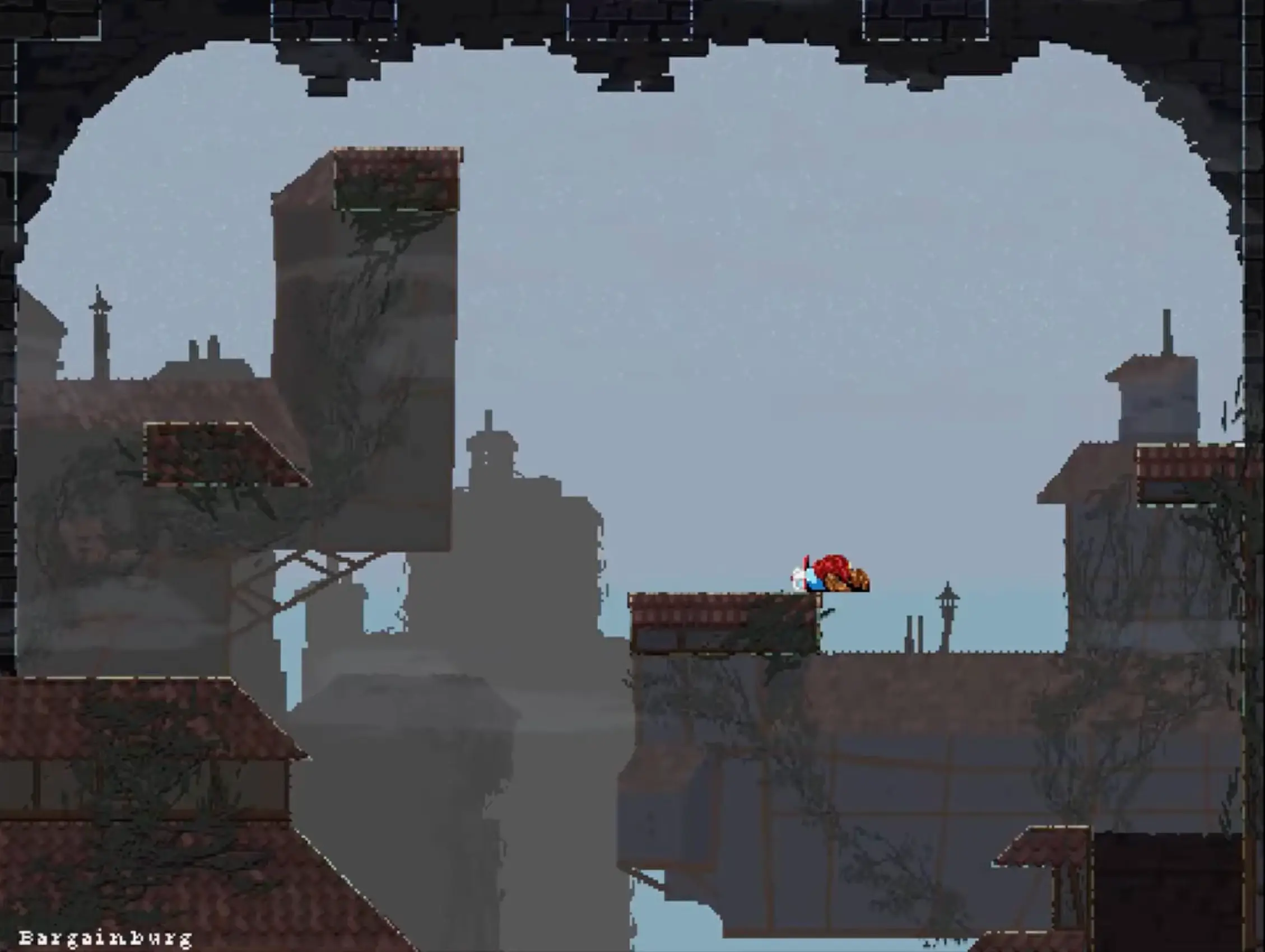
Visually, Jump King utilizes a gorgeous, painstakingly detailed 16-bit pixel art style. The environments are vibrant, distinct, and dripping with atmosphere. As you climb higher, the world transforms around you, transitioning from the damp, claustrophobic stone walls of the Colossal Drain to the beautiful, ethereal purples and blues of the Chapel. However, this cozy, nostalgic aesthetic is entirely a trap—a beautiful facade masking a ruthlessly hostile environment. The real star of Jump King's atmosphere is its incredible sound design. The audio is incredibly sparse, which makes every sound deeply impactful.
The heavy, metallic 'CLANK' of your boots hitting a stone platform is one of the most satisfying sounds in gaming, acting as a shot of pure dopamine confirming your success. Conversely, the horrific, cartoonish 'SPLAT' sound that occurs when you fall a great distance and hit the ground is deeply traumatizing. The game brilliantly weaponizes silence. When you make a mistake and begin to fall, the ambient music often fades, leaving you with nothing but the rushing sound of the wind as you helplessly watch your knight tumble downward, screen after screen, past areas you thought you had conquered hours ago. The atmosphere is one of profound isolation. You are entirely alone in this vertical purgatory. The repeating, ambient chiptune tracks become the soundtrack to your madness, etching themselves into your brain as you stare at the same arrangement of platforms for hours on end. It perfectly captures the thematic essence of a solitary, seemingly impossible struggle against gravity itself.
Conclusion: The Ecstasy of the Summit
Jump King is an incredibly difficult game to recommend to a casual player, yet it is absolutely essential playing for anyone who wants to understand the extreme boundaries of video game design. It is a masterwork of frustration, a title that completely rejects the modern design philosophy of player convenience in favor of something much older, much darker, and much more profound. It is a game that will make you shout, curse, and perhaps even question your own life choices. It will break your spirit time and time again, sending you tumbling back into the dirt just when you thought you had finally mastered its mechanics.
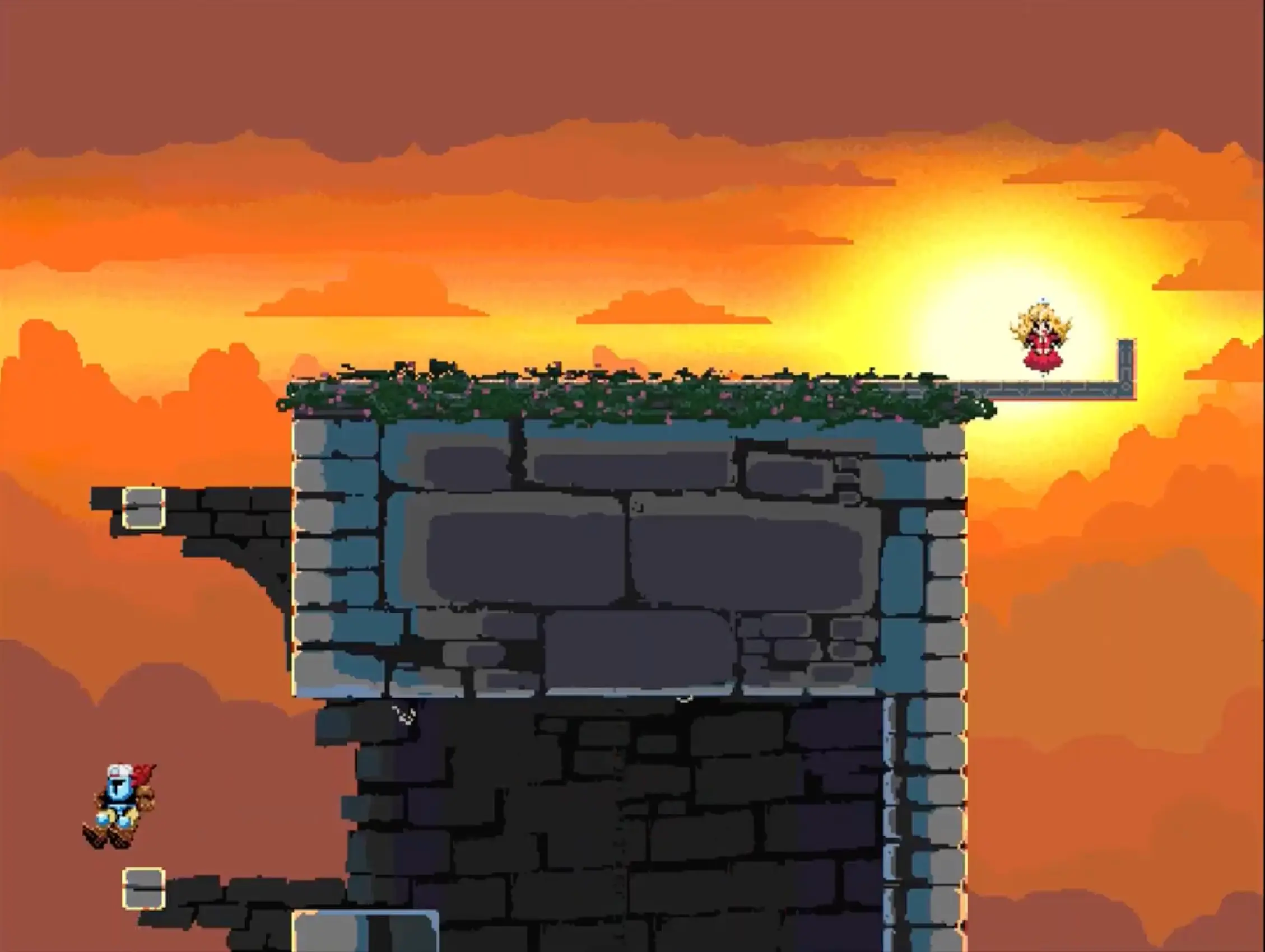
But the magic of Jump King is that it eventually teaches you how to get back up. It forces you to shed your anger, to accept your failures as learning experiences, and to try again with a calmer mind and a steadier hand. When you finally, inevitably, reach the top screen—when you execute that final, terrifying jump and land on the summit beside the Smoking Hot Babe—the feeling of catharsis is virtually unmatched in the medium of video games. You don't just feel like you beat a game; you feel like you conquered a mountain, and more importantly, you feel like you conquered yourself. Jump King is a painful, brutal, and utterly majestic triumph of indie gaming, a digital rite of passage that leaves a permanent mark on everyone who dares to take the leap.
Review Score
Based on overall narrative, gameplay, and experience.