In a contemporary gaming landscape often defined by sensory overload—dominated by the frenetic pace of competitive shooters, the grind of live-service ecosystems, and the exhausting scale of hundred-hour RPGs—ILA: A Frosty Glide arrives not with a bang, but with the hushed silence of a snowfall. Released in October 2025, this indie title from Magic Rain Studios serves as a bold, counter-cultural statement against the industry's obsession with engagement metrics and dopamine loops. It is a title designed not to raise the player's pulse, but to lower it; a digital sanctuary that asks a fundamental question: What happens when the fluid, high-skill movement mechanics of a skateboarding simulation are stripped of their competitive scoring systems and transplanted into a world resembling a cherished childhood storybook? The result is a masterclass in atmospheric design and kinetic joy, a game that argues that the simple act of movement, when executed with sufficient grace and weight, is a reward unto itself.
About the Game: A Study in Momentum
To categorize ILA merely as a "3D platformer" is to do a disservice to its distinct mechanical identity. While it shares DNA with the genre, it is functionally a momentum game, existing in the same lineage as titles like Tiny Wings or Tribes, yet recontextualized for a pacifist, exploration-driven experience. The setting is the Frosty Realm, a surreal archipelago of floating islands suspended in an eternal, frozen twilight. These are not flat levels; they are organic skate parks designed by nature, filled with rolling hills, jagged peaks, and sweeping valleys that invite interaction.
The narrative premise is refreshingly minimalist, eschewing the "chosen one" tropes of fantasy gaming. The protagonist is Ila, a diminutive witch adorned with an oversized, floppy hat and a pair of enchanted broom-skates. Her motivation is singularly personal: she is searching for her lost cat, Coco. There is no demon lord to vanquish, no looming apocalypse to avert, and no complex lore codex to memorize. There is only the mountain, the equipment, and the crunch of snow underfoot. This narrative simplicity allows the mechanical loop to take center stage, capturing the specific, nostalgic sensation of childhood winter—the irrational but powerful belief that with enough speed and the right slope, gravity might simply cease to apply.
Gameplay Mechanics: The Flow State
The brilliance of ILA lies in its physics engine, which manages to feel simultaneously heavy and floaty. The controls are deceptively simple, lowering the barrier to entry while maintaining a stratospheric skill ceiling. The core loop revolves around the Charge System. By holding a button, Ila drives her broom-skates into the terrain. On a downslope, this action utilizes gravity to build kinetic energy, rapidly increasing speed. On an upslope, releasing the charge converts that forward momentum into vertical lift, launching the character into the air. Mastery of this system requires a constant, subconscious calculus: reading the terrain, anticipating the curvature of the hill, and timing the release to maximize airtime.
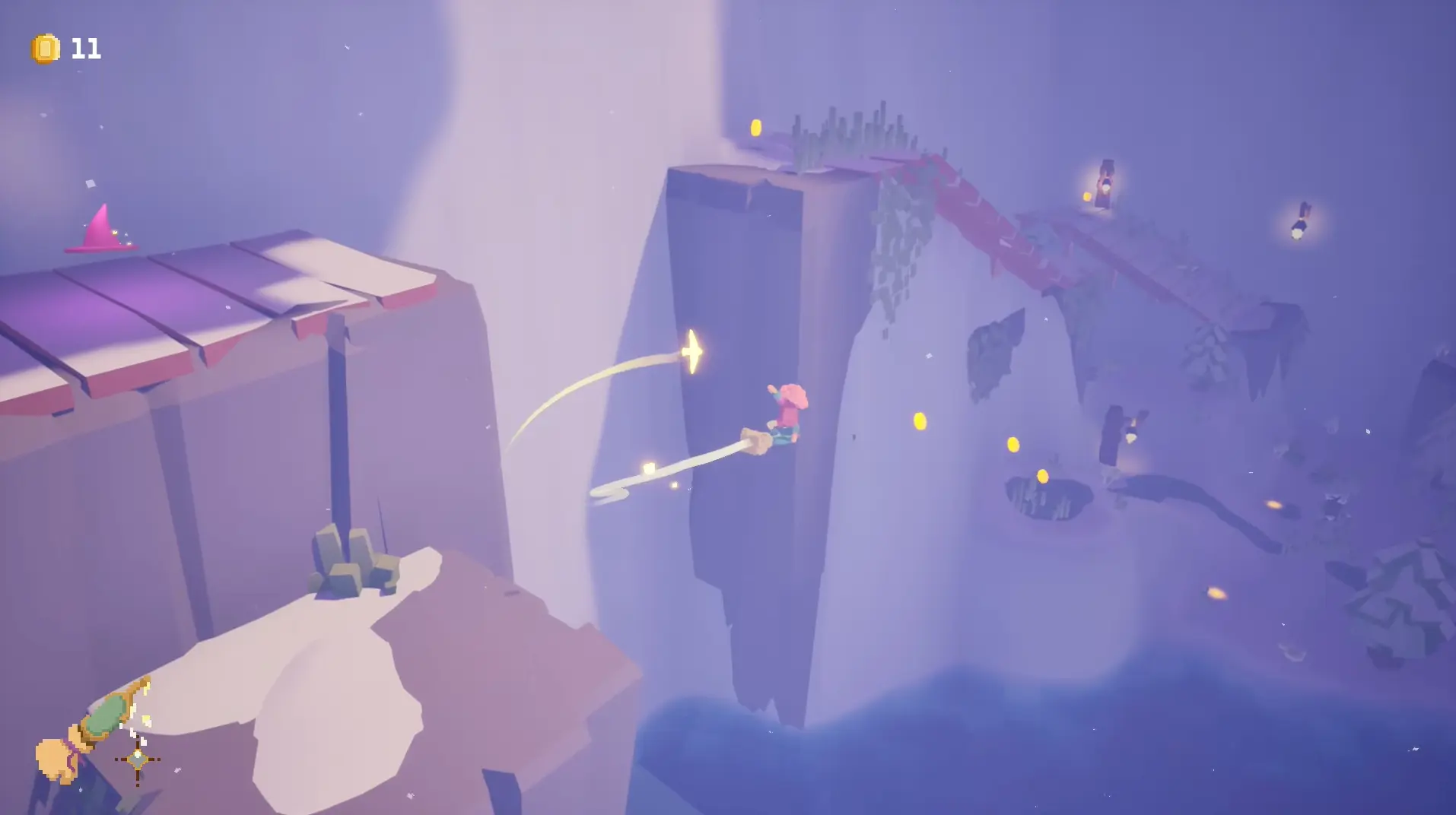
The game's defining innovation, however, is Thermal Gliding. The frozen world is populated with pockets of warm air, visually communicated by faint, shimmering orange distortions. If the player hits these pockets with sufficient velocity, the mechanics shift instantaneously from skating to gliding. Ila’s cloak expands, and the game transitions into a flight simulator. This interplay between ground-based friction and aerial freedom creates a gameplay loop of Scan, Plan, and Execute. From a high vantage point, the player identifies a distant peak or a hidden alcove. They must then trace a mental line—carving down a valley to build speed, snapping a drift around a tree line, hitting a ramp at the perfect angle, catching a thermal updraft, and finally grappling onto a hanging lantern to reach the destination.
When executed seamlessly, this loop induces a trance-like "flow state" rarely achieved in non-competitive games. Magic Rain Studios has made the deliberate choice to remove all combat. There are no enemies to fight, no health bars to manage. Instead, the environment itself provides the challenge. Deep snow acts as a friction trap, punishing poor line choices by sapping momentum. Sudden wind gusts can knock a glider off course, requiring quick course correction. Even the game's equivalent of "boss battles" are recontextualized as high-speed chase sequences. Here, Ila must keep pace with spectral animals—a Great White Fox or a Celestial Owl—weaving through dense forests and navigating treacherous ice flows. These encounters test mastery of the movement systems rather than damage output, reinforcing the game's pacifist philosophy.
Progression is handled through the collection of "Sun Bells," scattered throughout the islands. Unlike standard collectibles, these bells serve a functional purpose: they melt the glacial barriers blocking access to higher altitudes. This creates a natural difficulty curve; the higher the island, the more complex the platforming required to reach it. Yet, the game never forces a specific path. If a particular jump proves too frustrating, the open-world design allows the player to simply ski away, perhaps to spend twenty minutes chasing a procedural fox through the woods or finding a bench to sit on, listening to the wind howl. The game rewards curiosity and patience just as much as it rewards dexterity.
Atmosphere & Themes: The Warmth of Winter
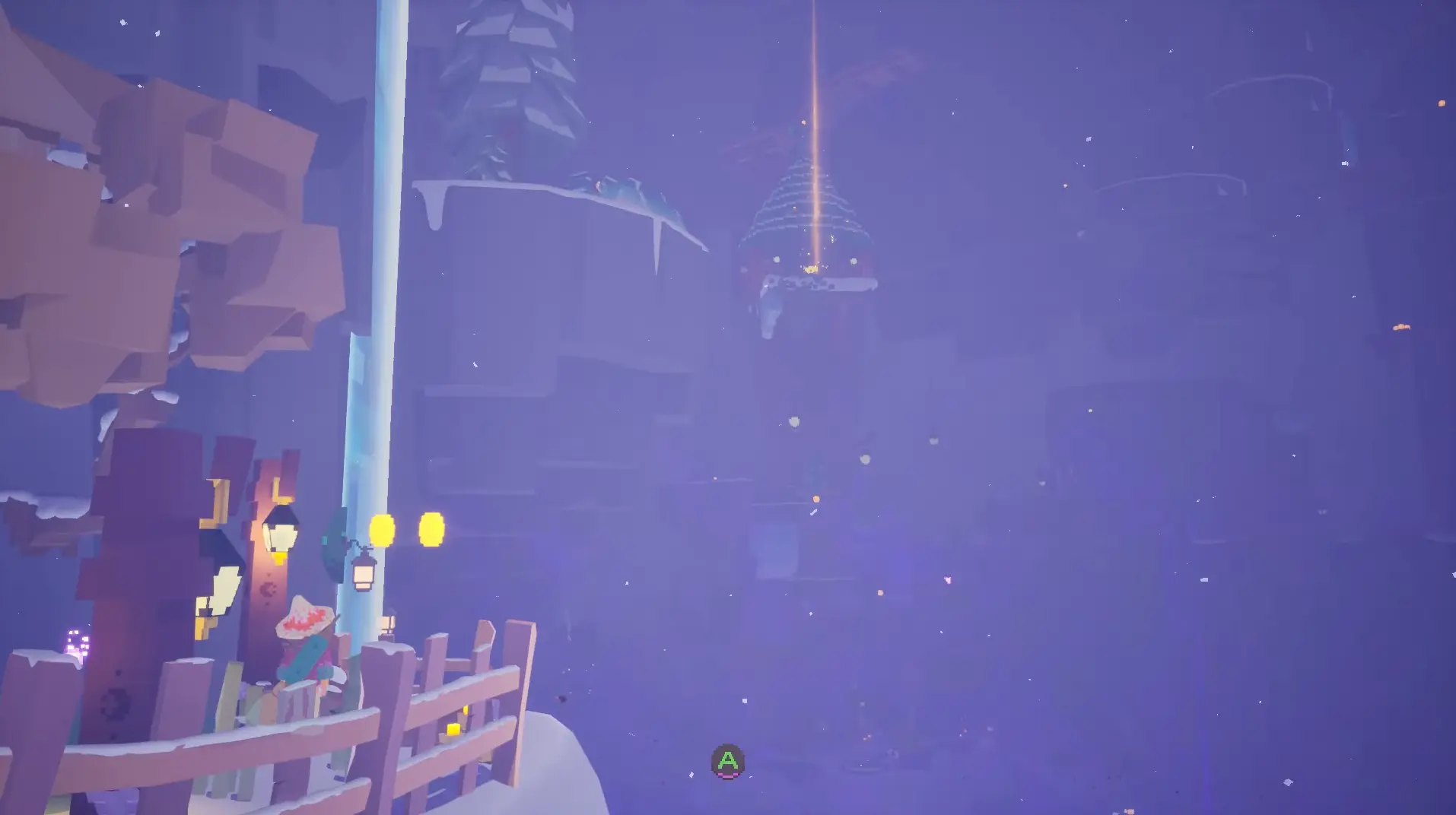
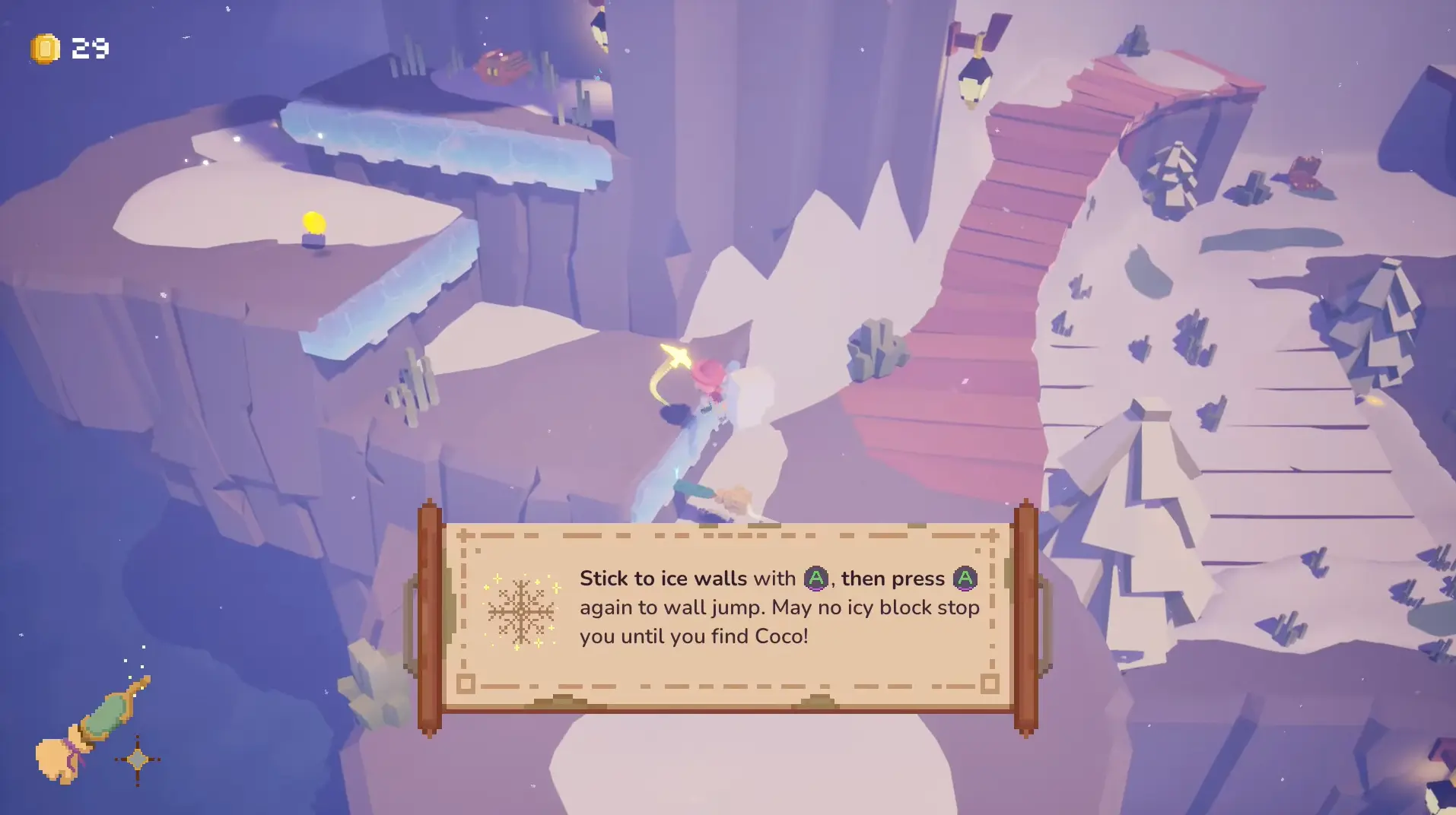
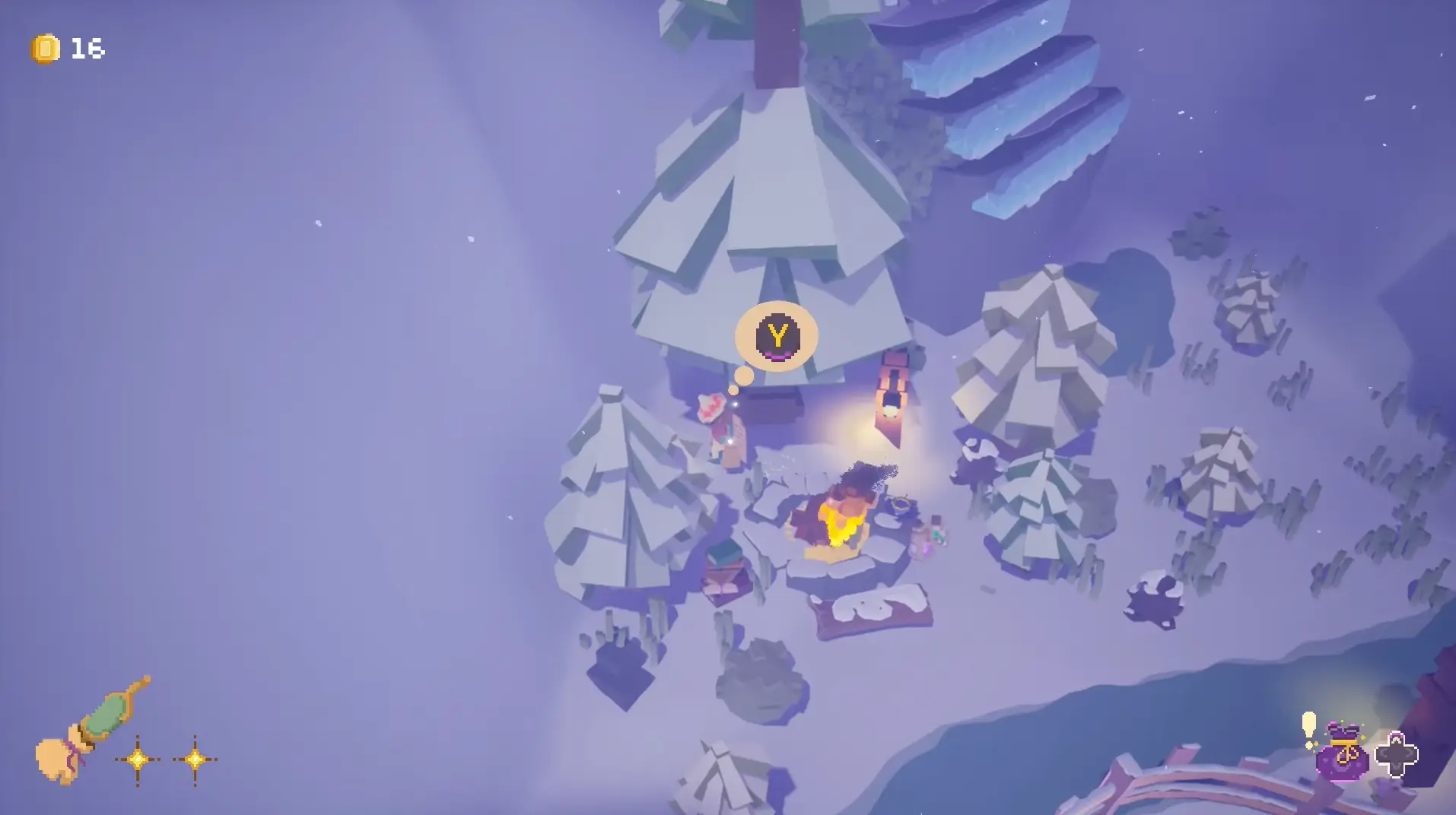
Visually, ILA: A Frosty Glide is a low-poly masterpiece, evoking the aesthetic sensibilities of titles like A Short Hike or Journey, but with a distinct color theory. The developers have avoided the stark, white-and-gray palette typically associated with ice levels. Instead, the world is rendered in soft pastels—lavender shadows, peach-colored sunsets, mint-green auroras, and rose-gold sunlight reflecting off the ice. This artistic choice renders the cold environment warm and inviting, a place the player wants to inhabit rather than survive. The dynamic day-night cycle further transforms the landscape; night skating, illuminated only by the bioluminescent flora and the glow of the broom-skates, offers a completely different, almost spiritual vibe.
The audio design is equally critical to the immersion and deserves specific praise for its tactile nature. The foley work is exceptional; the sharp, rhythmic shhhhk of skates cutting through hard-packed ice feels distinct from the muffled, soft fwoomp of gliding through deep powder. The wind acts as a constant companion, its intensity providing audio cues about speed and altitude. Complementing this is a dynamic, acoustic soundtrack that scales with the player’s momentum. When standing still or moving slowly, the music strips back to a lone, contemplative piano melody or the gentle strum of a guitar. As speed increases and the player enters the flow state, the soundscape swells, adding layers of cello, violin, and percussion, culminating in a triumphant orchestral sweep during moments of high-altitude gliding. This audio-visual synergy creates a feedback loop that makes the simple act of movement feel epic.
Thematically, beneath the charming exterior lies a poignant exploration of Grief and Acceptance. While never heavy-handed, the narrative subtext of searching for a lost companion in a frozen, suspended world serves as a gentle metaphor for processing loss. The frozen landscape represents a state of emotional stasis, and Ila’s movement brings life and warmth back to the world. It is a story handled with a delicate touch, prioritizing hope and resilience over melancholy. The warmth of the "Sun Bells" and the thermal pockets represents the small moments of joy that help one navigate the coldness of grief.
Conclusion: A Vital Respite
ILA: A Frosty Glide operates as a salve for the weary modern gamer. In an era where games demand increasingly more of the player's time, money, and emotional energy, ILA respects the value of a quiet moment. It is a concise, perfectly formed experience that refuses to overstay its welcome. It appeals directly to those who appreciate the "cozy" gaming movement, but its deep physics engine ensures it also resonates with speedrunners and mechanics-driven players.
It is a rare title that succeeds in being relaxing without being boring, and challenging without being frustrating. By turning the traversal mechanics usually reserved for extreme sports games into a vehicle for meditation and exploration, Magic Rain Studios has created a modern classic. It is a must-play experience that proves emotional resonance can be achieved not through complex dialogue trees or cinematic cutscenes, but through the simple, magical joy of a perfect glide.