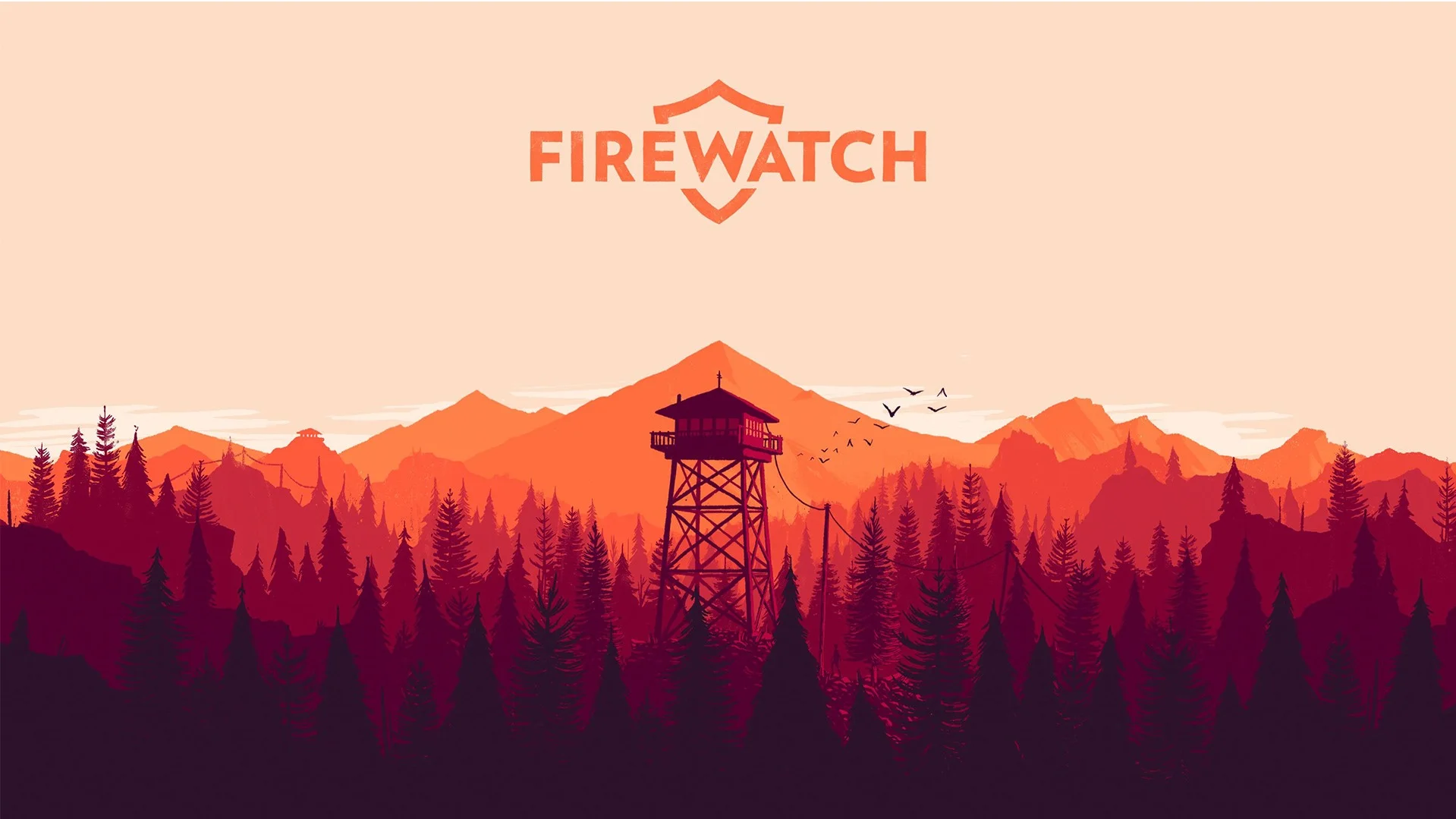
The year is 1989. The location is the Shoshone National Forest. Firewatch is not a game about saving the world; it is a game about running away from it. In an industry obsessed with power fantasies, developer Campo Santo dared to create a "powerlessness fantasy." It strips away the UI, the weaponry, and the noise, leaving only the silence of the woods and a single human voice on the radio. It is a masterclass in minimalism, a title that proves a conversation can be just as gripping as a gunfight.
About the Game
From developer Campo Santo, a supergroup of narrative designers and artists, Firewatch stands as a landmark achievement in first-person storytelling. It boldly rejects the conventions of combat, leveling, and complex systems. What remains is pure, distilled narrative. This is a game built on three pillars: a breathtaking, painterly art style that saturates its world with atmosphere; world-class voice acting that creates one of the most believable relationships in gaming history; and a slow-burn, adult mystery that preys on a fundamental human fear: isolation. It is a mature, character-driven adventure for those who believe that a well-told story is its own reward.
The Story: Two Voices in the Dark
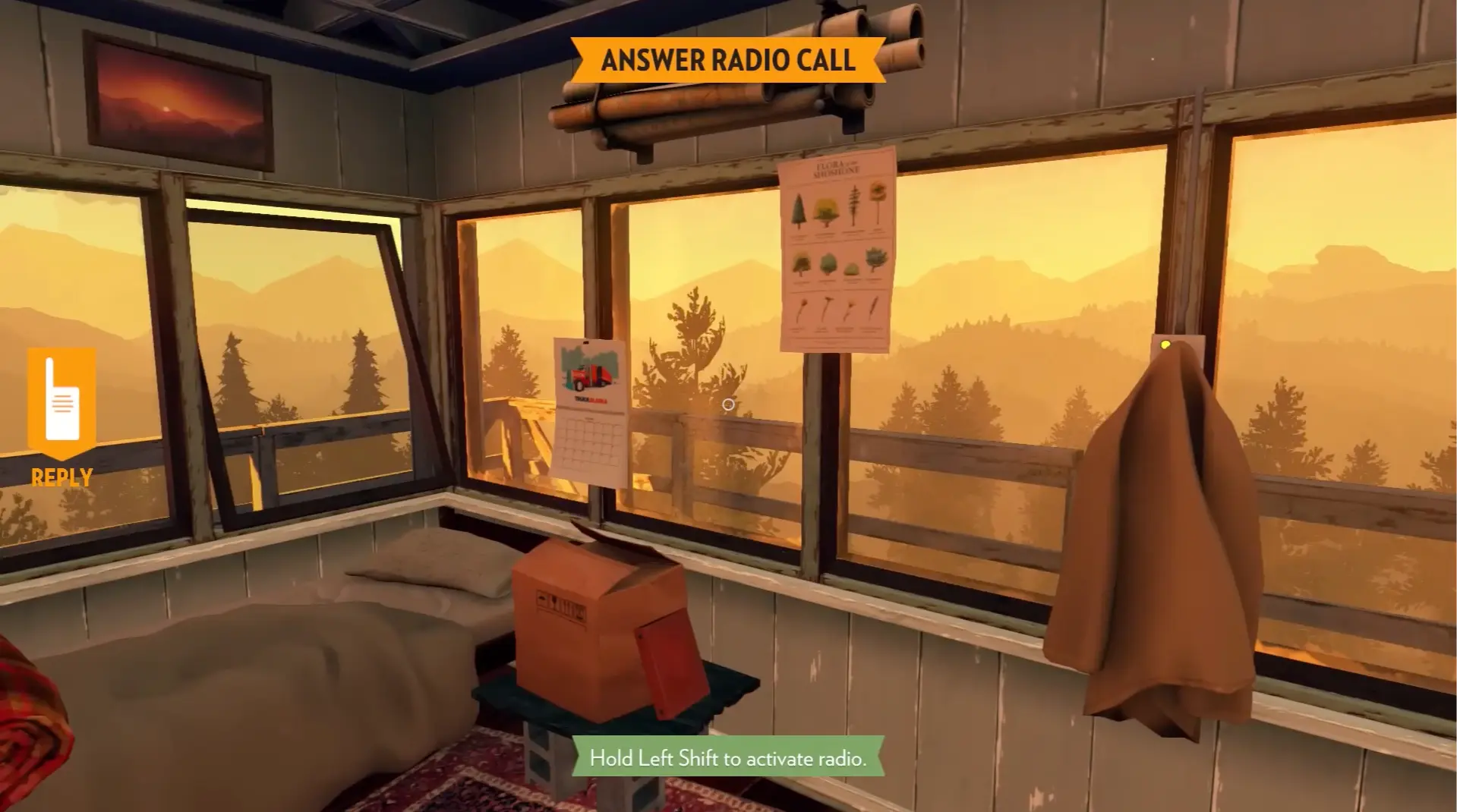
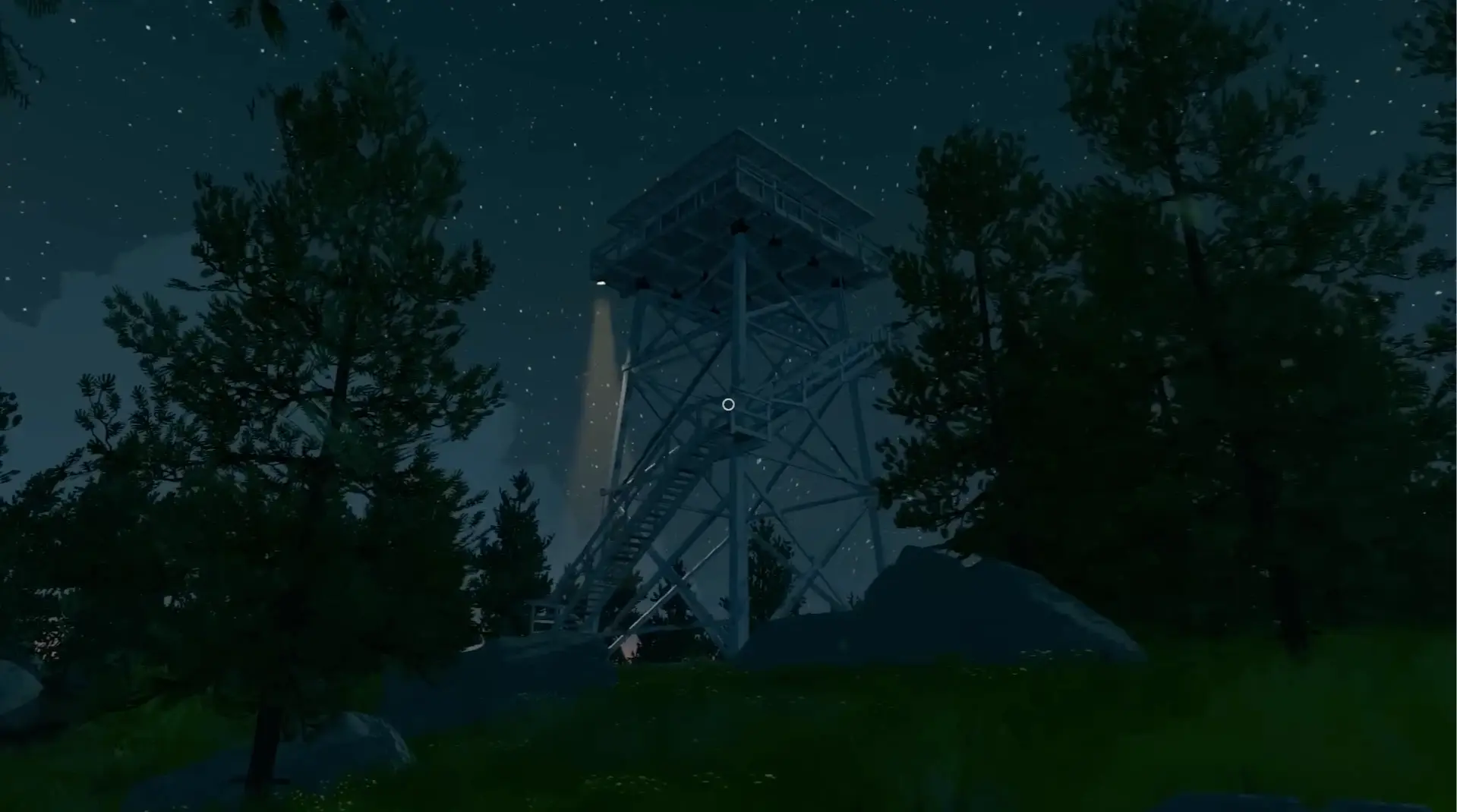
The protagonist is Henry, a man fleeing the wreckage of a complicated life, trading the familiar confines of his past for the vast, isolating beauty of the Wyoming wilderness. His new job: a fire lookout in the Two Forks Tower. His home: a solitary post with a panoramic view of a sea of trees. His only lifeline: a voice on the other end of a walkie-talkie.
Her name is Delilah, a supervisor stationed in her own tower miles away. What begins as a summer of peaceful solitude—watching for smoke and keeping the wilderness safe—soon unravels into a tense, psychological thriller. Firewatch is not about fighting monsters; it is an intensely personal drama about two people, bound only by a radio frequency, navigating a creeping sense of paranoia. It is a story about escapism, guilt, and the desperate human need for connection, all set against one of the most breathtakingly beautiful backdrops in video game history.
Gameplay: Analog Exploration
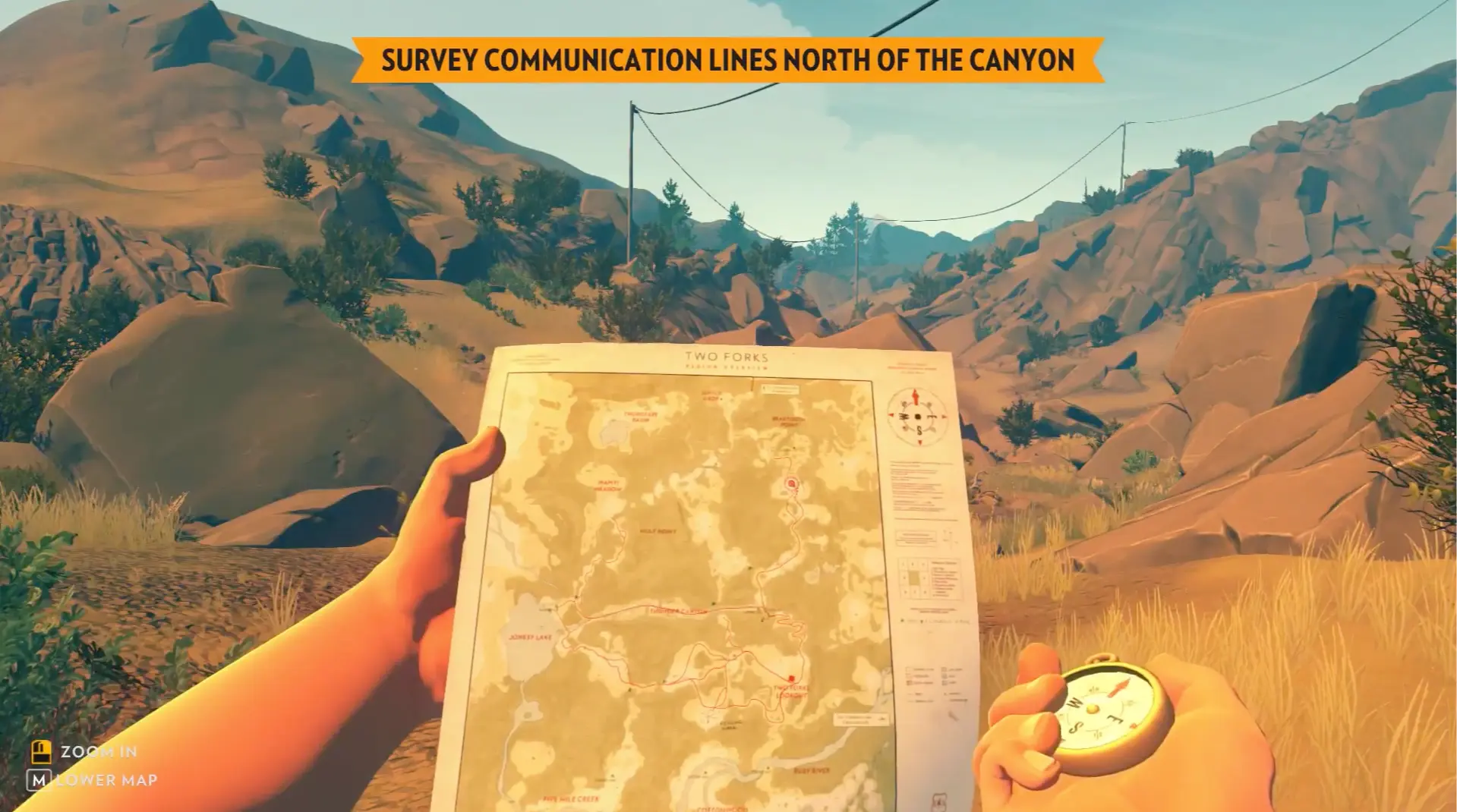
Firewatch is often reductively labeled a "walking simulator," but that tag fails to capture the tactile nature of its systems. The primary gameplay loop revolves around exploration and communication. Tasks are assigned by Delilah—investigate illegal fireworks, check a downed line, investigate a trashed campsite—but the execution requires genuine navigation.
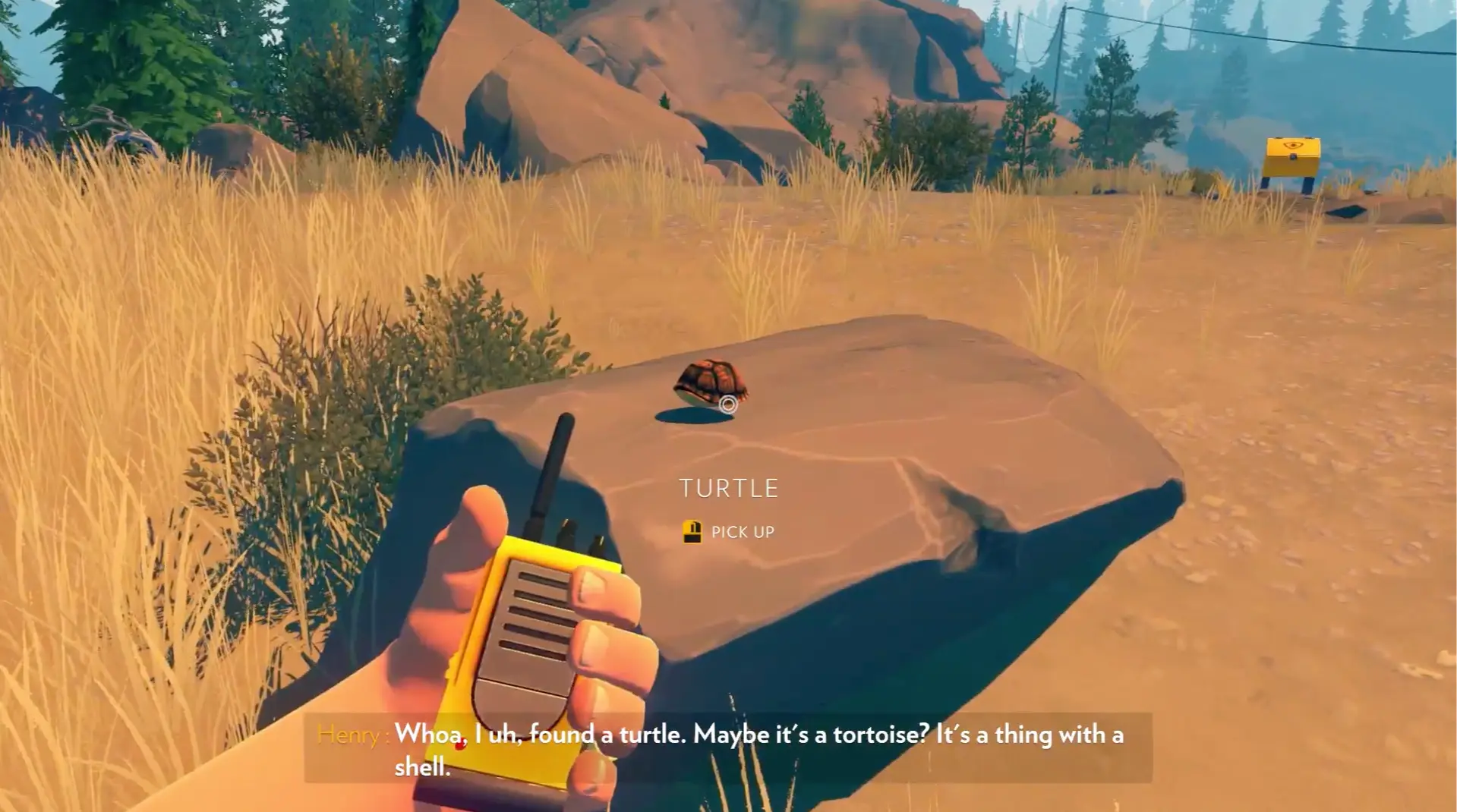
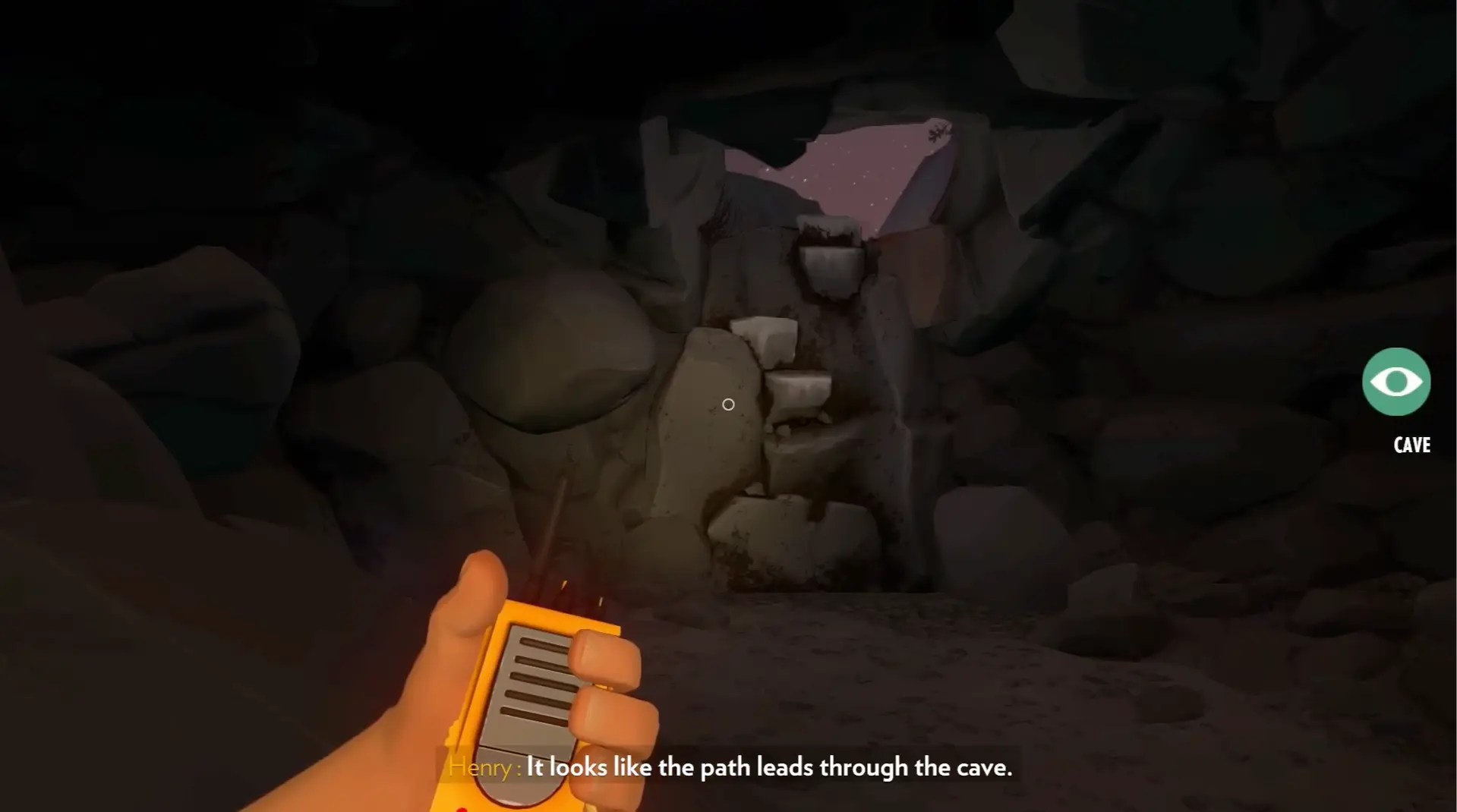
There is no mini-map. There are no glowing objective markers floating in the sky. The tools are beautifully analog: a paper map and a compass. Navigation is a deliberate act of orienting oneself using landmarks and trails. This grounds the experience, making the traversal feel physical and earned. But the true mechanic is the walkie-talkie. Reporting a strange beer can or a majestic vista triggers branching dialogue choices. The decision to be professional, flirtatious, sarcastic, or guarded shapes the relationship with Delilah. These choices define Henry's character and the emotional tenor of the summer. It is a role-playing game where the stats are emotional intelligence and wit.
Atmosphere: The Paranoia of Beauty
The visual identity of Firewatch, crafted by visionary artist Olly Moss, is unforgettable. It utilizes a striking, poster-art aesthetic, with bold, warm colors that make the wilderness feel like a living painting. The orange glow of a sunset, the deep blue of twilight, and the hazy smoke of a hot summer day are palpable.
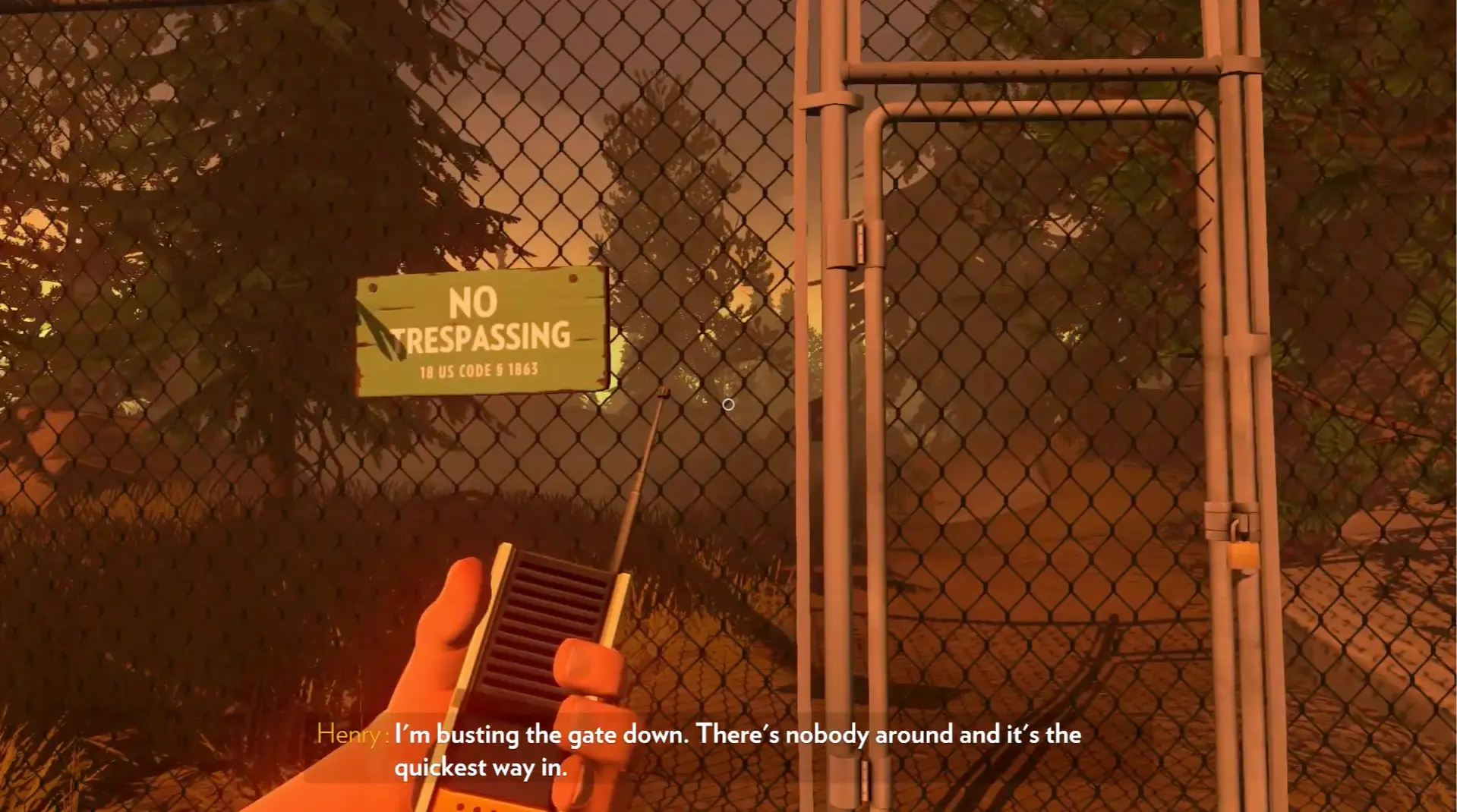
However, this beauty serves a dual purpose. It is both a tranquil escape and a disquieting veil. As the narrative progresses, the vastness shifts from liberating to oppressive. Paranoia becomes the central theme. Signs of intrusion appear. The tower is breached. The feeling of being watched turns the idyllic woods into a stage for a thriller. The sound design is crucial; the snap of a twig or the distant echo of a radio signal forces a frantic search of the treeline. The game expertly manipulates the sense of security, turning the beautiful forest into a place of unseen threats.
Conclusion: The Honest End
Firewatch is a landmark in narrative gaming because it refuses to provide the easy answers of a Hollywood blockbuster. The ending is famously divisive, but it is honest. It forces a confrontation with the harsh reality that one cannot simply run away from their problems, no matter how far they hike into the woods.
It is not about the mystery solved; it is about the emotional journey of the man trying to solve it. It stands as a testament to the power of writing and performance in the medium, proving that a game without enemies can still be a fight for survival—survival of the self. It is a haunting experience that lingers long after the radio goes silent.
Review Score
Based on overall narrative, gameplay, and experience.