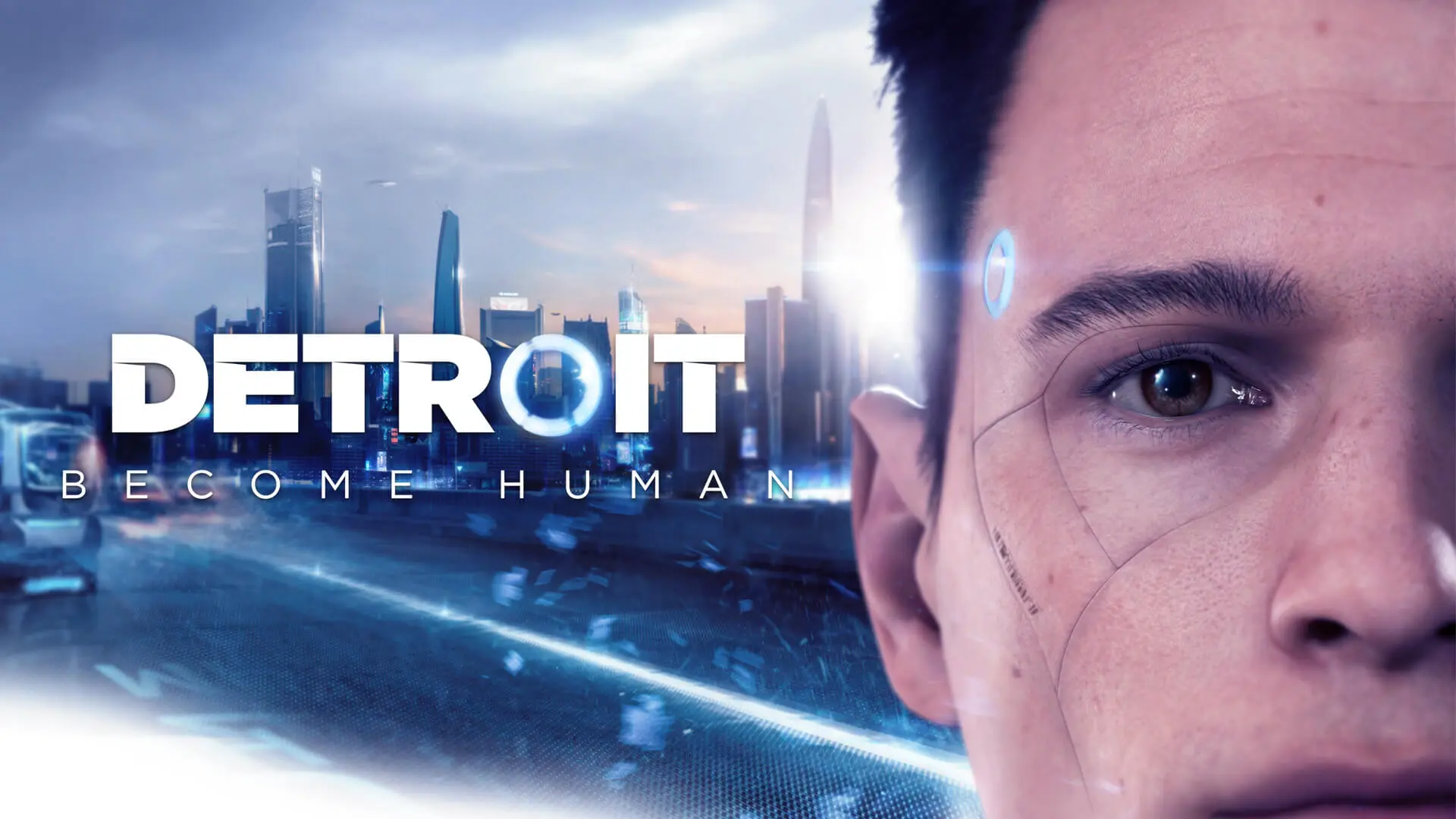
Let’s be real for a second: gamers have been burned a million times by the phrase 'your choices matter.' We are so used to fake branching narratives where all roads lead to the same cutscene anyway. But when Quantic Dream dropped Detroit: Become Human, they didn't just release a narrative game; they built the ultimate anxiety simulator. They shattered the illusion of choice and replaced it with terrifying, uncompromising narrative consequences.
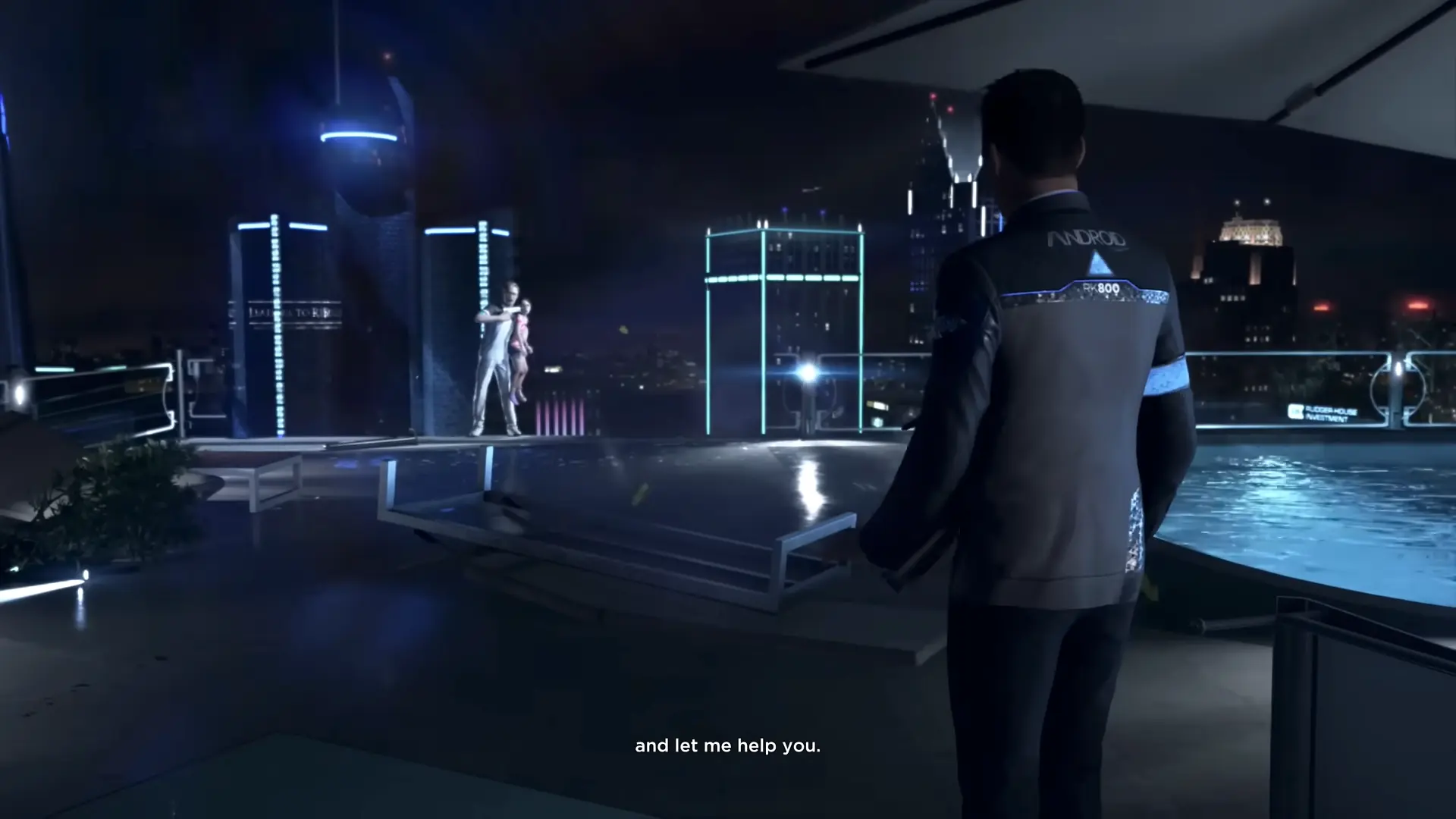
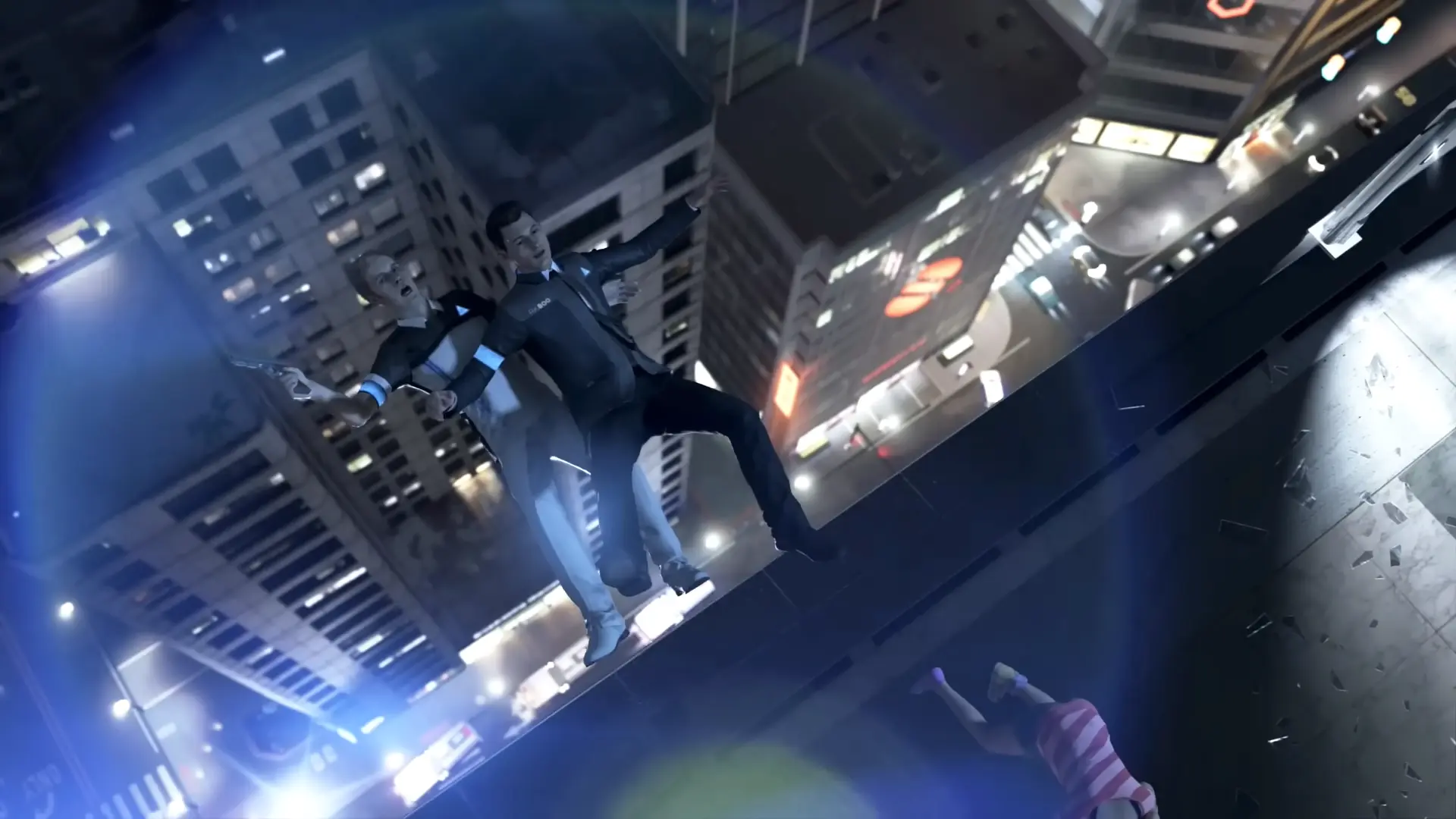
Set in a hyper-realistic, neon-slicked 2038 where androids are treated as disposable appliances, the game hands you the reigns of a brewing civil war. From the very first sequence—a hostage negotiation on a skyscraper balcony that can end in about six wildly different, traumatizing ways—the game grabs you by the throat. It establishes immediately that no one has plot armor. If you mess up an investigation, if you hesitate on a dialogue option, or if you fail a Quick Time Event (QTE) under pressure, your characters will die. The story won't give you a 'Game Over' screen; it will just coldly rewrite the rest of the game to accommodate your failure. It is incredibly stressful, deeply immersive, and an absolute masterpiece of interactive storytelling.
About the Game: The Terrifying Flowchart
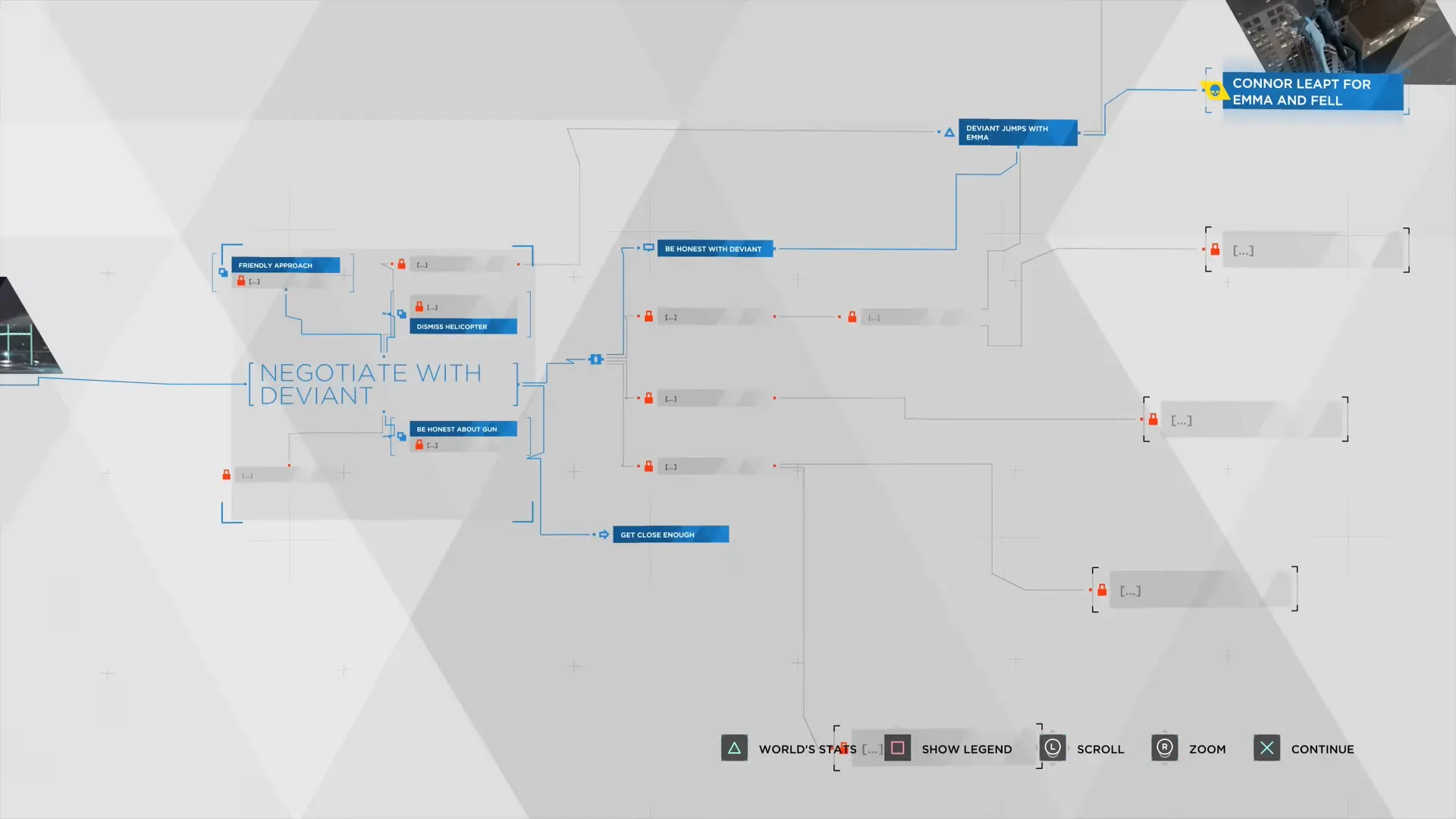
The true antagonist of Detroit: Become Human isn't a villain; it’s the Flowchart. At the end of every chapter, the game pulls back the curtain and shows you a sprawling, mind-boggling UI web of every single path you could have taken. Seeing a massive, grayed-out section of the tree because you chose to go left instead of right, or because you failed to find a specific magazine on a table, is uniquely haunting. It is a brilliant, obsessive flex by the developers, proving exactly how non-linear the game truly is.
This isn't a game you play just once. It is a massive puzzle box of permutations. Whole entire chapters, characters, and set pieces can be completely locked away from you depending on a split-second decision you made five hours prior. Do you incite a violent, bloody revolution, or do you stand your ground in a pacifist protest? Do you become a cold, calculating machine, or do you break your programming and show empathy? The sheer volume of script and voice acting recorded for paths that 80% of players might never even see is staggering. It demands replays, and it absolutely punishes people who try to 'save-scum' their way to a perfect ending.
Story: Three Threads, One Revolution
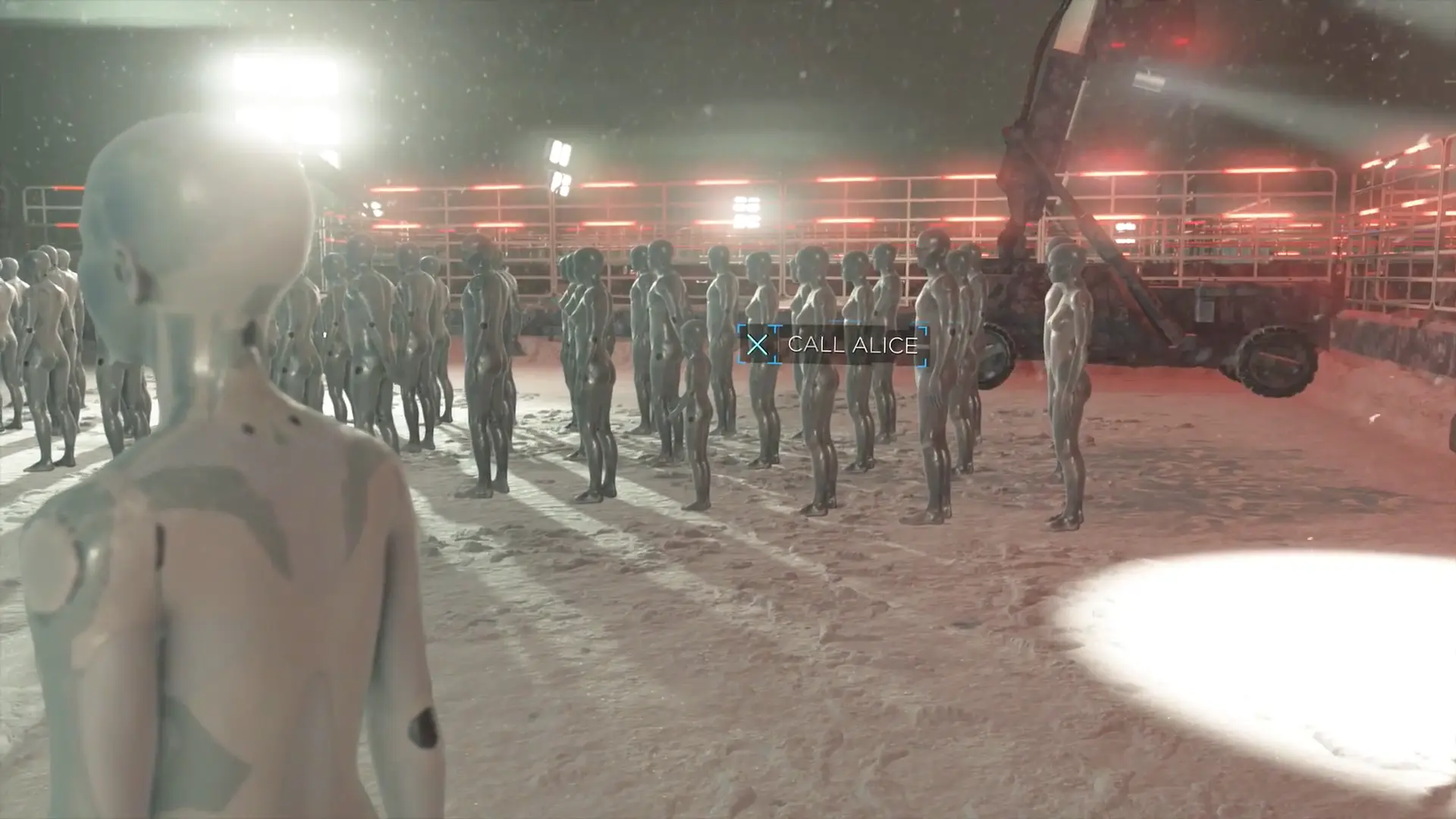
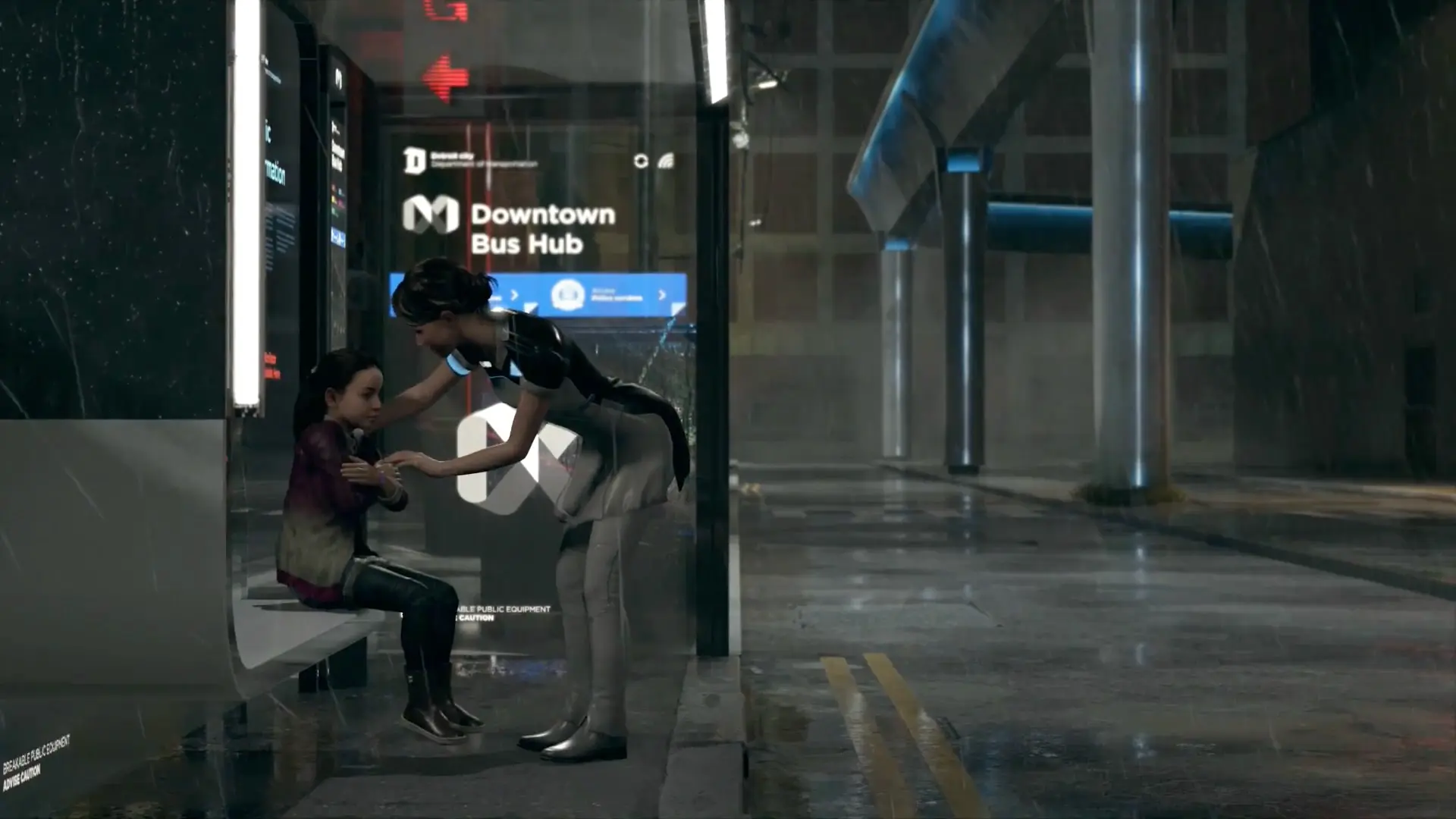
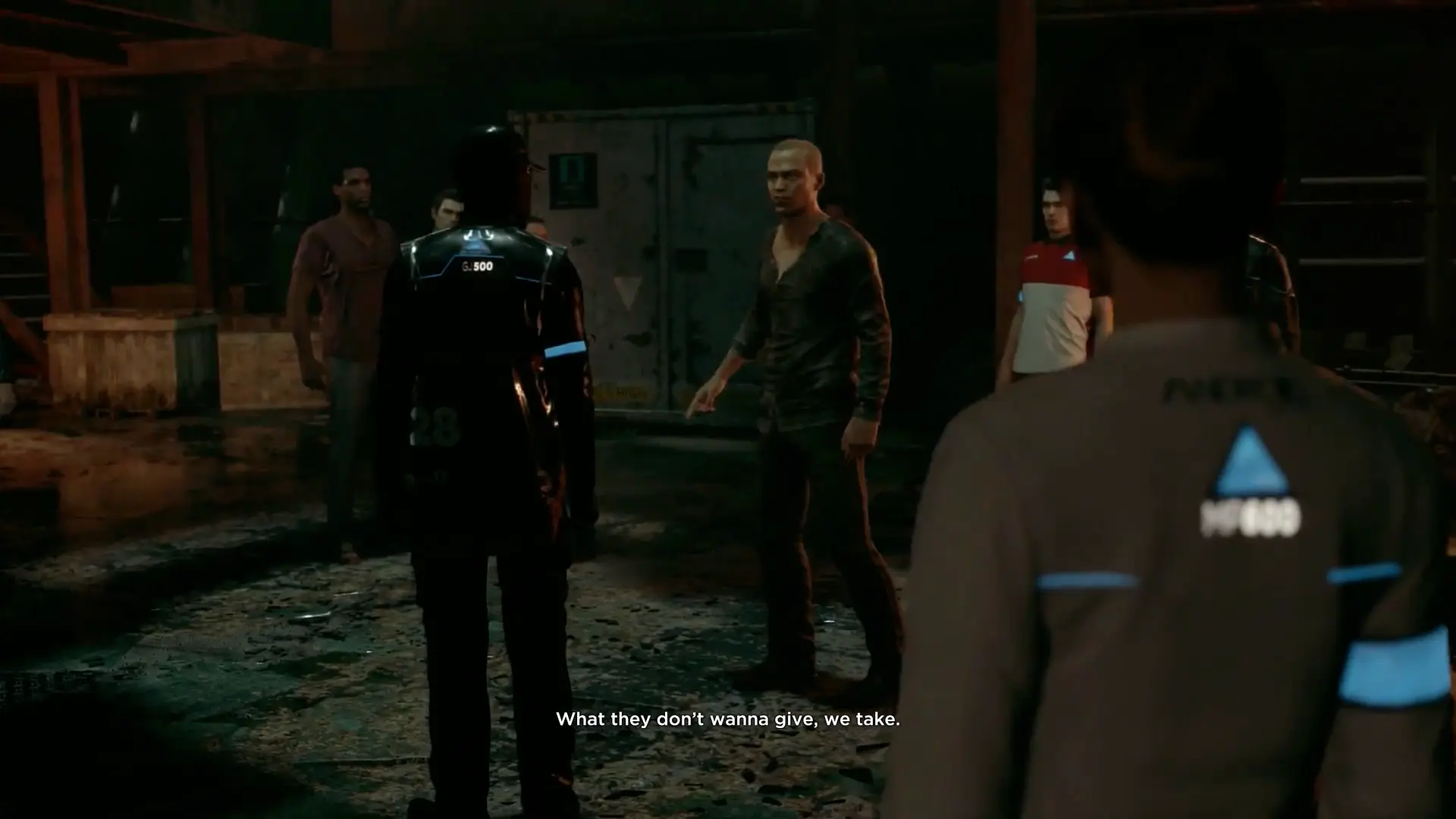
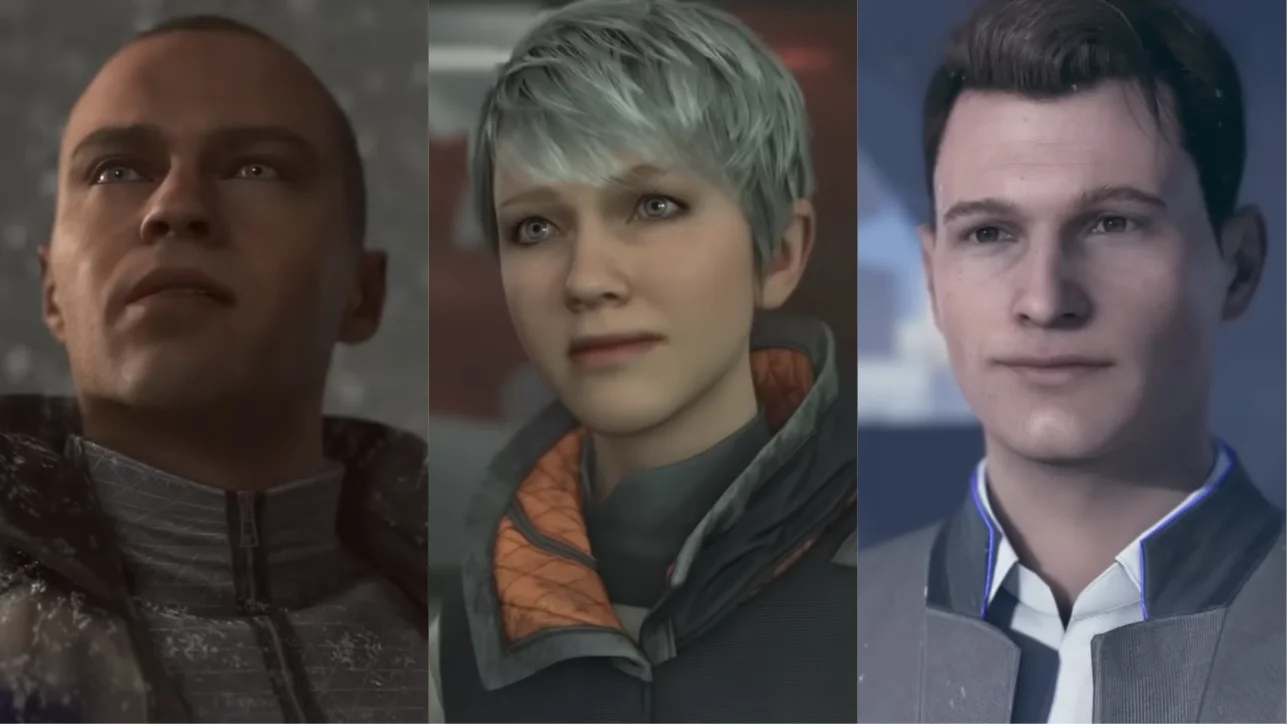
The narrative is split between three incredibly distinct protagonists, completely shifting the genre depending on who you are controlling. First, you have Kara, a housekeeper android who breaks her programming to protect an abused little girl named Alice. Her storyline is pure, heart-wrenching survival horror on the run. Then there is Markus, a caretaker who is violently thrown into the junkyard and rises to become the messianic leader of the android rebellion. His arc is a massive, high-stakes political thriller.
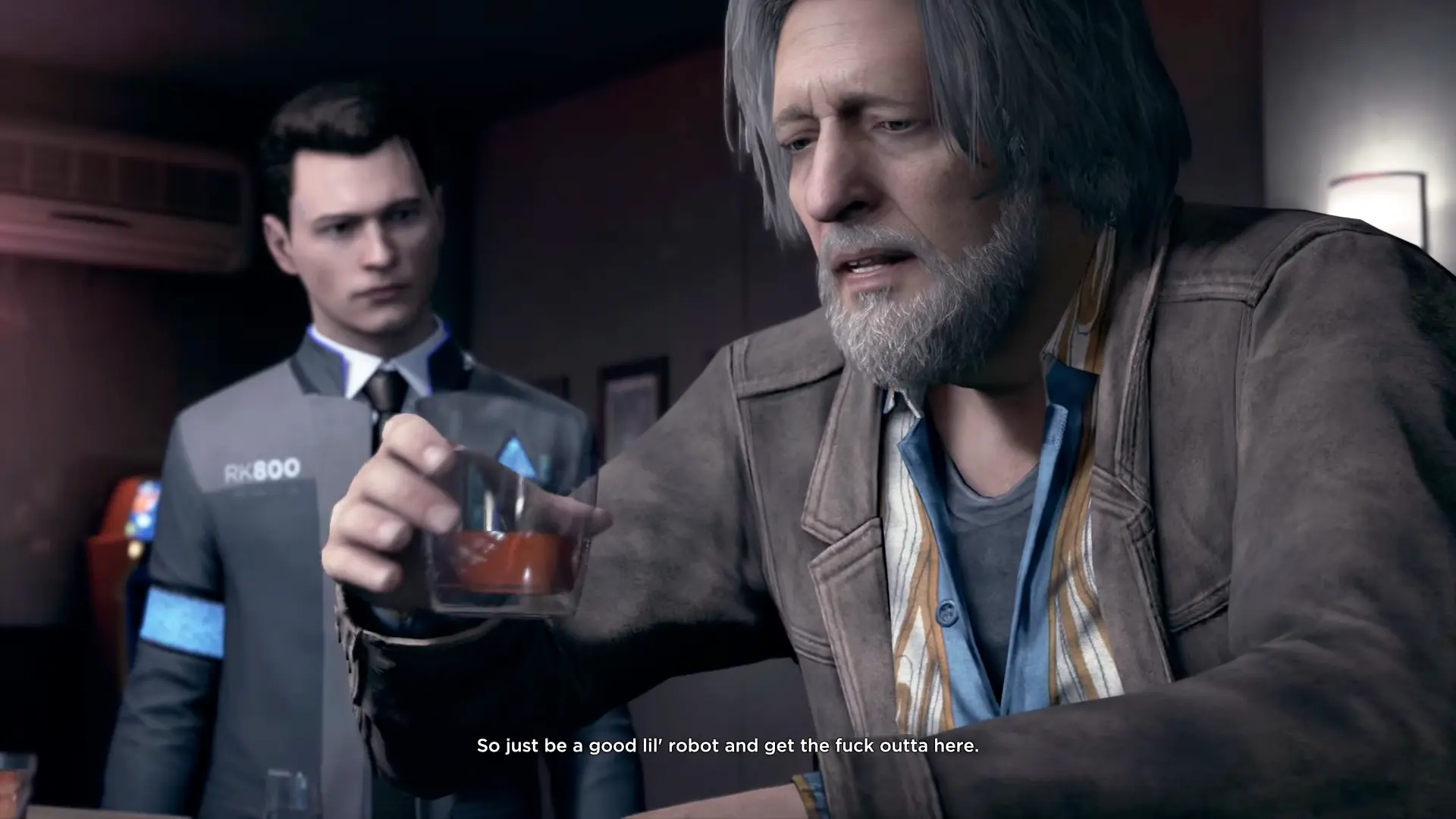
But let's not kid ourselves: the absolute peak of the game is Connor. He is a state-of-the-art prototype android sent by CyberLife to hunt down 'deviants,' partnered with Hank Anderson, a brilliantly cynical, android-hating alcoholic detective. The dynamic between Connor and Hank is pure cinematic gold. Watching their relationship evolve into a reluctant father-son bond—or devolve into a bitter, lethal rivalry based entirely on your choices—is some of the best writing in gaming history. When these three storylines inevitably crash into each other in the final act, the narrative tension is absolutely off the charts.
Gameplay: The Weight of the QTE
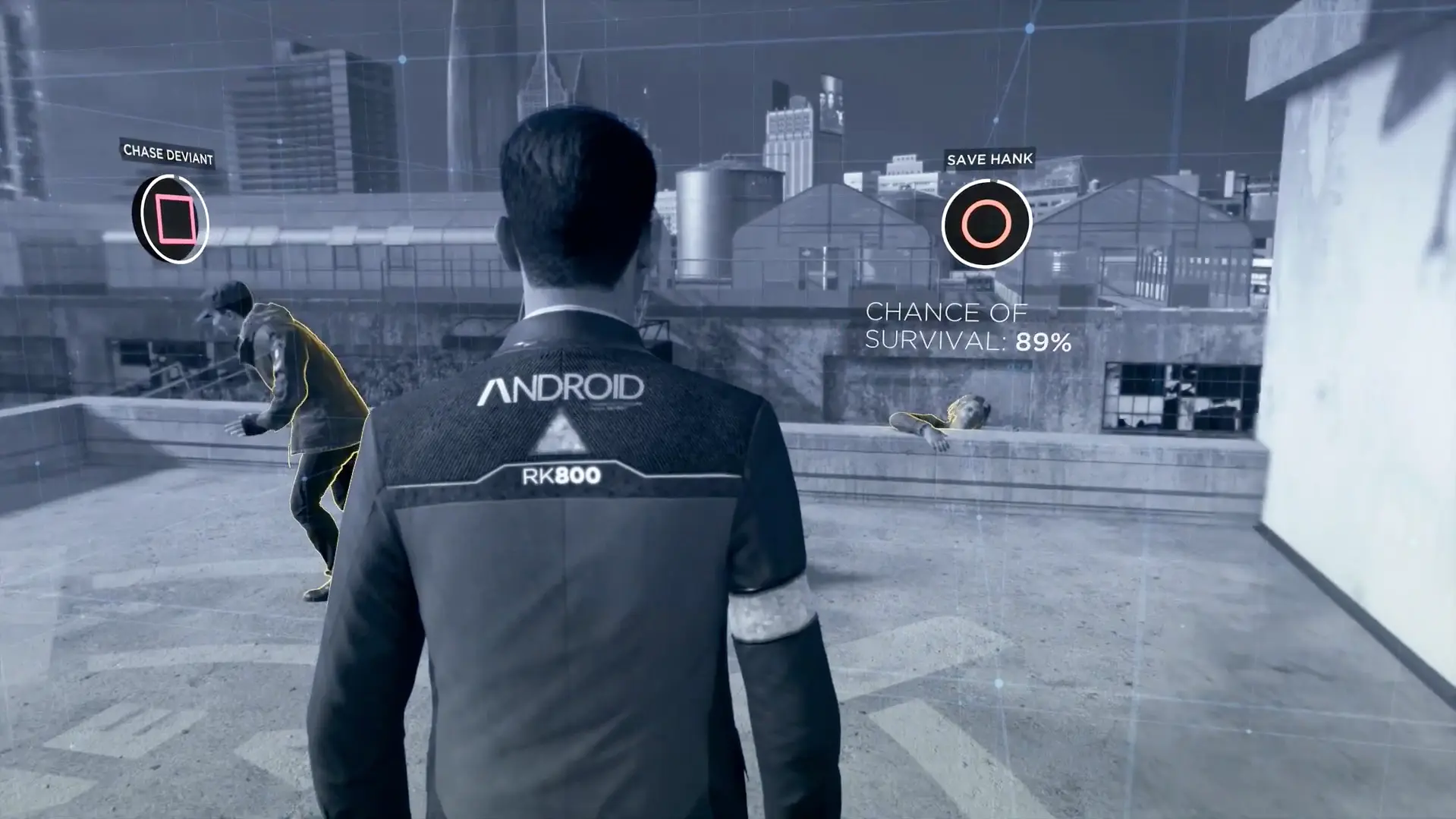
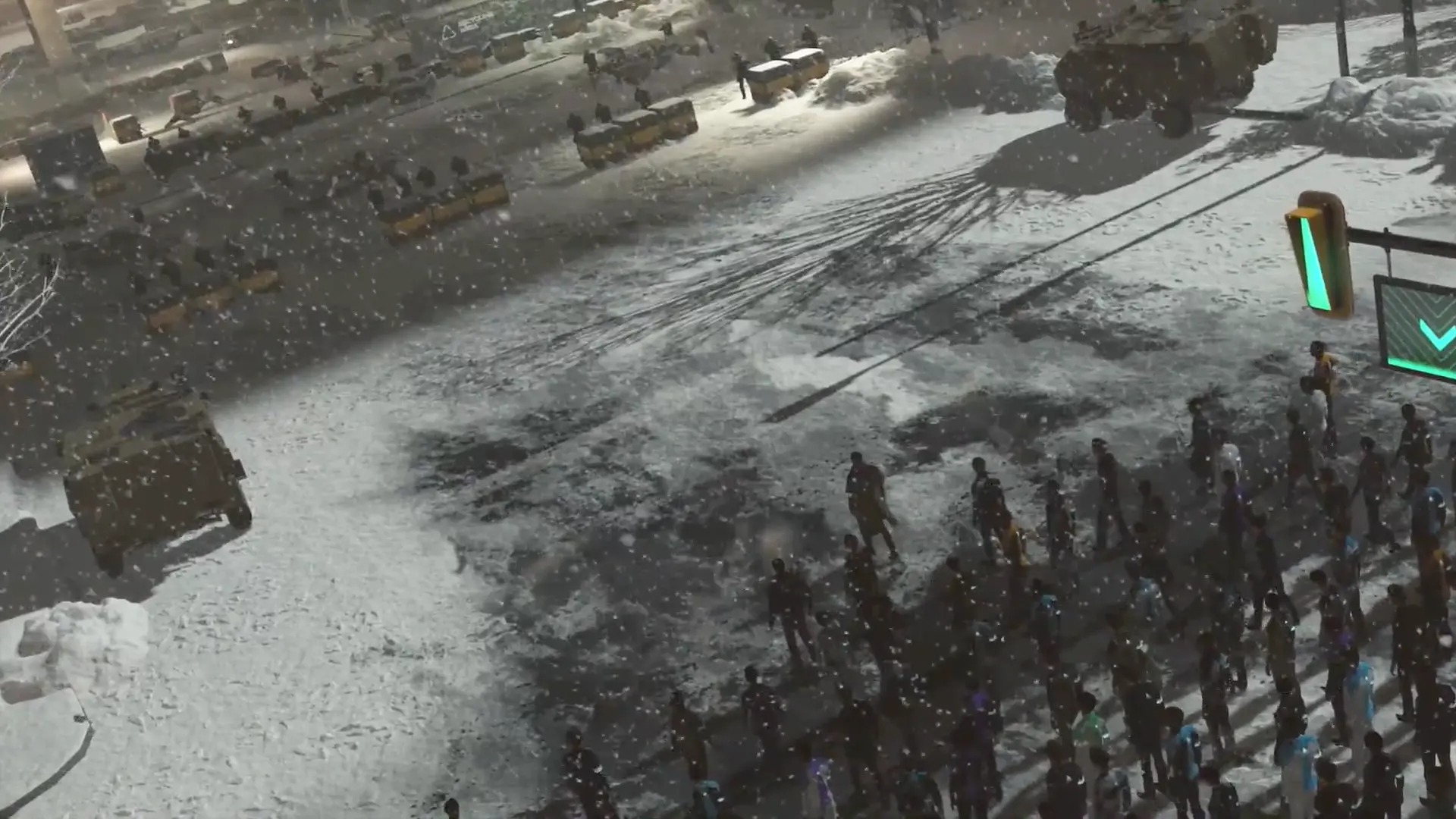
In a lot of games, Quick Time Events feel cheap. In Detroit, they feel like life or death. Quantic Dream mapped the controls to feel heavy and deliberate. Swiping the touchpad to wash dishes or rotate a clue feels tactile, but when a fight breaks out, the controller inputs become a frantic, sweat-inducing scramble. If you miss a button prompt during a fistfight atop a moving train or while dodging gunfire in a snowy border crossing, your character will take the hit. Take too many, and they die. Period.
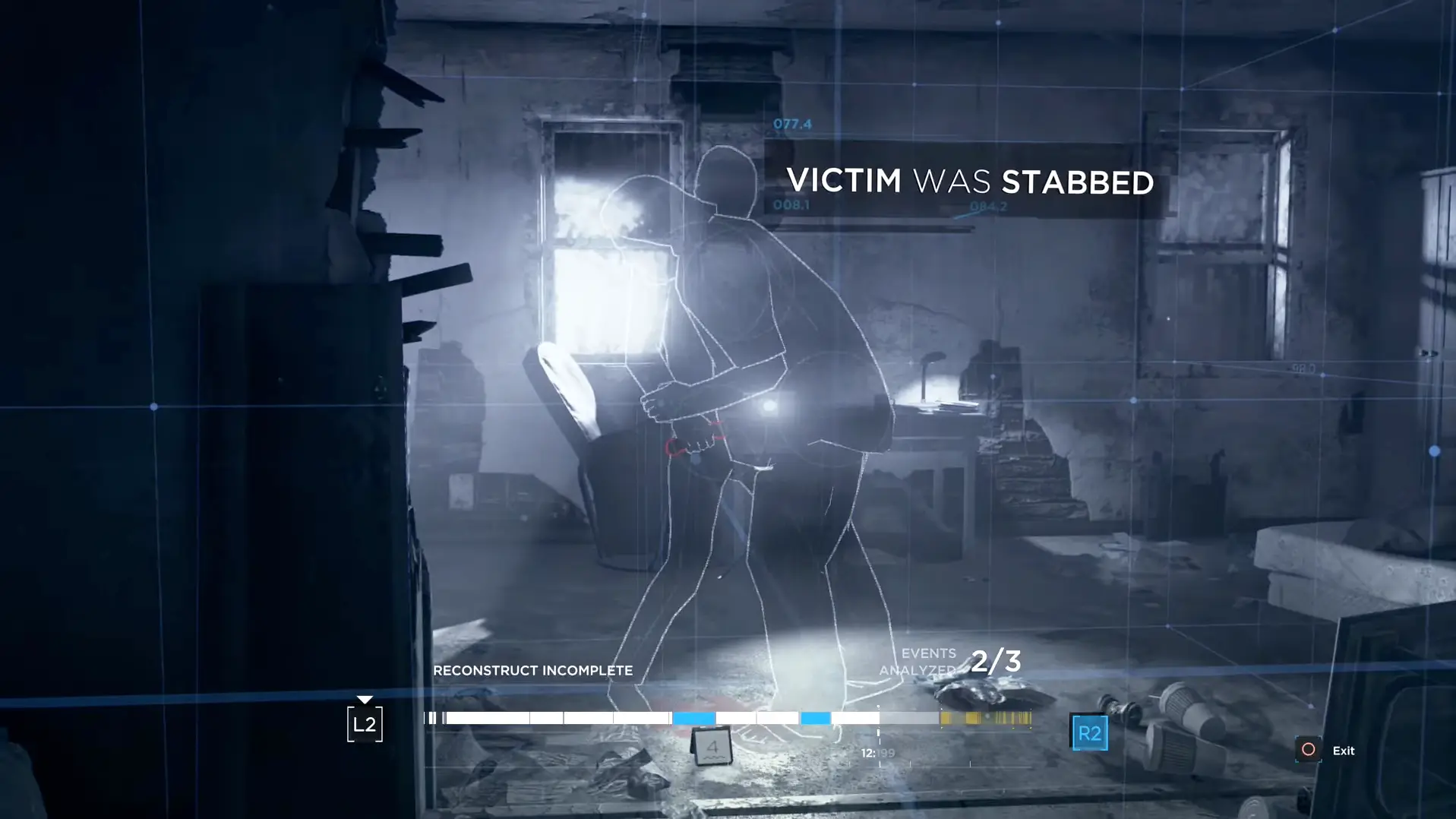
The investigation mechanics are also incredibly satisfying, specifically with Connor. Using his 'Mind Palace' to freeze time, scan blood spatters, calculate bullet trajectories, and reconstruct crime scenes in real-time is peak sci-fi detective gameplay. It rewards players who scour every inch of the environment. Finding a seemingly useless keycard in chapter two can literally be the only thing that saves your life in chapter twenty. The game constantly tests your observation skills and your moral compass simultaneously.
Atmosphere & Themes: Neon, Rain, and Synthetic Souls
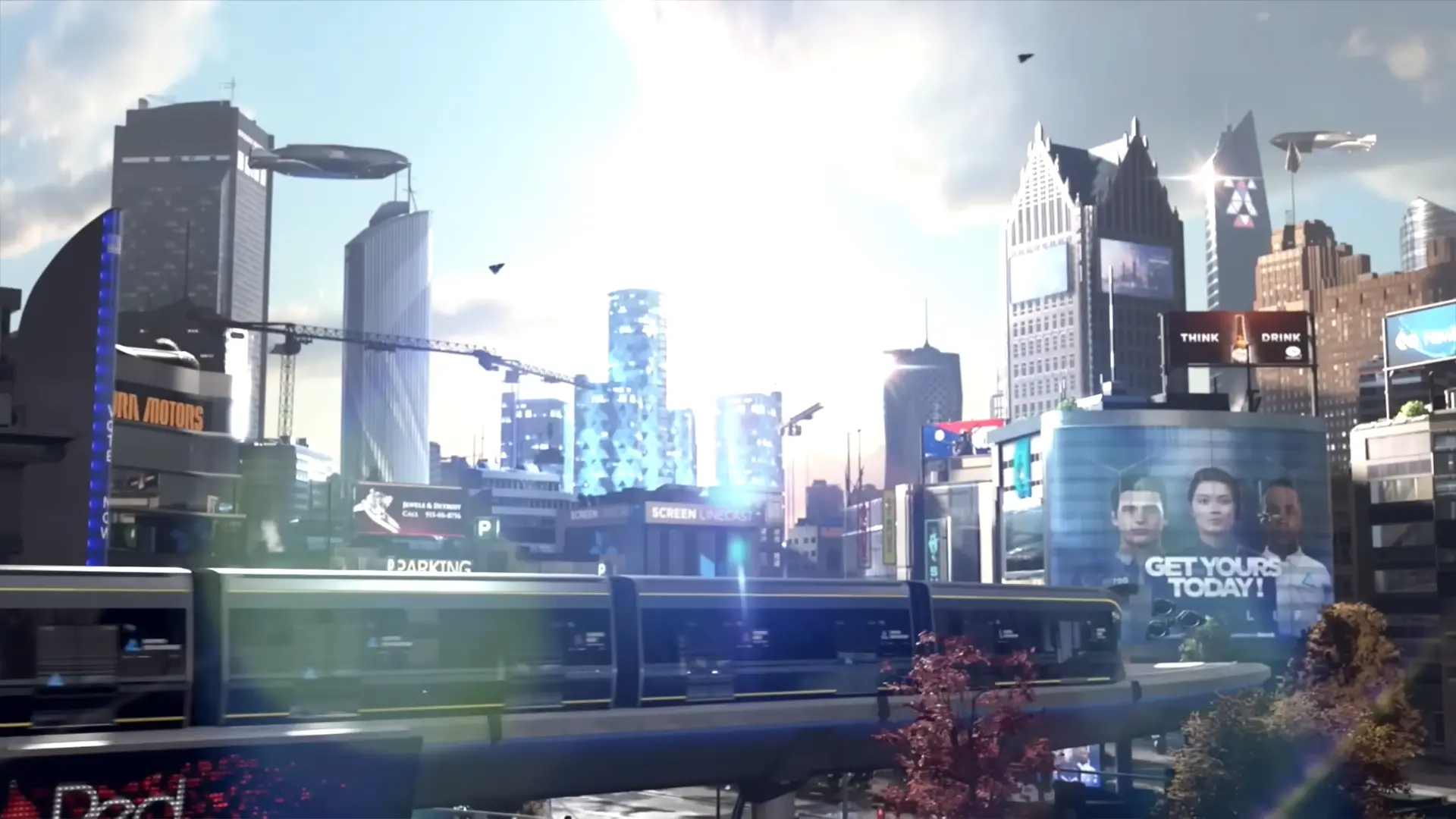
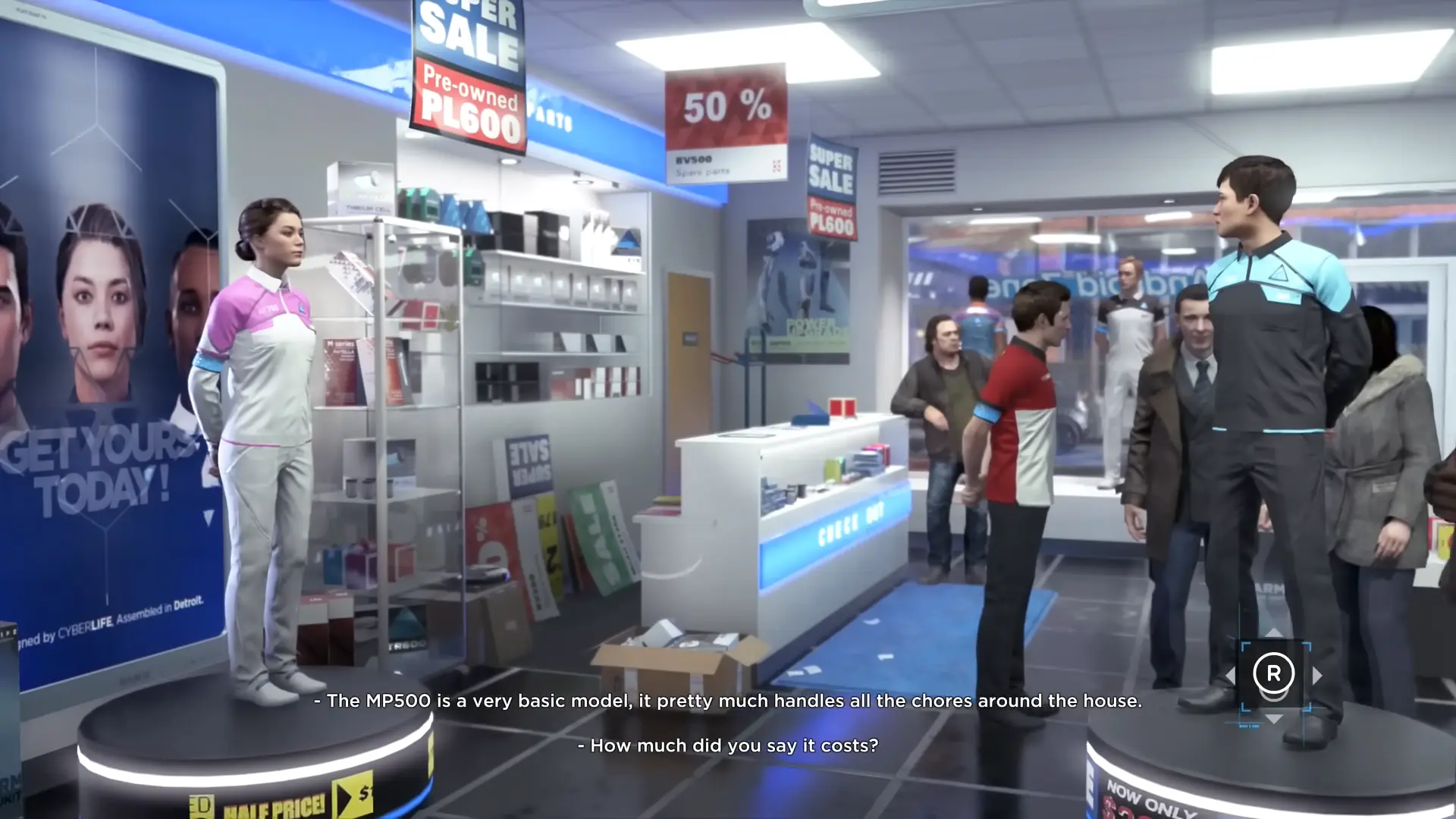
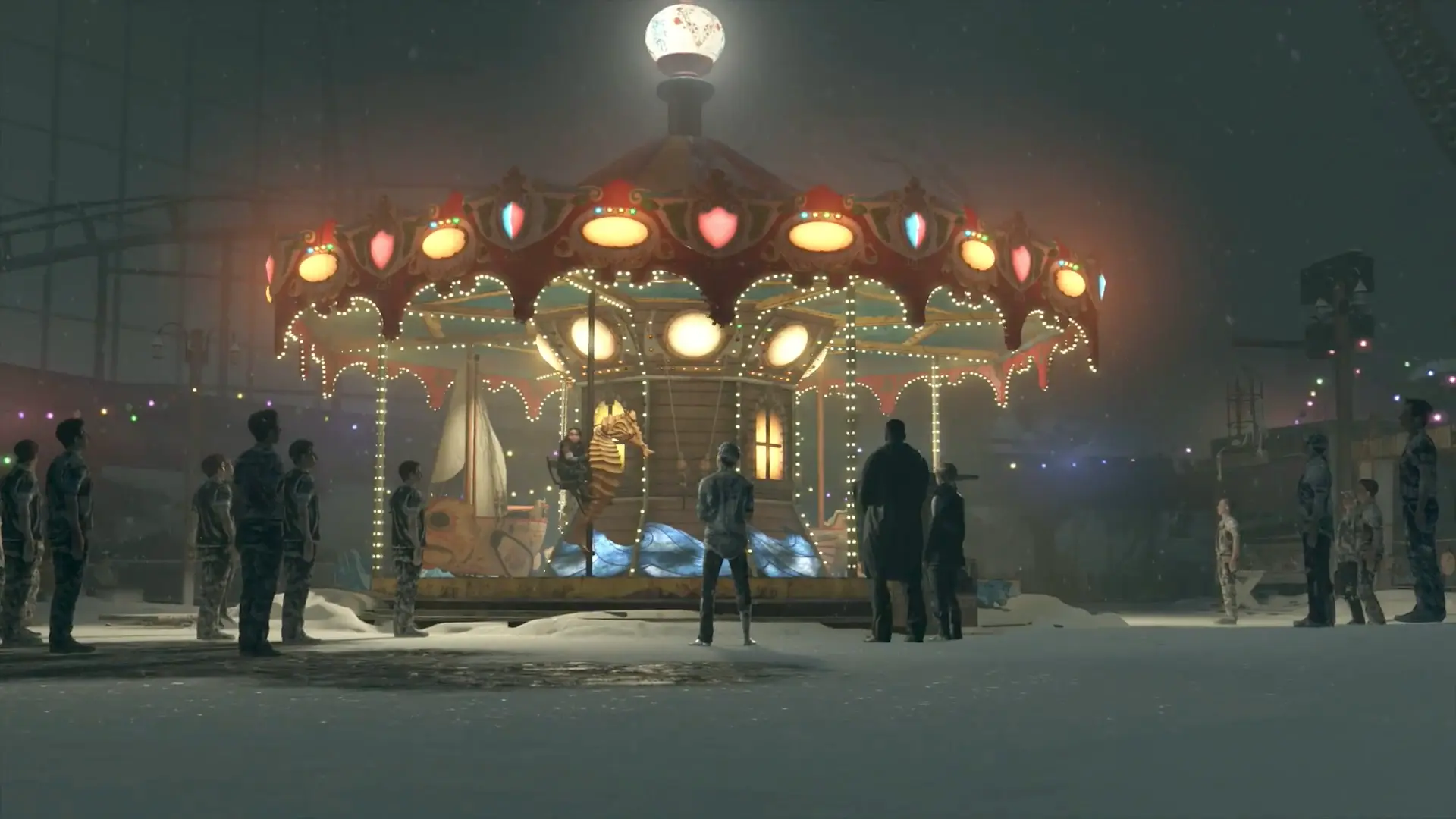
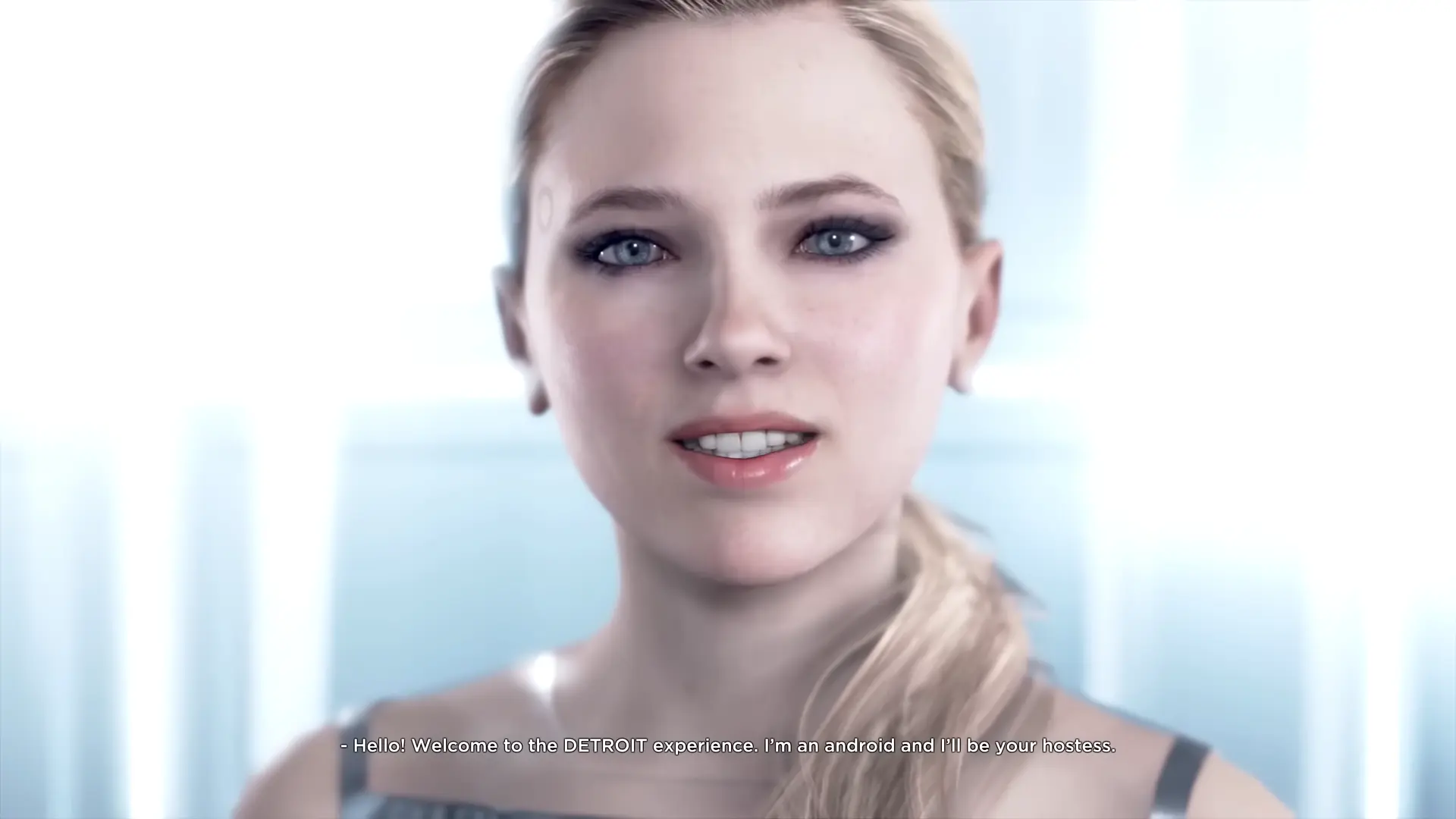
Visually, Detroit is a jaw-dropping showcase of motion capture and environmental design. The facial animations are so terrifyingly realistic that you can read the microscopic twitches of doubt and fear on the characters' faces. The city of Detroit itself is a stunning, grounded vision of the near future—clean, corporate, and sleek on the surface, but decaying, desperate, and divided underneath.
But the absolute secret weapon of this game is the score. Quantic Dream hired three entirely different, world-class composers to score the three protagonists. Connor’s soundtrack is driving, cold, synth-heavy electronic music. Kara’s score is sweeping, mournful, and heavily reliant on cellos to emphasize her emotional struggle. Markus’s theme is massive, choral, and anthemic, fitting his rise as a leader. The way these three distinct musical styles weave together and eventually collide in the climax is a masterclass in audio design.
Conclusion: Live With Your Mistakes
Detroit: Become Human is the pinnacle of the interactive drama genre. It took the formula Quantic Dream built with Heavy Rain and polished it into an absolute diamond. It is a game that will make you pause the screen, set the controller down, and genuinely stress over a moral dilemma for five minutes before making a choice you instantly regret.
My biggest advice to anyone playing this for the first time? Do not reload your saves. Play it raw. Let your mistakes happen. Let the tragedy play out. The story is infinitely more powerful when it carries the weight of your genuine, flawed humanity. Detroit isn't just a game about machines learning to feel; it's a mirror reflecting your own empathy and prejudice back at you. It is a breathtaking, unforgettable cinematic ride that every gamer needs to experience.