Introduction: The Cauldron, The Hammer, and the Madness
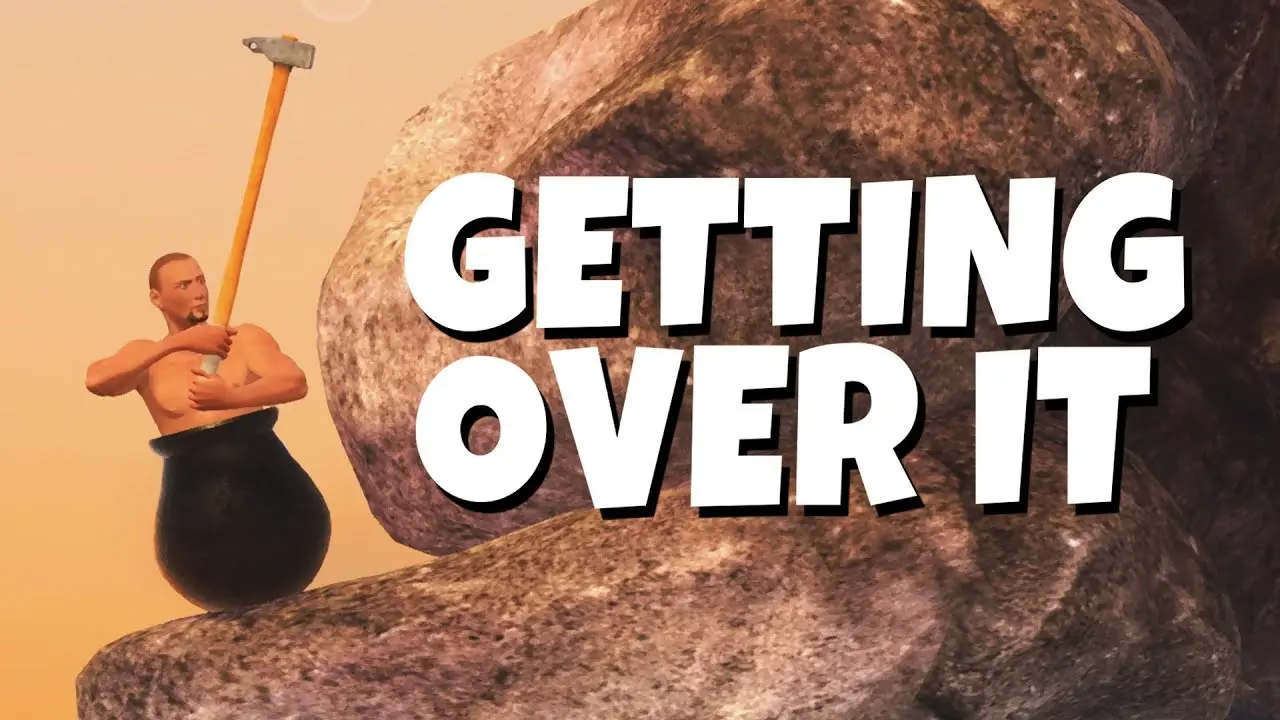
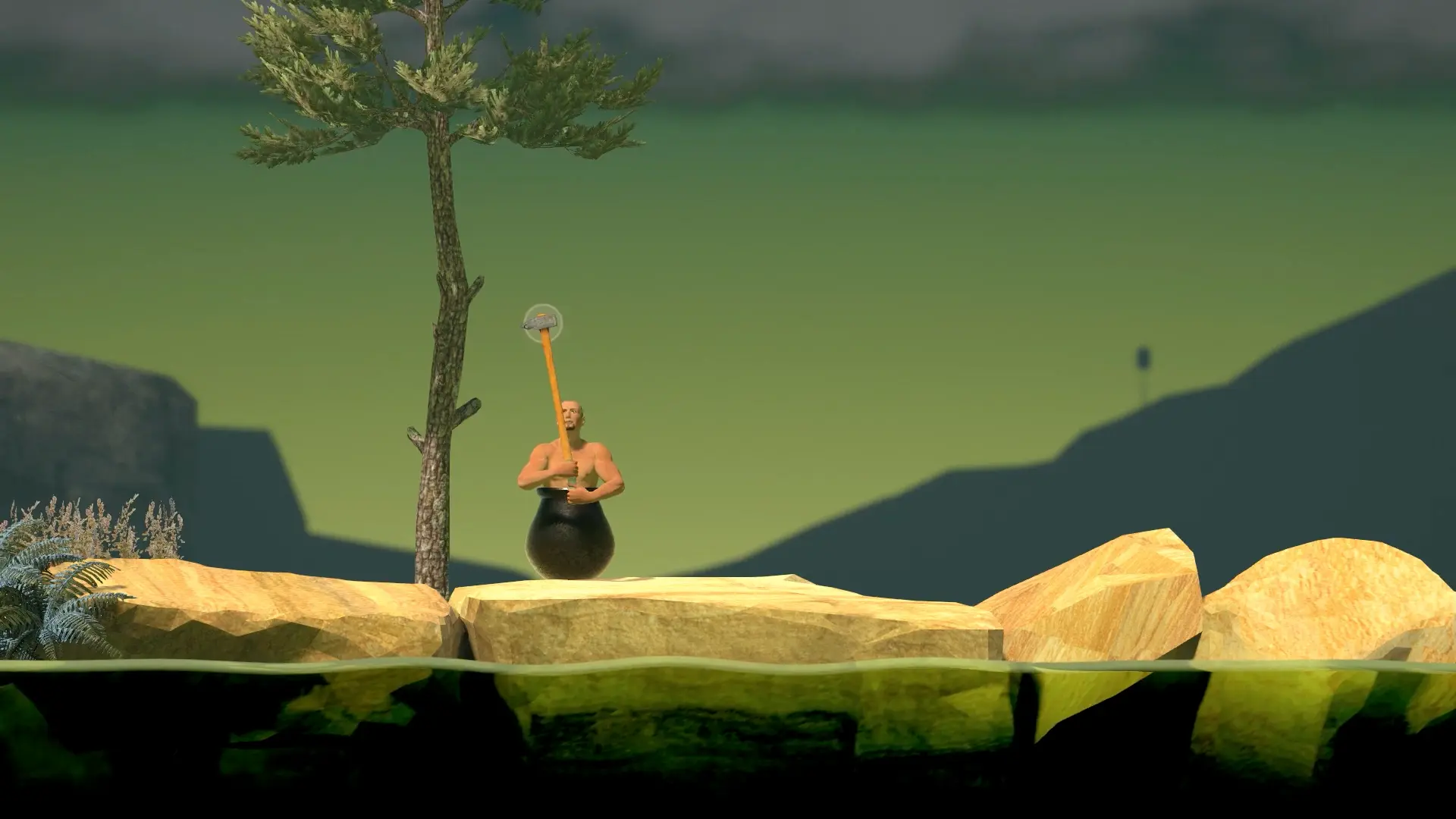
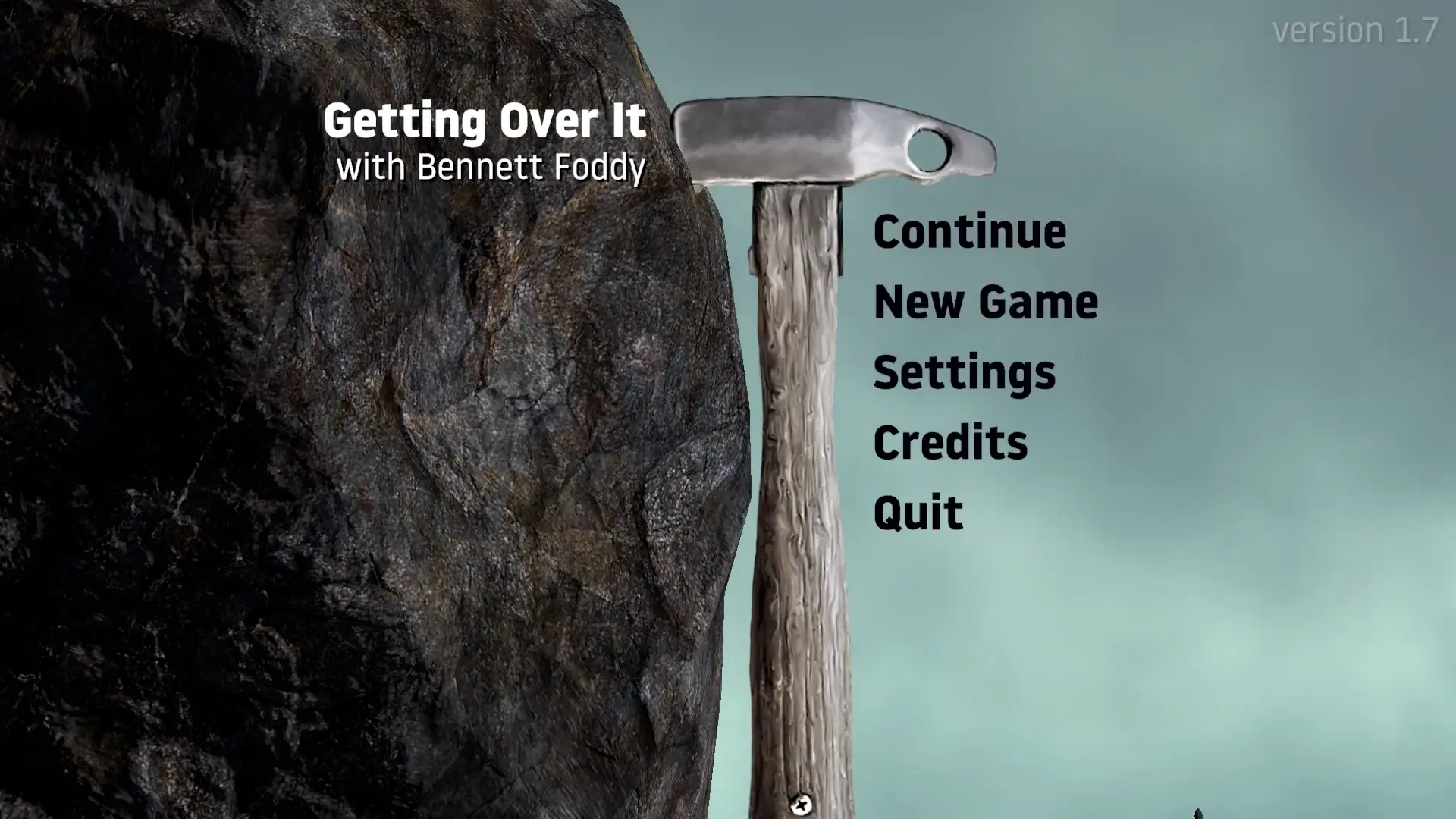
I didn't start playing Getting Over It because I wanted to relax; I started because I saw other people losing their minds and thought, 'It can't be that hard.' I was so incredibly wrong. As a simple gamer who usually enjoys a good story and a clear path forward, this game became an immediate, unhealthy obsession. You play as Diogenes, a man permanently stuck in a cast-iron cauldron, armed with nothing but a Yosemite sledgehammer.
There is no running, no jumping, and absolutely no hand-holding. You simply move your mouse to swing the hammer, catch it on ledges, and drag your body weight upward. What begins as a clumsy, awkward struggle quickly devolves into an all-consuming need to conquer the mountain. I found myself gripping my mouse until my knuckles turned white, staring at my monitor at 3 AM, completely hooked. It isn't just a game; it is a psychological mirror that stares back at you, testing exactly how much frustration you can swallow before you break.
About the Game: The Architecture of Frustration
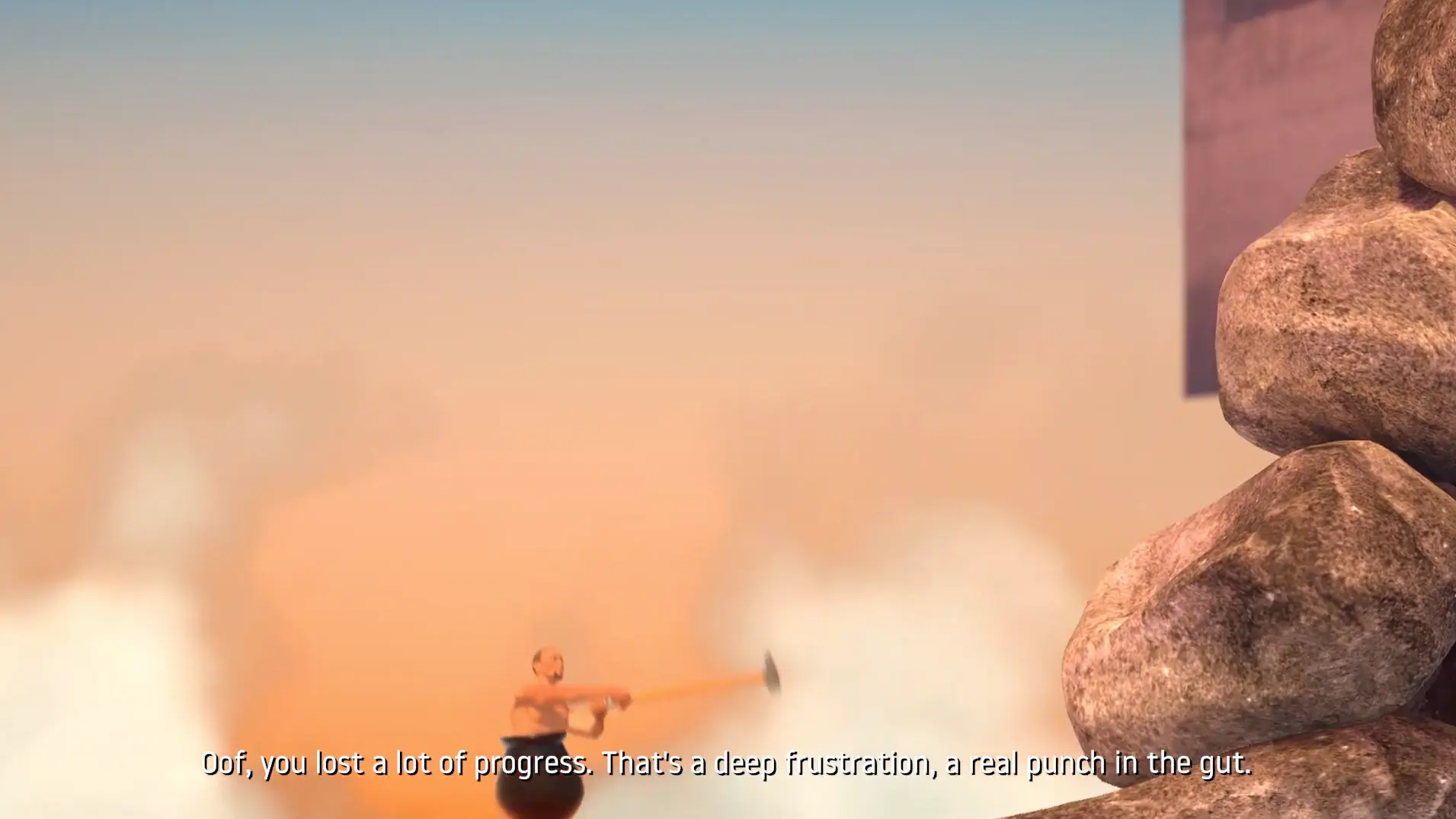
Unlike modern games that treat failure as a minor inconvenience, Getting Over It weaponizes it. The defining mechanic of this game is the complete absence of checkpoints or save states. If you make a mistake—if your hammer slips off a slippery pipe or you push when you meant to pull—you fall. And you don't just fall a little bit; you can easily plummet all the way back to the starting line, losing hours of agonizing progress in a single heartbeat.
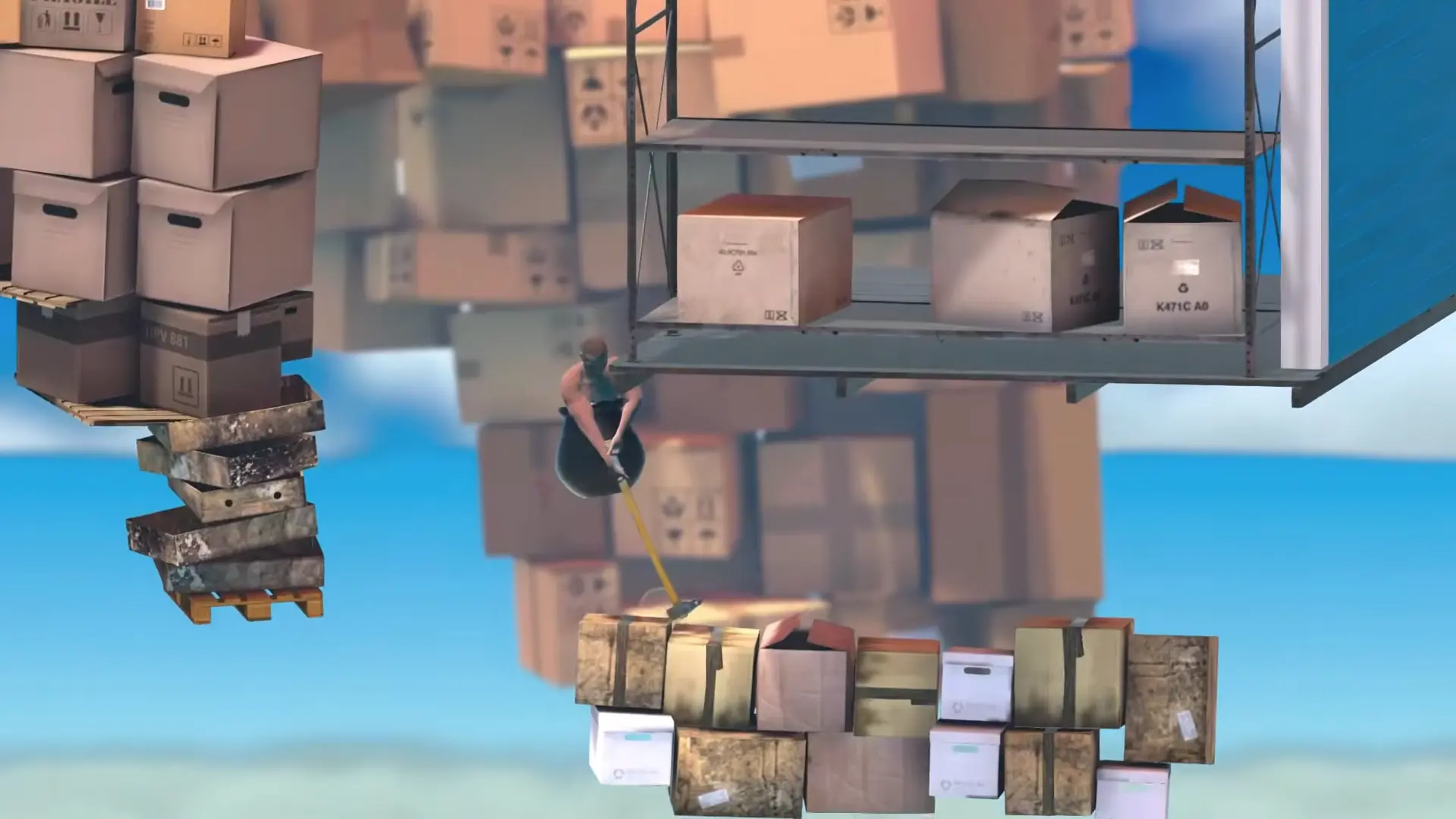
This lack of a safety net changes the entire atmosphere of your living room. Every single swing of the hammer becomes a monumental decision. It demands absolute focus and respect for the physics engine. I spent days mapping out the exact angle I needed to vault over a floating cardboard box. It sounds ridiculous to explain to a non-gamer that a digital pile of trash made my hands shake, but the physical sensation of losing your grip in this game is terrifyingly real. It’s an obsessive loop: you fall, you scream, you swear you'll never play again, and five minutes later, you're back in the cauldron.
Story: The Voice in Your Ear
There isn't a traditional narrative here—no princesses to save, no evil empires to topple. The story is entirely about you and your relationship with the game's creator, Bennett Foddy. As you climb, Bennett speaks to you through a calm, almost soothing voiceover. He talks about internet culture, the history of digital trash, and why he built a game specifically 'to hurt' a certain kind of person.
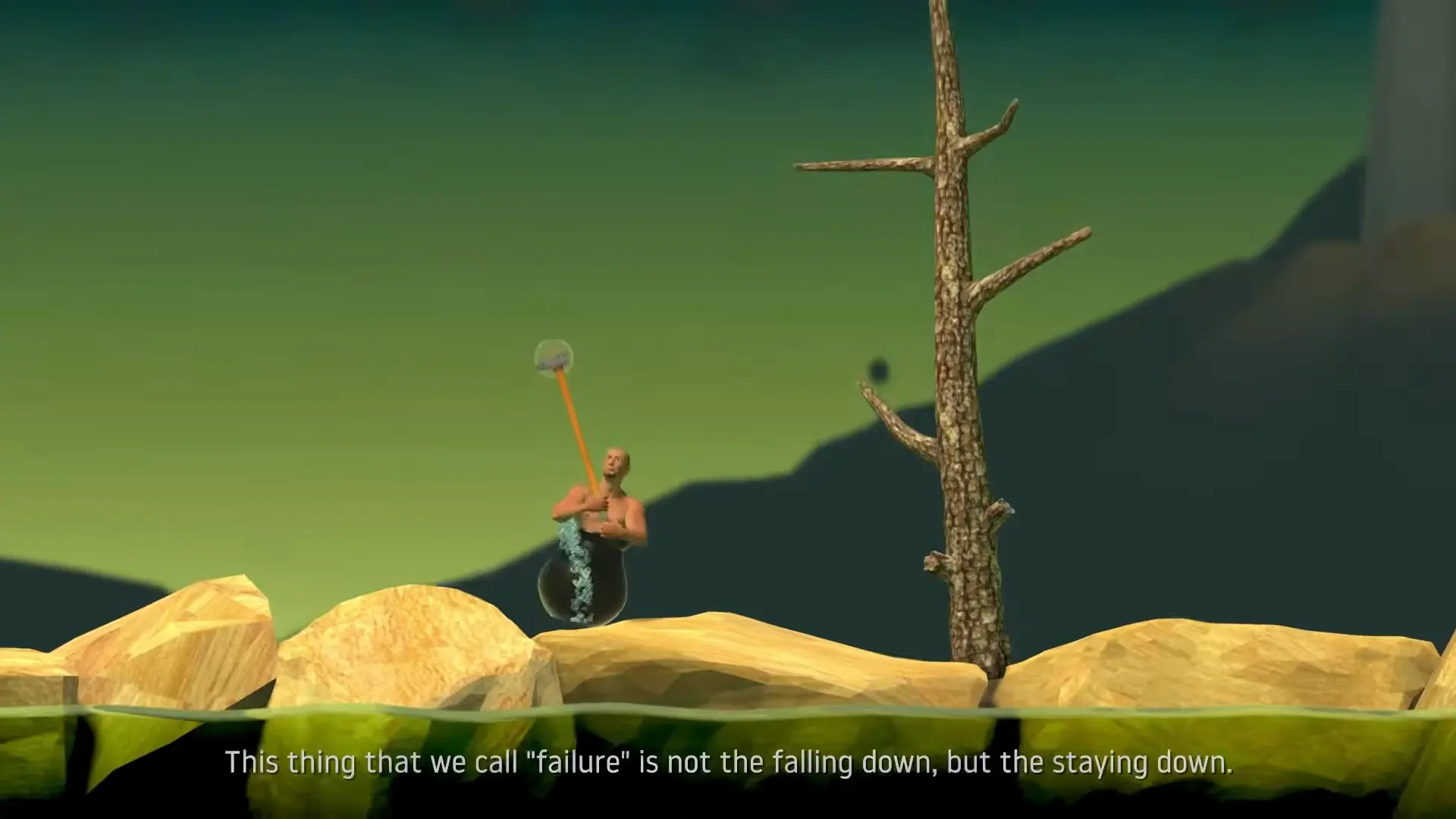
But the true narrative genius happens when you fall. Instead of a 'Game Over' screen, Bennett chimes in with philosophical quotes about failure from Mary Pickford, C.S. Lewis, or Abraham Lincoln. At first, it feels like he is mocking you. I genuinely wanted to yell at my screen when smooth jazz started playing after a massive drop. But as the obsession deepens, you realize he isn't taunting you; he is sitting beside you in the mud. He is trying to teach you that failure isn't the end—it's just part of the climb. That realization turned my frustration into a weirdly beautiful, stubborn determination.
Gameplay: Swing, Slip, and Start Over
The controls are deceivingly simple: you just move the mouse. But mastering that movement is like learning to play an instrument while someone throws rocks at you. The physics are incredibly precise. If you move the mouse too fast, you'll launch yourself backward. If you move it too slow, you won't get enough leverage to pull your cauldron over an old rusted car.
There are specific bottlenecks on the mountain that are burned into my memory. 'The Devil's Chimney,' an impossibly tight vertical shaft where you must carefully push off two walls at once, took me three days to conquer. I would go to sleep thinking about hammer angles. The gameplay forces you to abandon luck. You cannot brute-force your way up the mountain; you have to learn, adapt, and build muscle memory. The sheer euphoria of finally clearing an obstacle that broke you dozens of times is a high that very few other games can deliver.
Atmosphere: Trash, Jazz, and Despair
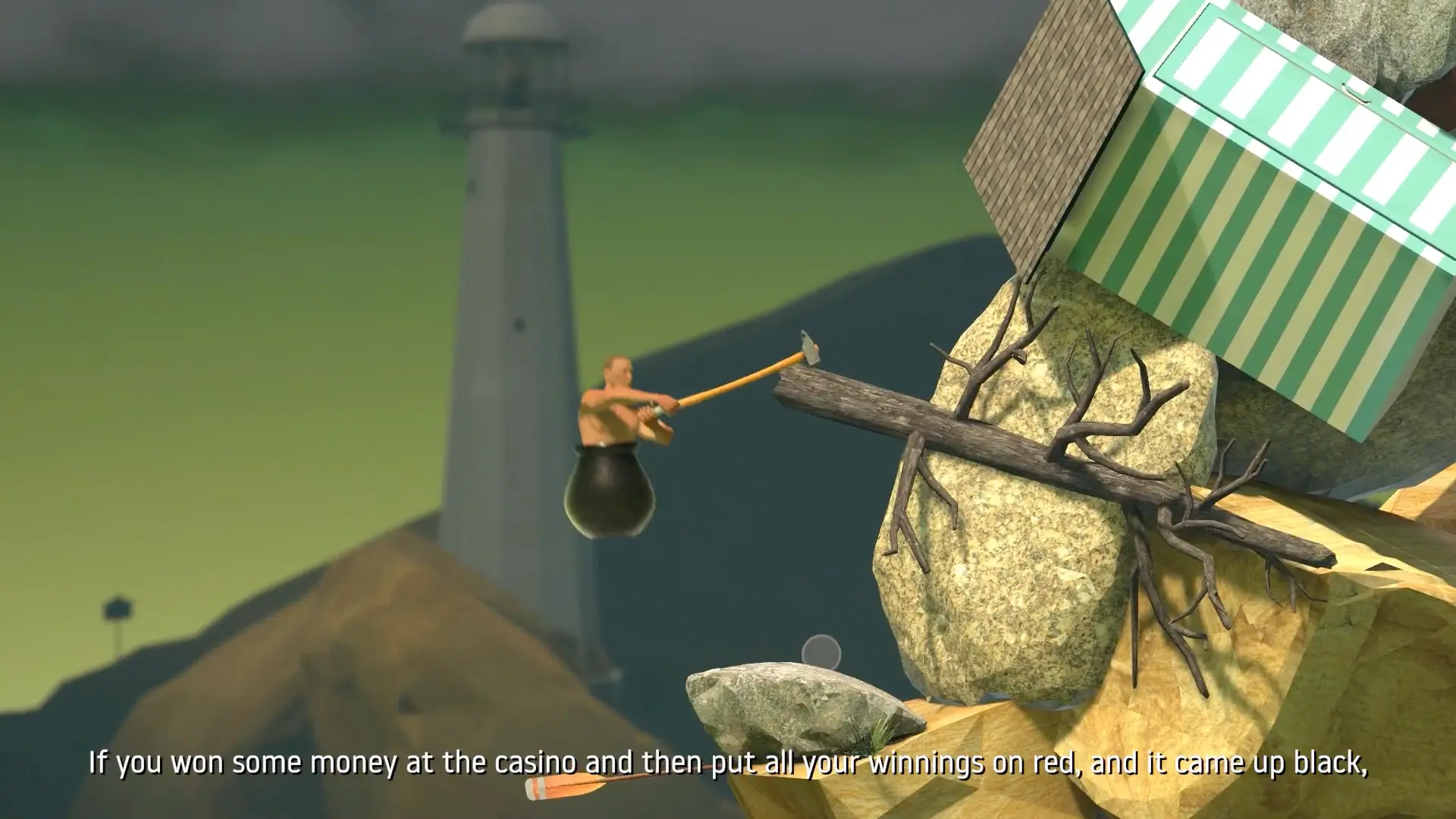
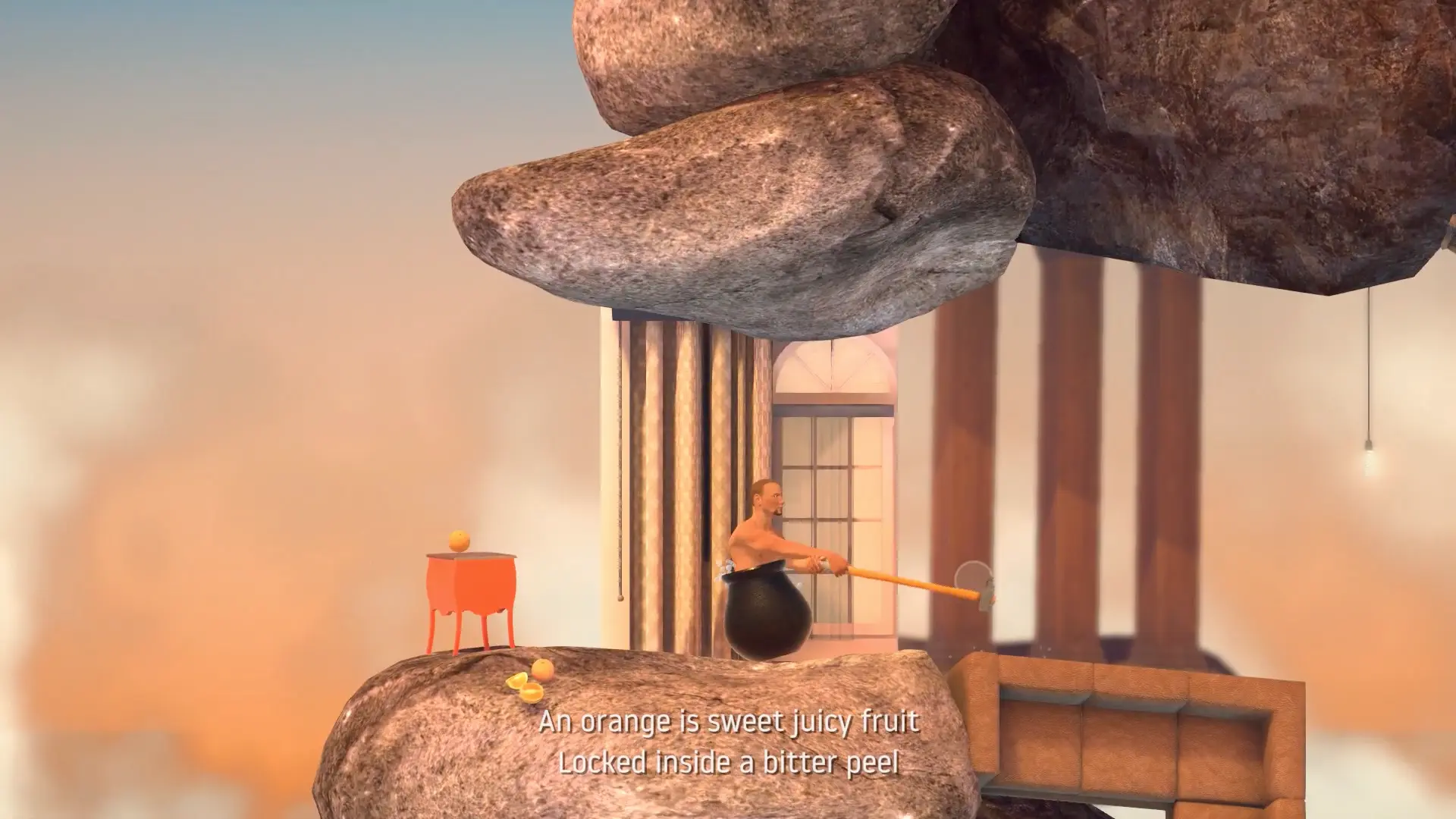
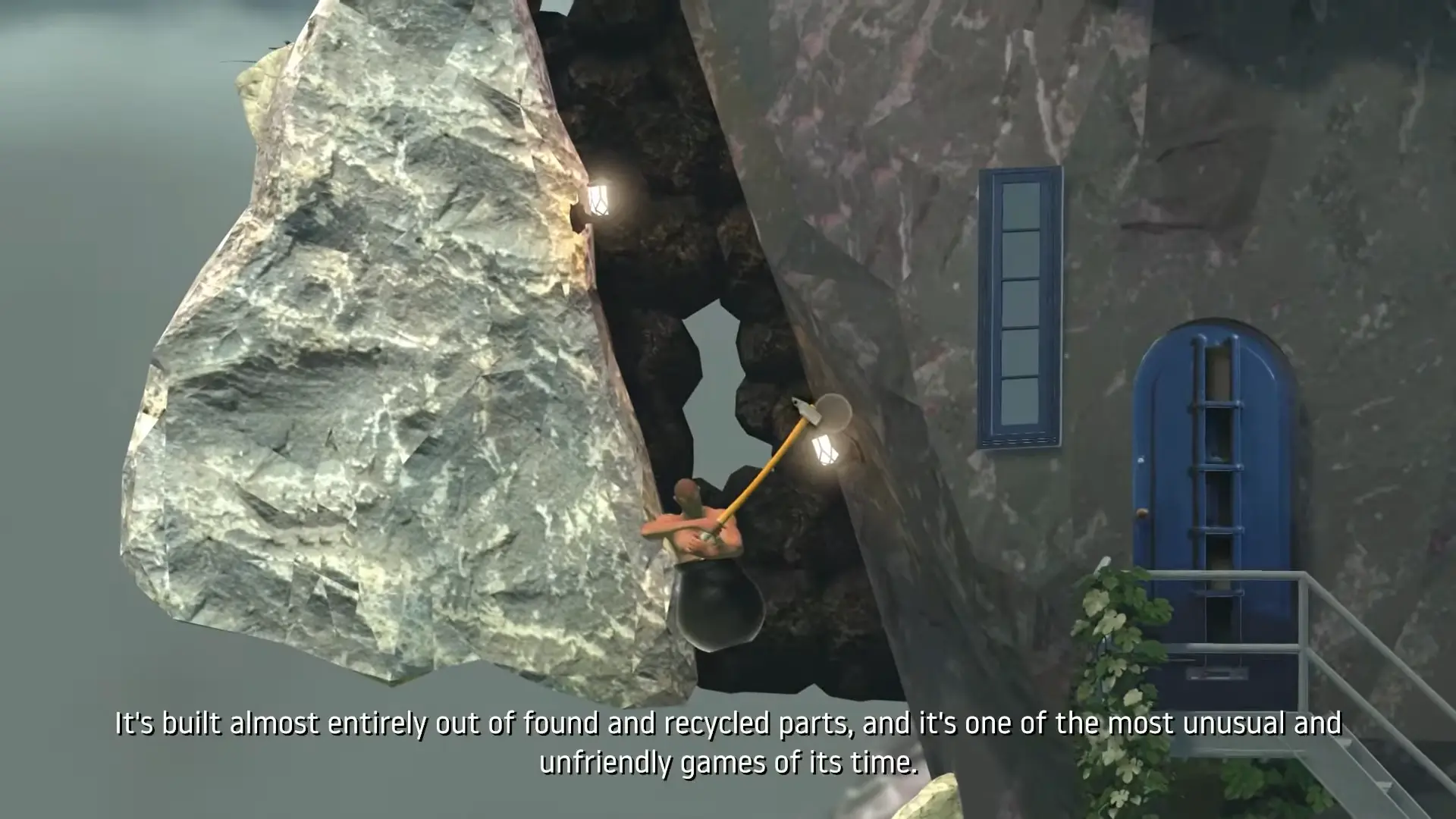
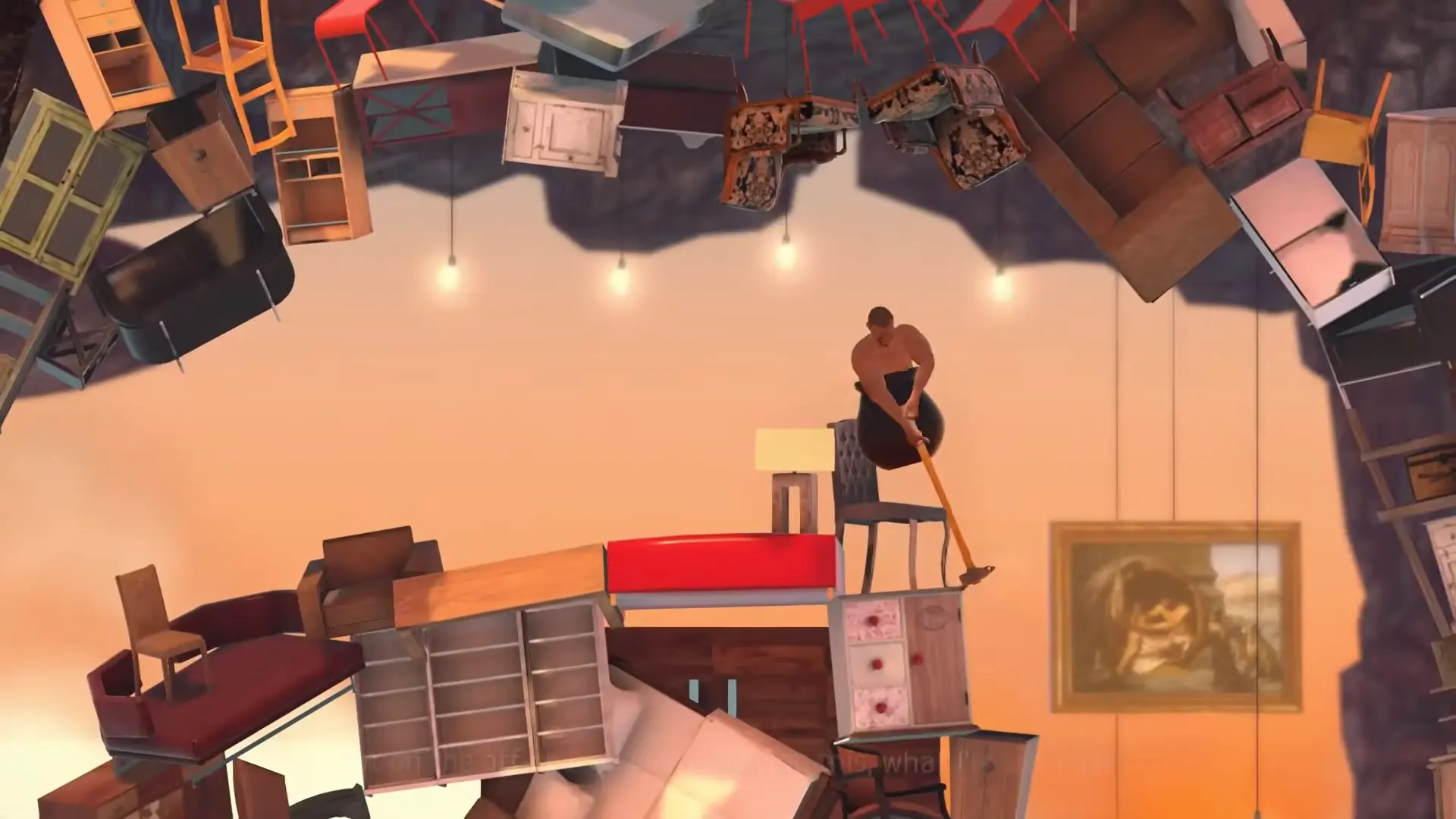
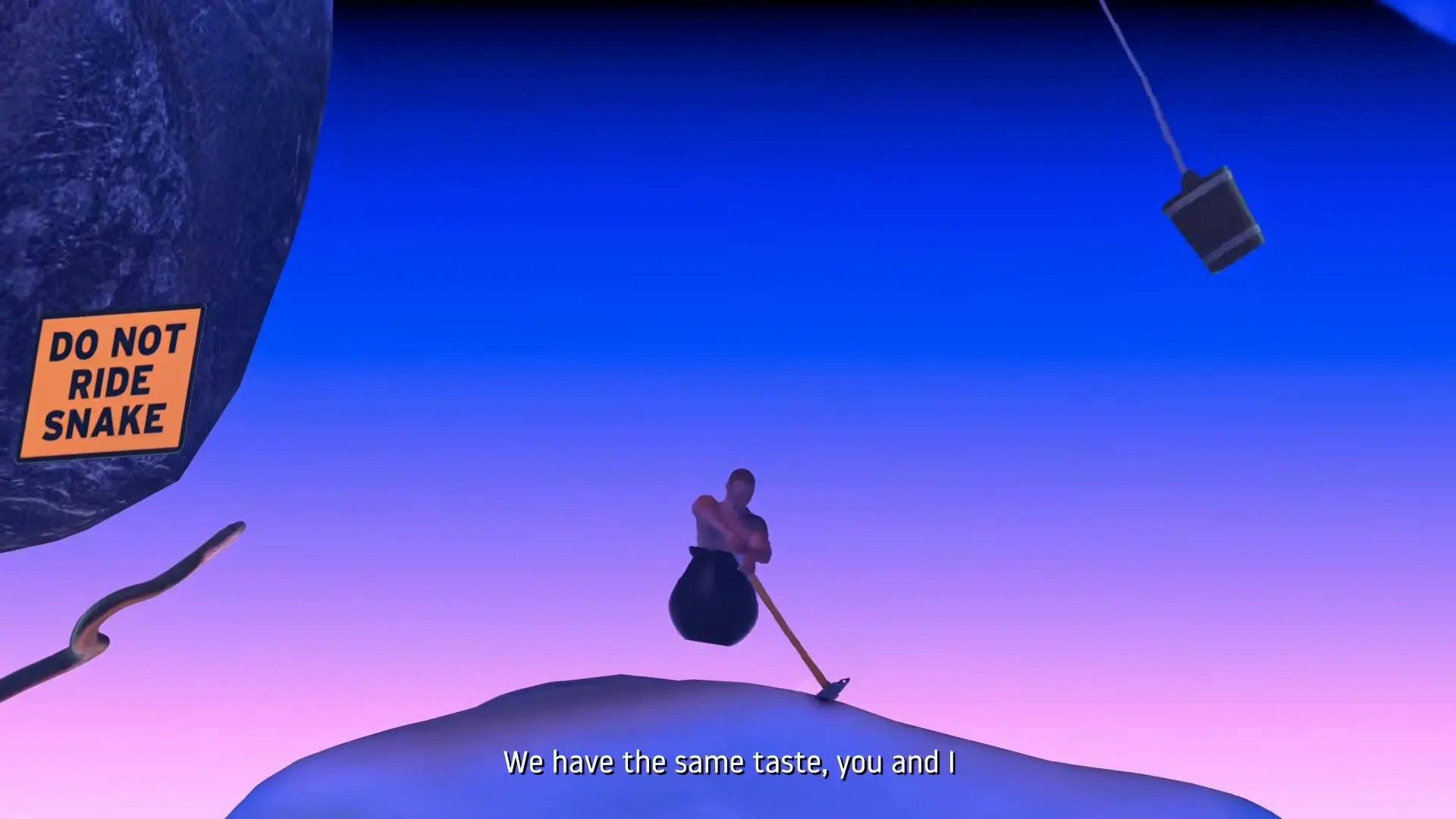
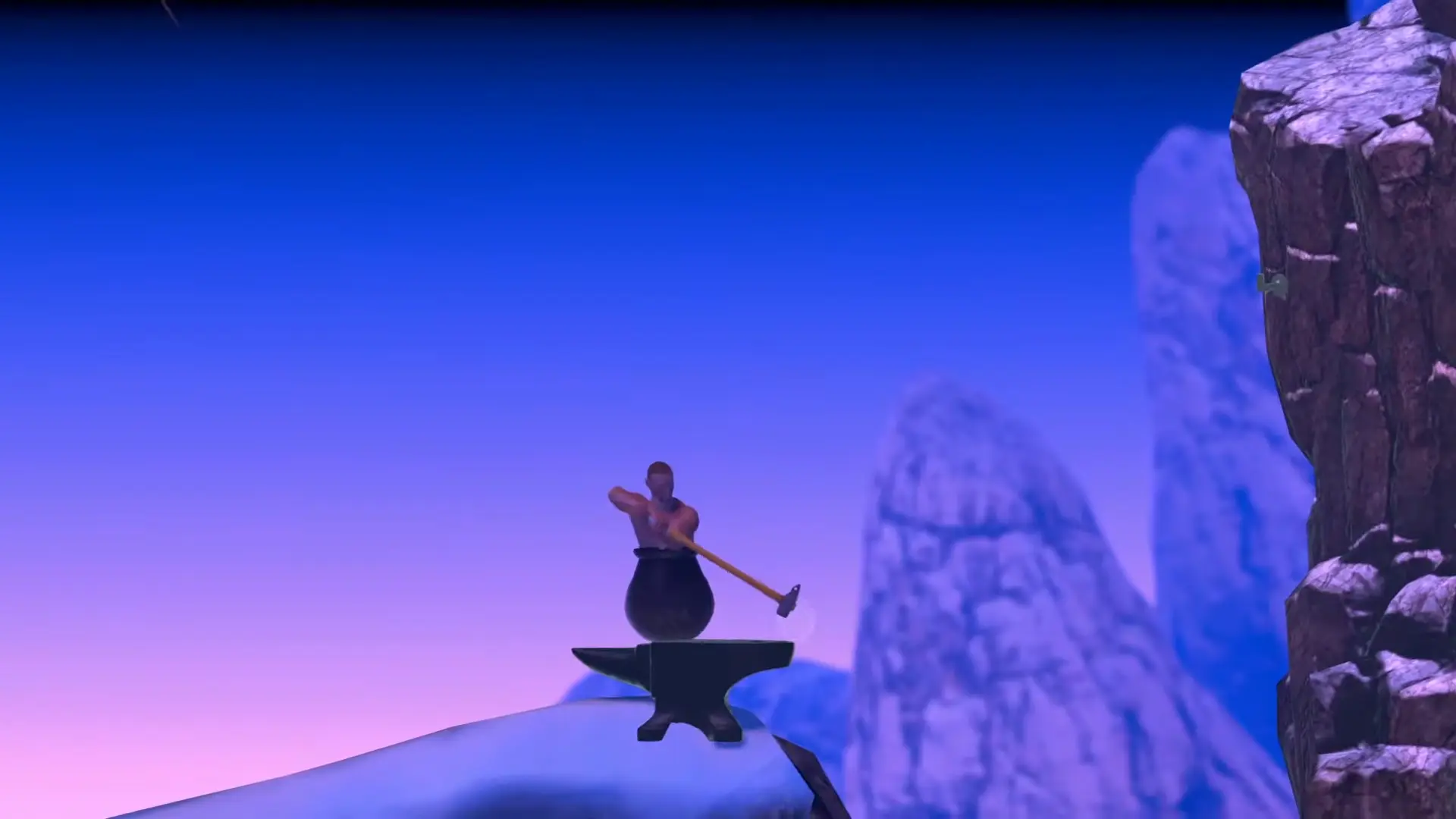
The visual design of Getting Over It is delightfully absurd. The mountain is an amalgamation of reused digital assets—rocks seamlessly transition into a suburban house, which gives way to a construction site, floating anvils, and giant coffee cups. It looks like the desktop recycling bin of a game developer, which perfectly fits Bennett Foddy's commentary on digital permanence and disposable culture.
The sound design is equally isolating and impactful. Most of the time, the only sounds you hear are the scrape of metal on rock, the heavy thud of the cauldron, and Diogenes' occasional grunts of effort. This eerie silence makes the sudden drops even more agonizing. And then, there is the music. The old-school blues and jazz tracks that trigger when you lose massive amounts of progress are perfectly timed to drain whatever adrenaline you had left. It creates an atmosphere that swings wildly between suffocating tension and bizarre, comedic tragedy.
Conclusion: The Summit and the Transformation
I have played hundreds of games in my life, but Getting Over It is one of the few that actually changed my real-life mindset. It is not a fun game in the traditional sense; it is a grueling, obsessive test of character. When you finally stop fighting the physics, when you accept that falling down is just an opportunity to climb back up faster, something clicks in your brain.
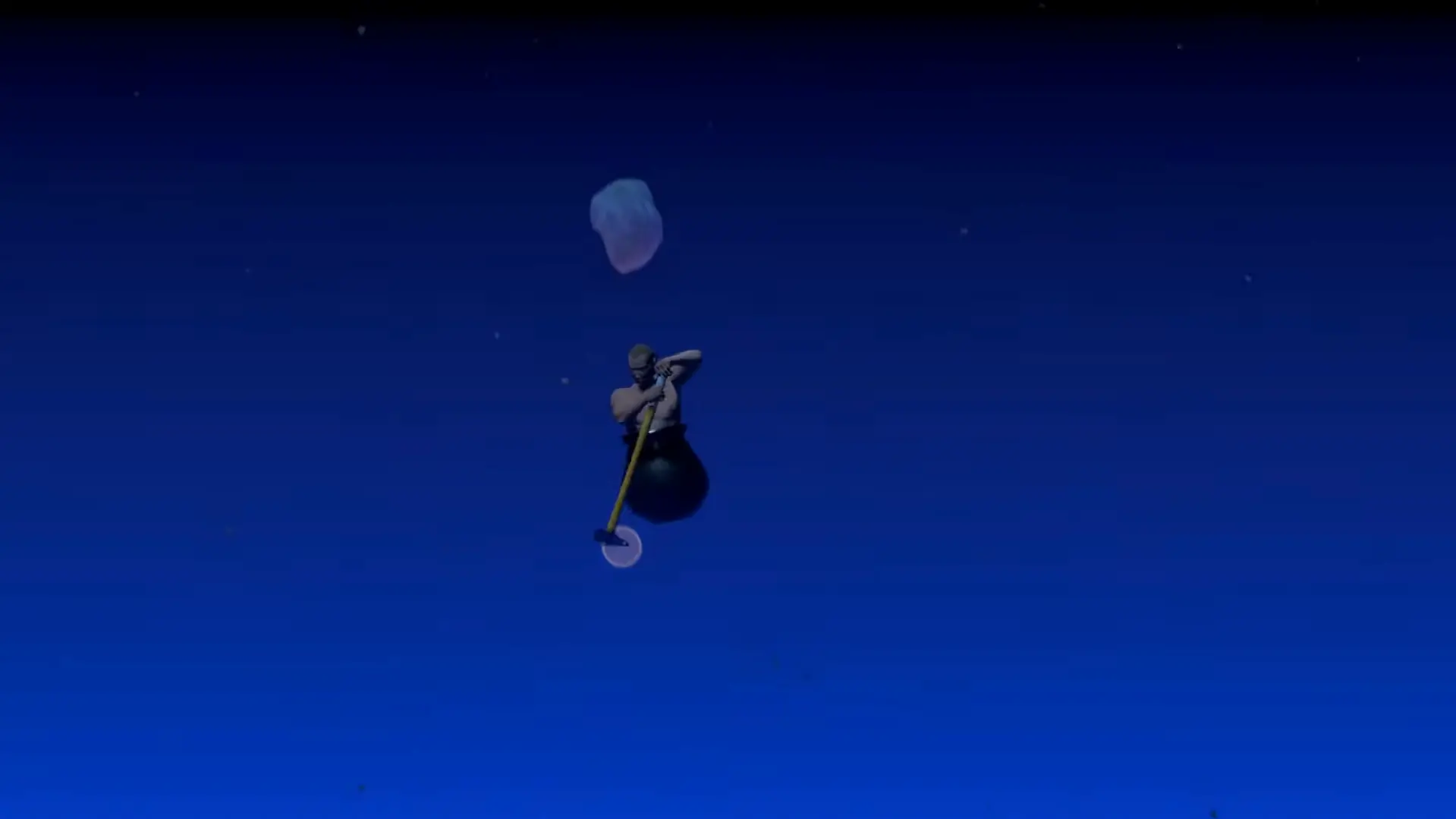
Reaching the top of that mountain and launching yourself into the starry sky is a deeply personal, almost spiritual reward. There are no fireworks, no epic cutscenes, just a quiet acknowledgment that you didn't give up. If you are a player who wants to truly earn a victory and is willing to stare into the abyss of your own impatience, this game will hook you. It will hurt you, it will make you obsessed, and ultimately, it will make you a better climber.