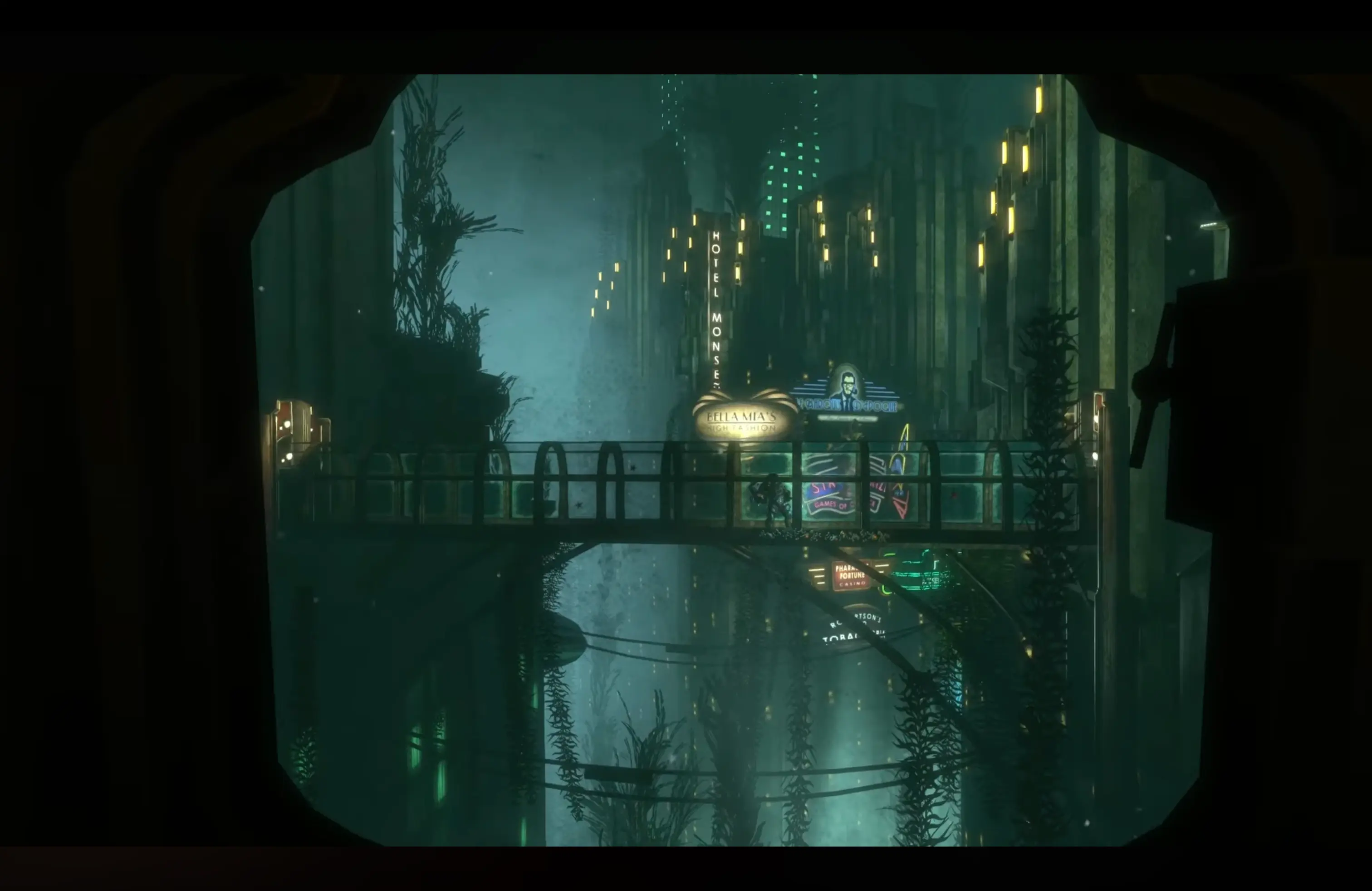
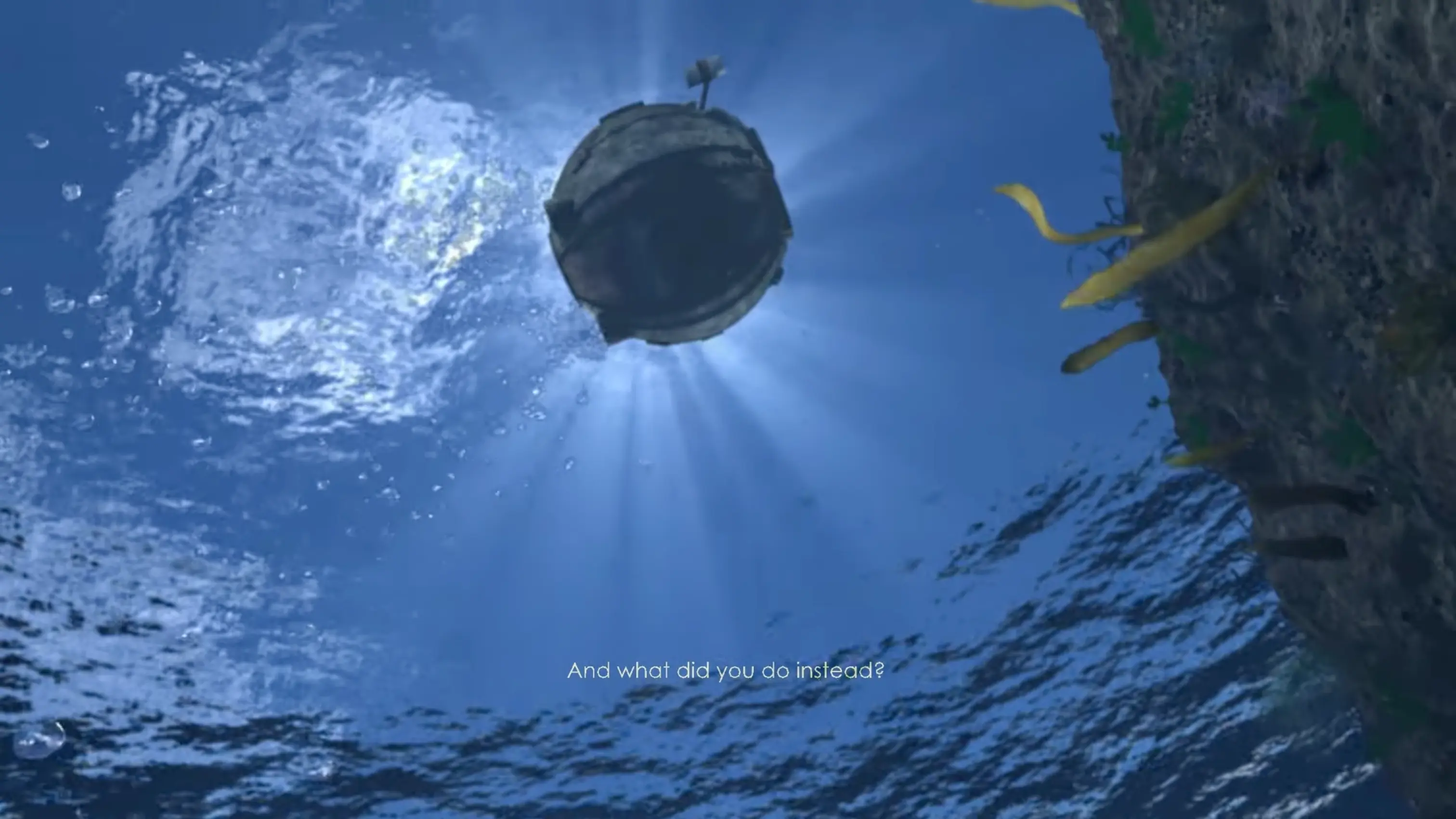
1960. Mid-Atlantic. A commercial airliner crashes into the icy, churning waters of the ocean, leaving you, a man named Jack, as the sole survivor gasping for air amid a sea of burning wreckage. In any other game, this catastrophic opening would be the climax, but in BioShock, it is merely the prologue to one of the most iconic descents in the history of interactive media. Swimming toward a solitary, ominous lighthouse cutting through the dark waves, you enter a bathysphere and are pulled down into the abyssal depths. As the classical strings of Garry Schyman’s score swell, the dark ocean gives way to a sprawling, neon-lit metropolis resting on the ocean floor. A recording plays, featuring the baritone, uncompromising voice of industrialist Andrew Ryan: 'I chose something different. I chose the impossible. I chose... Rapture.'
Released in 2007 by Irrational Games, BioShock did not just arrive on the gaming scene; it shattered the glass ceiling of what first-person shooters were expected to be. It took the frantic, gun-toting mechanics of its predecessors and married them to a deeply intellectual narrative dripping with atmosphere and socio-political critique. Rapture is not merely a setting; it is the game’s primary character. It is an Art Deco wonderland of brass, glass, and hubris, a city built to escape the censorship, taxes, and morality of the surface world. But as your bathysphere docks and you witness a horrific murder in the shadows, it becomes immediately, terrifyingly clear: the utopia has collapsed. The water is leaking in, the citizens have mutated into insane monsters, and the dream of absolute freedom has drowned in a sea of blood and genetic splicing.
About the Game: The Architecture of Objectivism
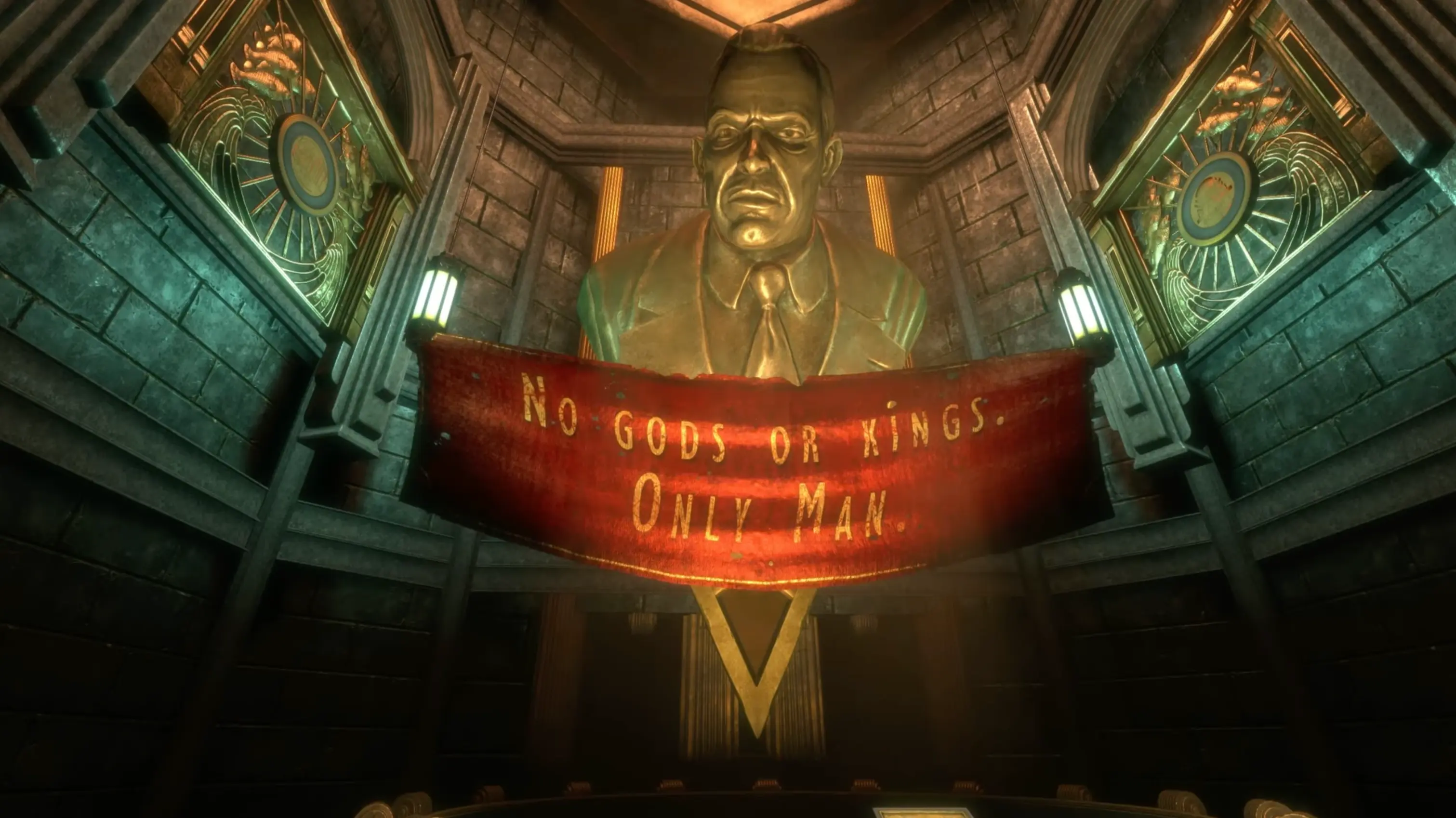
At its intellectual core, BioShock is a devastating interactive critique of Objectivism, the philosophy championed by Ayn Rand which argues for rational self-interest and unregulated, laissez-faire capitalism. Andrew Ryan, Rapture’s founder, is a beautifully tragic analog for Rand’s ideals. He built a city where 'the artist would not fear the censor, where the scientist would not be bound by petty morality, where the great would not be constrained by the small.' However, BioShock forces the player to walk through the logical, horrific conclusion of an unregulated society. Without oversight, the scientists of Rapture discovered ADAM, a sea slug stem cell that allowed for rapid genetic modification.
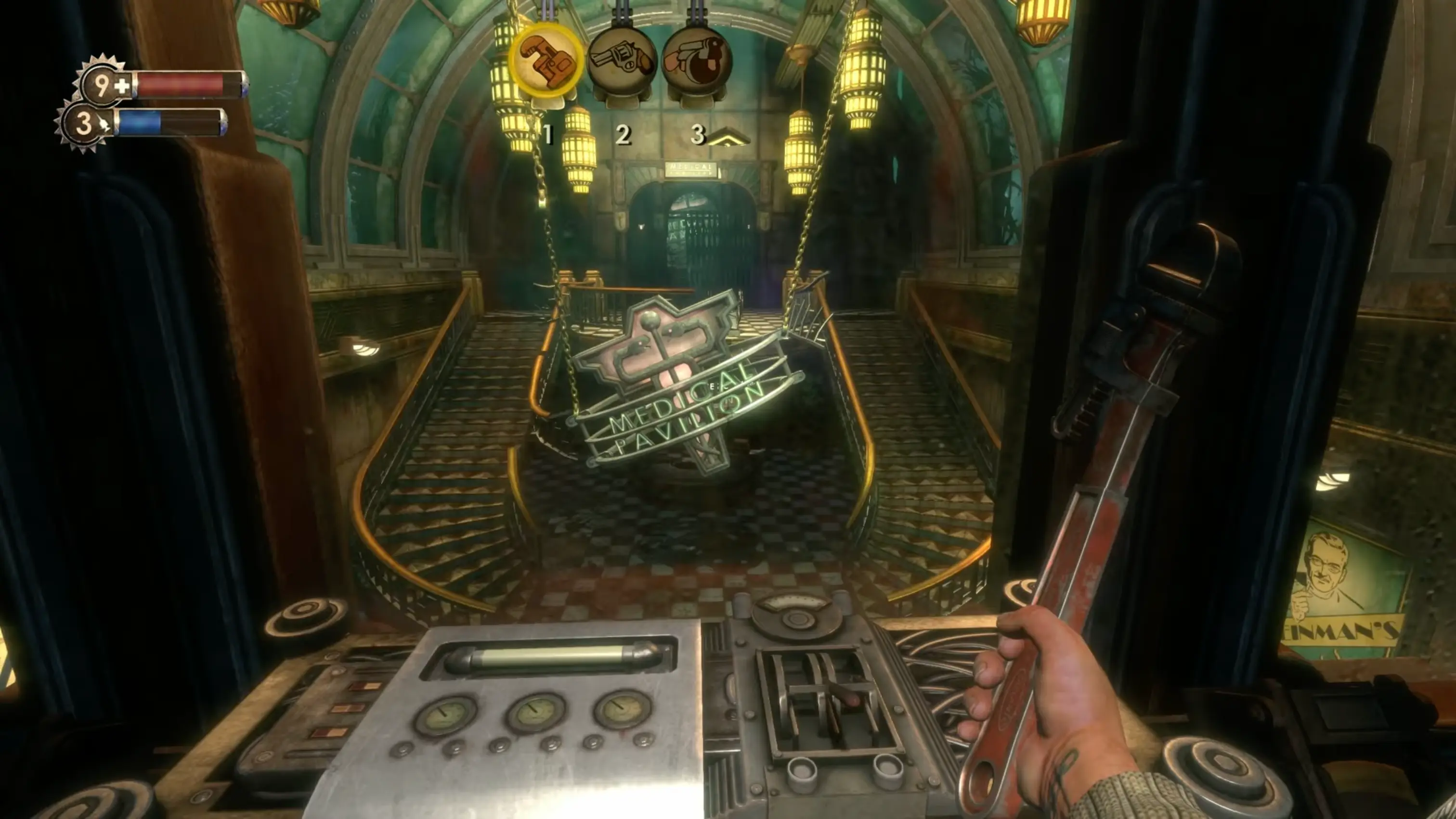
The commodification of human DNA became Rapture’s booming industry and, ultimately, its fatal flaw. The game’s level design acts as a museum of this societal collapse. You wander through the Medical Pavilion, where brilliant surgeons completely lost their minds to unchecked vanity and sadistic experimentation. You trudge through the agrarian utopia of Arcadia, where the very oxygen of the city is held hostage by corporate greed. Every audio diary you find—brilliantly voice-acted snippets of the city’s former citizens—paints a mosaic of a society that consumed itself. The game asks profound questions about free will, the role of government, and the dangers of pure, unfettered ambition, wrapping these complex sociological themes in a layer of rusted metal and pooling seawater. It demands that the player look at the ruined grandeur around them and understand exactly why the city fell: not because of outside forces, but because it rotted from the inside out.
Story: The Illusion of Choice
The narrative structure of BioShock is legendary, primarily for how brilliantly it subverts the very medium of video games. Guided by a working-class revolutionary named Atlas via a shortwave radio, Jack must navigate the horrors of Rapture to survive. Atlas is the friendly voice in the dark, constantly ending his requests with a polite, familiar phrase: 'Would you kindly?' As you follow his directions—fetching keys, clearing blockages, assassinating targets—you feel like a traditional video game protagonist doing exactly what the mission objective dictates.
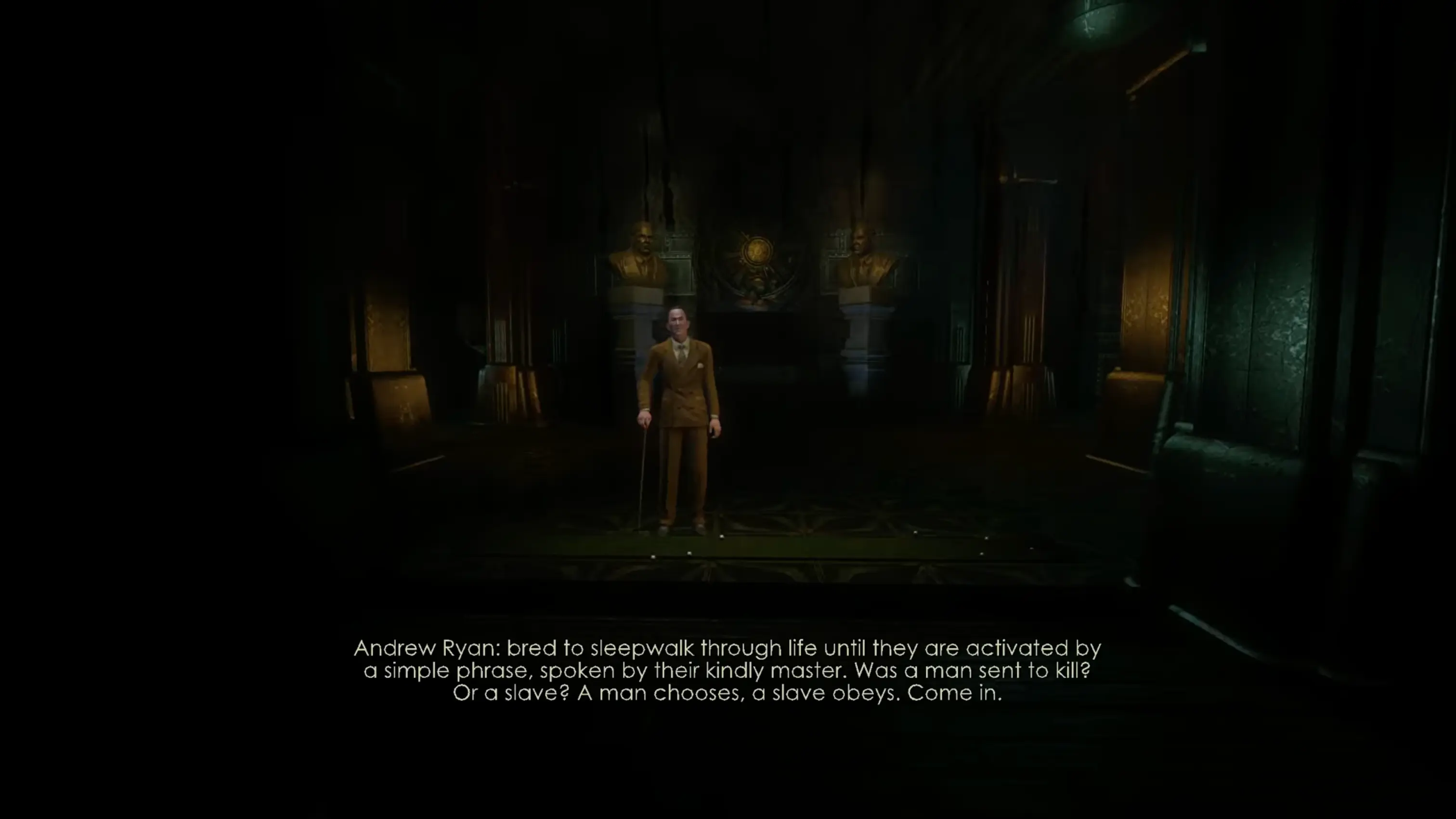
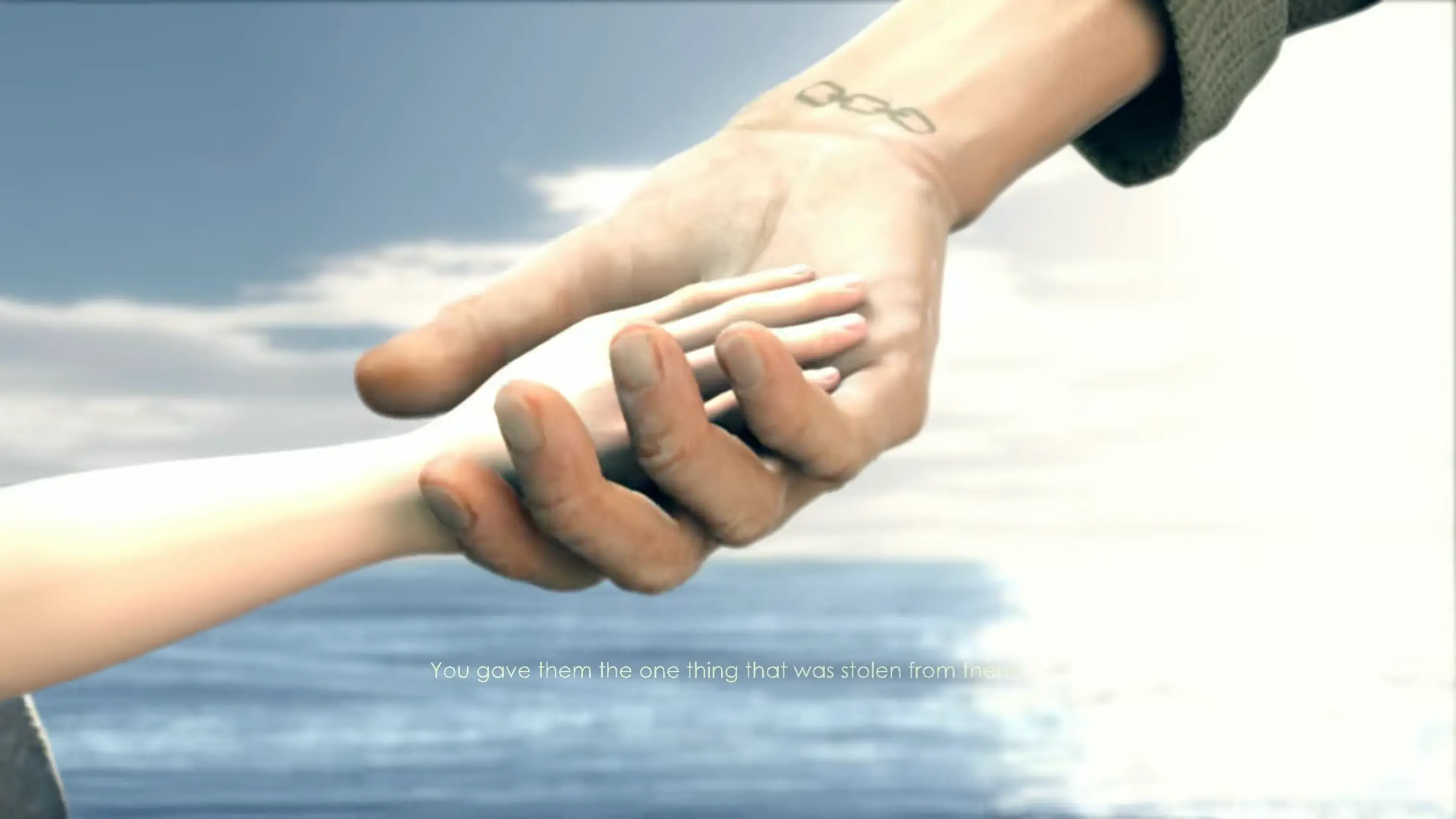
However, when the game’s infamous twist is finally unveiled in the office of Andrew Ryan, it hits with the force of a tidal wave. BioShock deconstructs the player’s agency, turning the mechanical necessity of following quest markers into a horrifying narrative revelation about mind control and conditioning. 'A man chooses, a slave obeys,' Ryan violently declares, forcing the player to realize that they have never had free will at all; they have merely been a puppet on a string, blindly following the commands of the game UI. This twist remains one of the most powerful moments in gaming history because it could only be achieved in an interactive medium. It actively implicates the player in the deception. Beyond this central twist, the game weaves a rich tapestry of secondary characters, from the tragic maternal figures to the haunting, artistic insanity of Sander Cohen, making every corner of the narrative feel incredibly rich and deeply unsettling.
Gameplay: Genetics and Gunpowder
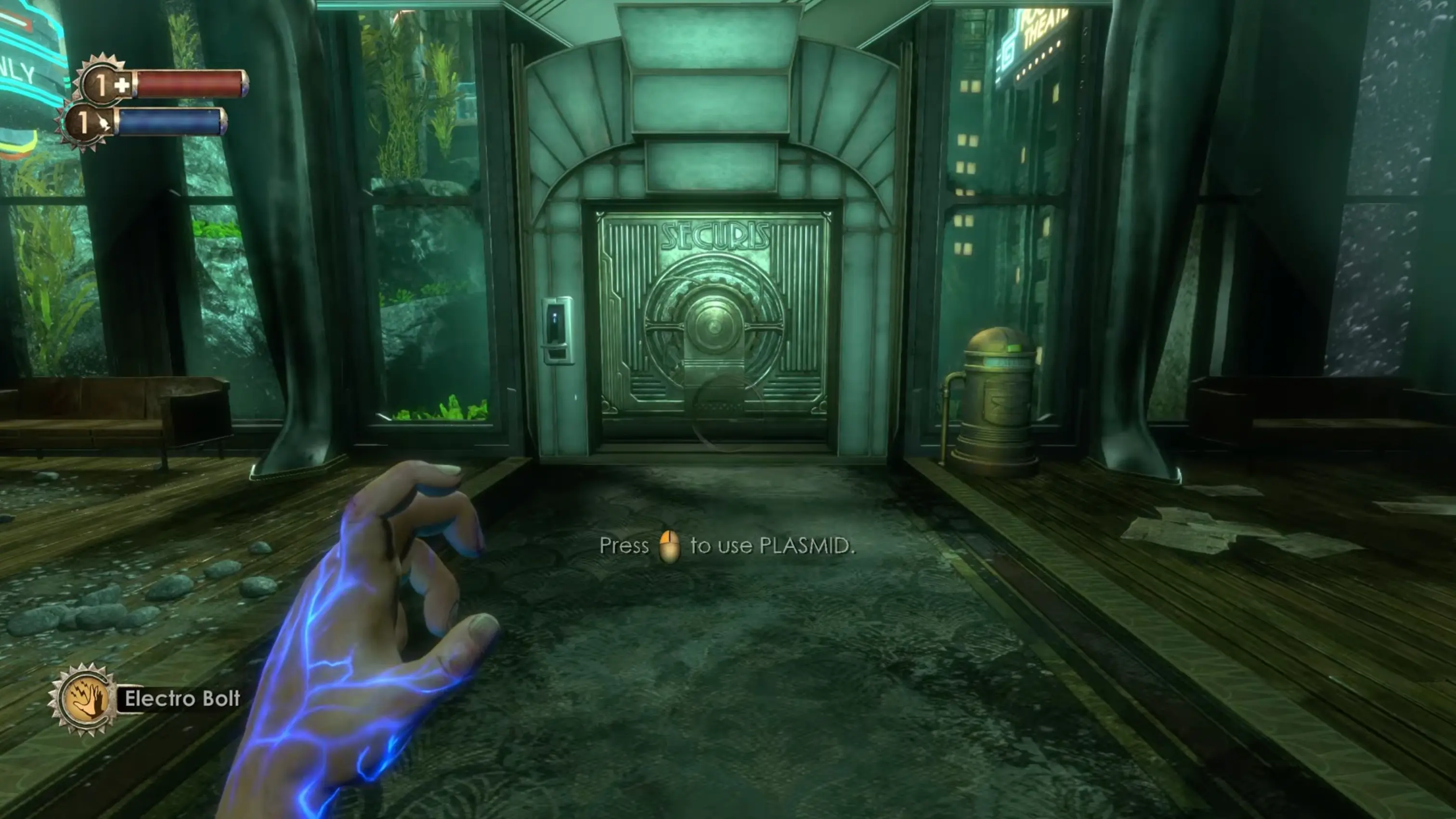
BioShock's combat is heavily defined by the phrase 'the one-two punch.' While you have access to a standard arsenal of 1950s-era firearms like revolvers, tommy guns, and shotguns, the true depth of the gameplay lies in Plasmids—genetic modifications that essentially grant you terrifying magic powers. Emitted from your left hand, these Plasmids allow you to shoot lightning to electrocute enemies standing in water, hurl fireballs to ignite oil spills, or use telekinesis to catch thrown grenades and launch them back. The combat is a kinetic, improvisational sandbox that encourages you to use the environment to your advantage.
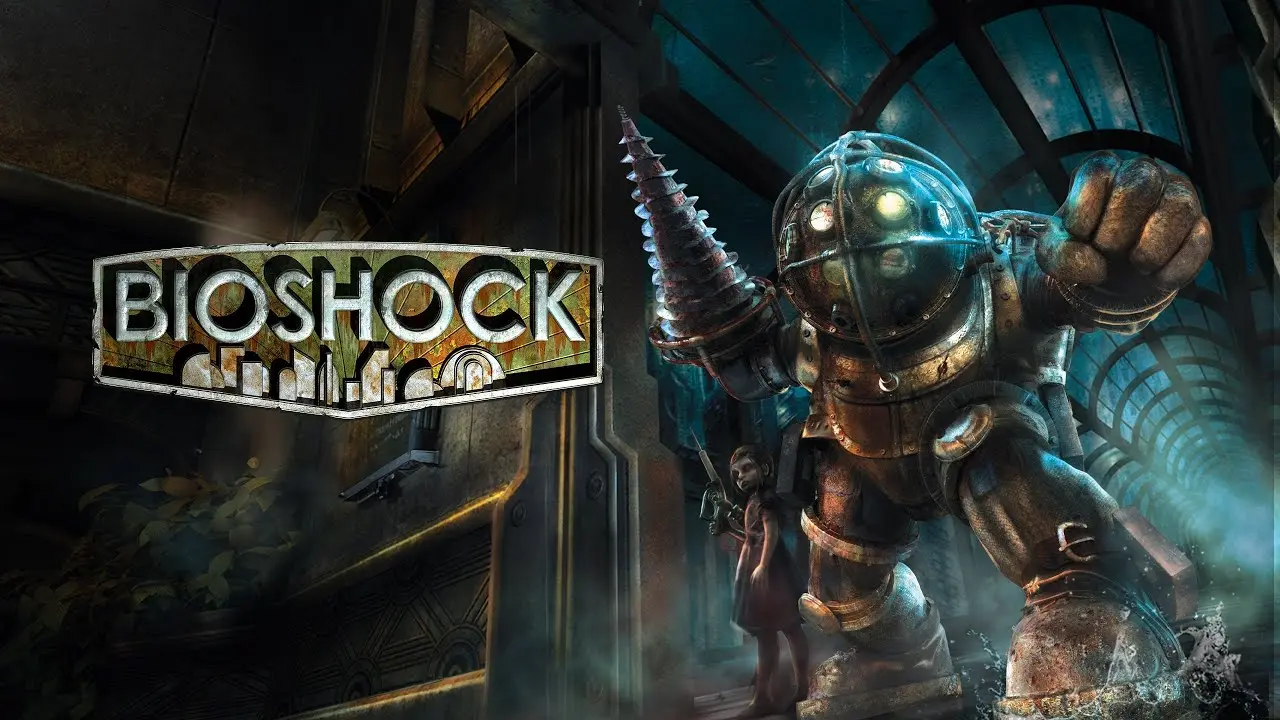
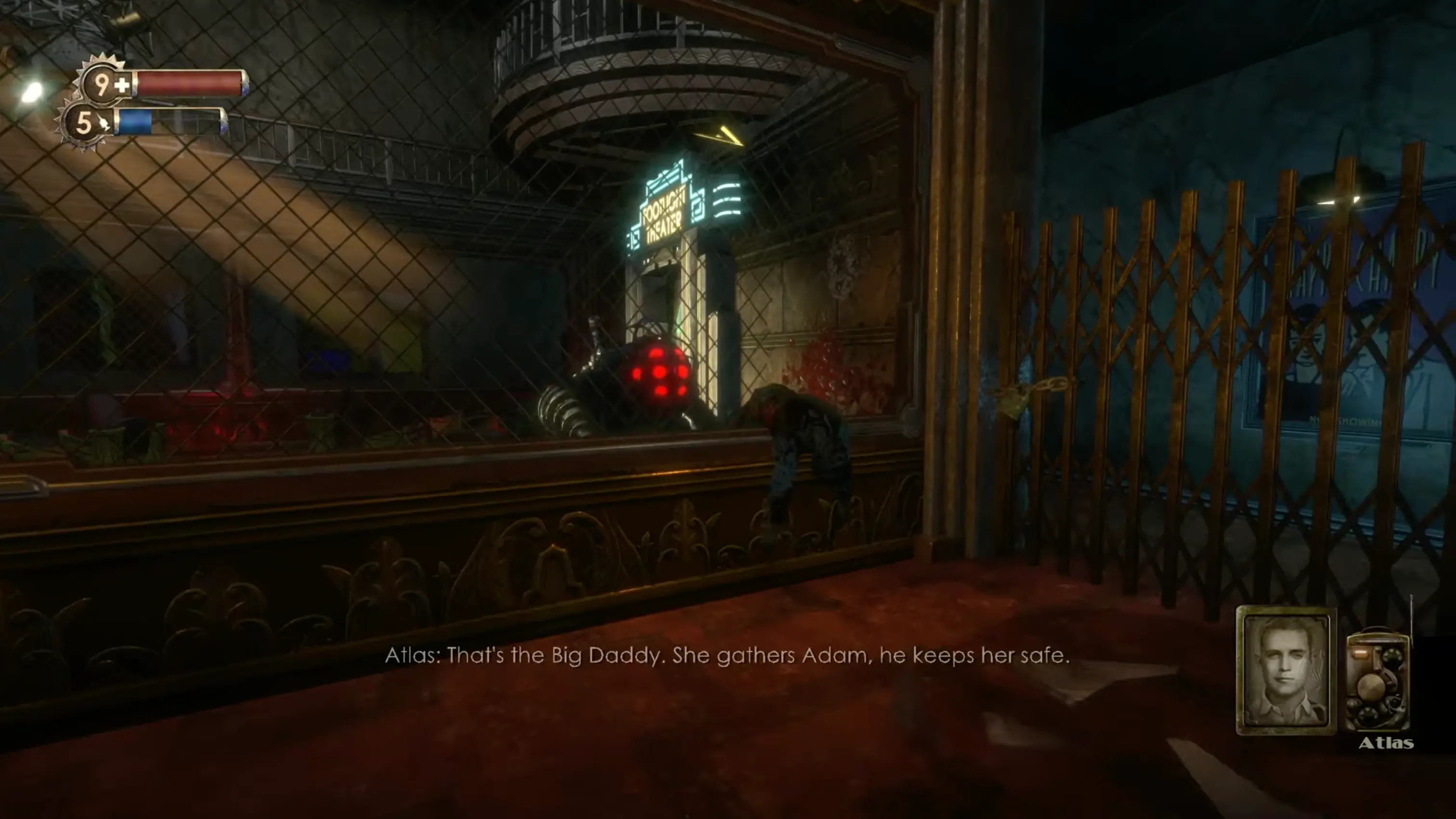
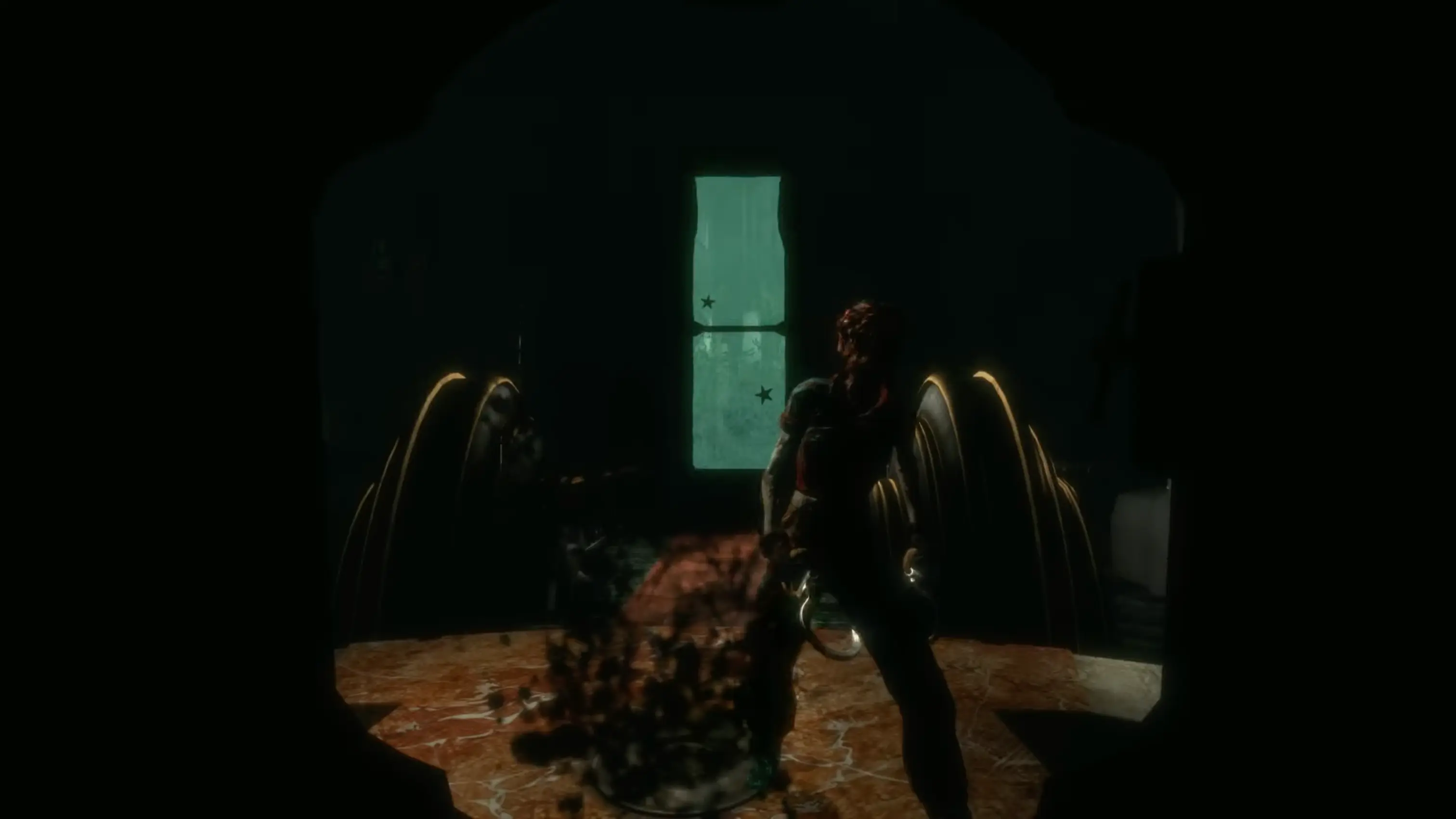
However, the absolute pinnacle of BioShock’s gameplay loop revolves around the terrifying Big Daddies and the eerie Little Sisters. To get the ADAM needed to upgrade your Plasmids, you must harvest it from Little Sisters—genetically altered little girls who wander the city extracting ADAM from corpses. But they are fiercely guarded by Big Daddies: lumbering, heavily armored, genetically modified titans in vintage diving suits equipped with massive drill arms. Engaging a Big Daddy is never a casual affair; it requires preparation, traps, and a massive expenditure of ammunition. Once defeated, the game forces a brutal moral choice upon the player: ruthlessly harvest the Little Sister for a massive payout of ADAM, or rescue her and cure her condition for a smaller, delayed reward. This binary moral system ties the narrative's themes of greed and empathy directly into your character progression, making you constantly weigh your need for survival against your remaining humanity.
Atmosphere & Themes: Art Deco Decay
The visual and auditory design of BioShock is nothing short of a masterpiece. Even years after its release, Rapture remains one of the most fully realized, visually arresting settings in gaming. The Art Deco architecture—characterized by sweeping geometric lines, brass trimmings, and opulent materials—creates a stark, beautiful contrast with the reality of the city's flooded, decrepit state. The water tech was revolutionary for its time; the ocean constantly feels like an encroaching enemy, pouring through cracked glass, pooling in hallways, and distorting the neon lights of the city.
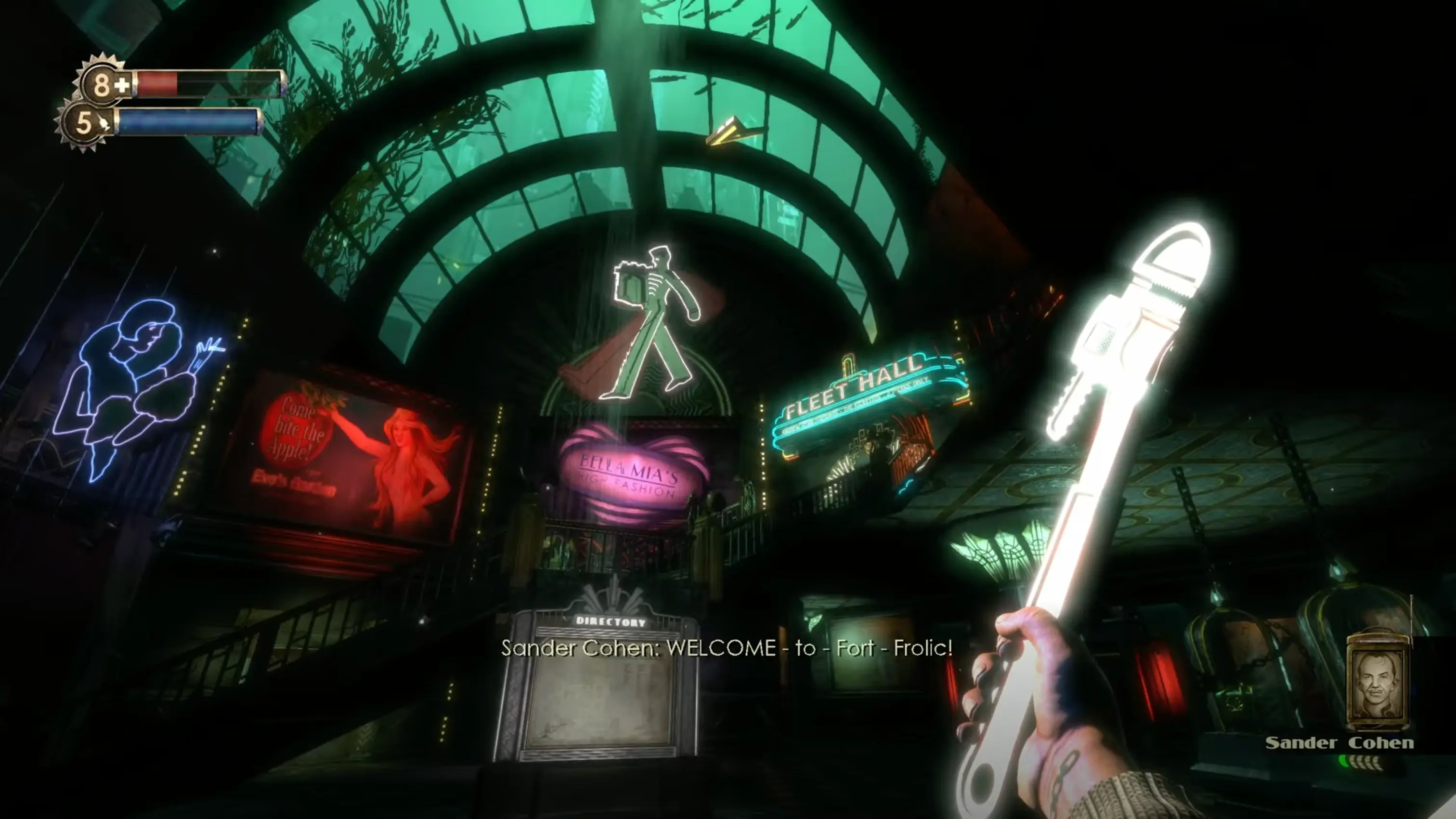
The audio design elevates the horror to a claustrophobic extreme. The soundscape is filled with the agonizing groans of the immense water pressure bending the city's metal frame, the horrific, manic giggling of Spider Splicers crawling on the ceiling, and the distant, heavy thud of a Big Daddy's footsteps shaking the floorboards. Complementing this is the brilliant use of licensed music from the 1930s, 40s, and 50s. Hearing Bobby Darin croon 'Beyond the Sea' or Billie Holiday sing 'God Bless the Child' echoing through a blood-splattered, ruined ballroom creates a haunting dissonance. The atmosphere reaches its absolute peak in Fort Frolic, an entertainment hub ruled by the deranged artist Sander Cohen. Here, the game leans into psychological horror and surrealism, forcing you to participate in Cohen's twisted masterpiece, surrounded by plaster-encased corpses and unsettling waltzes. It is a world that feels incredibly beautiful, deeply sad, and relentlessly hostile.
Conclusion: A Lighthouse in Gaming History
BioShock is not just a great first-person shooter; it is a foundational text in the argument that video games are a potent, mature form of art. It proved that blockbuster, AAA gaming could trust its audience with complex philosophical concepts, political allegory, and morally ambiguous narratives without sacrificing thrilling, satisfying gameplay. Irrational Games crafted an experience that lingers in the mind long after the final credits roll, prompting players to examine their own relationship with authority, agency, and ambition.
Returning to Rapture is a reminder of how rare it is for a game's setting, mechanics, and story to align with such flawless synergy. The tragedy of Andrew Ryan’s underwater utopia serves as a timeless cautionary tale, while the visceral thrill of combining genetic powers with heavy weaponry remains as deeply satisfying today as it was in 2007. BioShock is a landmark achievement, a game that permanently raised the bar for environmental storytelling and narrative ambition. It stands tall like the lighthouse in the middle of the Atlantic—a dark, alluring beacon that invites every generation of gamers to take the plunge, descend into the depths, and discover what happens when mankind tries to build a paradise without morality.
Review Score
Based on overall narrative, gameplay, and experience.