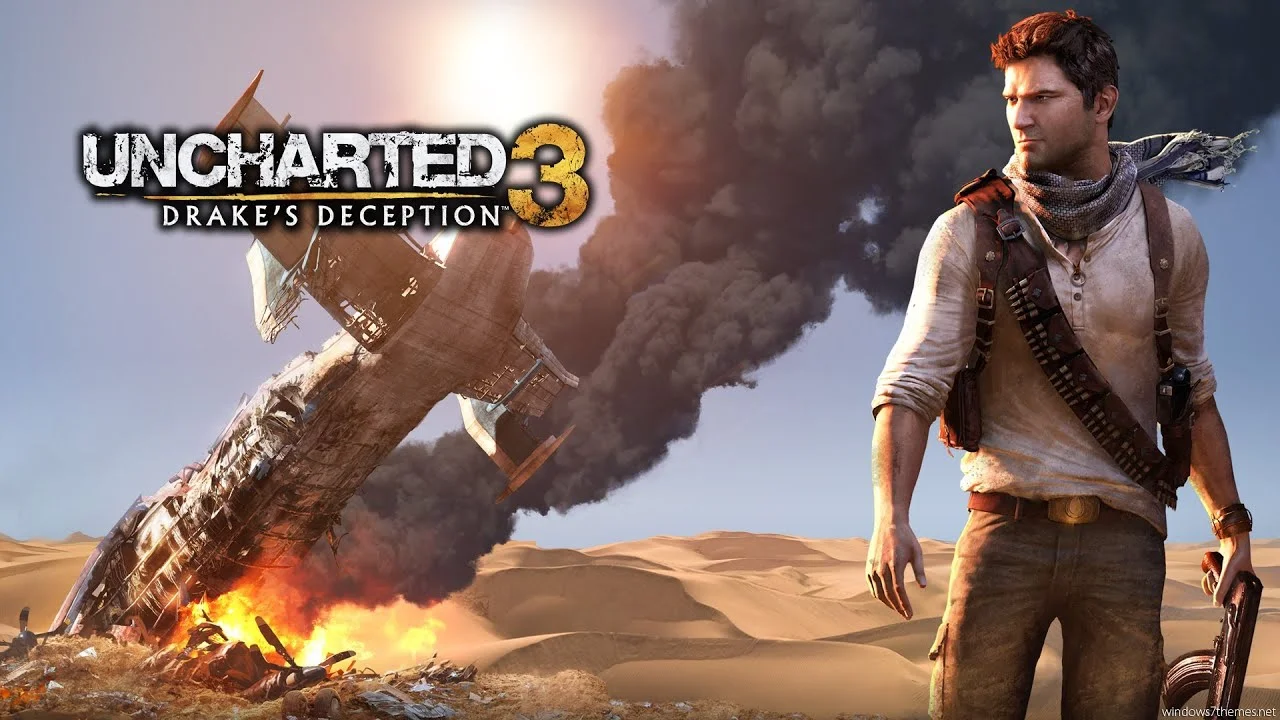
By the time Uncharted 3: Drake's Deception arrived in 2011, the series had already conquered the world. We had searched for El Dorado and found Shambhala, but the third chapter promised something deeper, something more intimate. It wasn't just about the treasure anymore; it was about the man holding the map. We are here for the experience of a story that peels back the layers of a legend to reveal the vulnerable, stubborn, and flawed human underneath. We are here for the gut-punch story of a lifelong friendship tested to its absolute limit and a character arc that finally answers the question: who is Nathan Drake, really?
Uncharted 3 deserves to be overthought because it took the cinematic perfection of its predecessor and infused it with a sense of personal stakes and hallucinogenic wonder. It skips the fluff of generic sequels to deliver a high-stakes investigation into the "Atlantis of the Sands." This isn't just a globe-trotting adventure; it’s a psychological exploration of obsession. From the rain-slicked streets of London to the burning sands of the Rub' al Khali, Naughty Dog crafted a masterpiece of pacing and technical prowess. As an expert video game critic and senior SEO content strategist, I believe this title is the most emotionally resonant in the trilogy, a game that explores the fine line between bravery and recklessness.
About the Game
Uncharted 3: Drake's Deception is the third installment in the critically acclaimed franchise, developed by Naughty Dog and published by Sony Computer Entertainment. Released at the peak of the PlayStation 3’s lifecycle, it pushed the console's architecture further than ever before, specifically targeting improved physics and environmental effects. The game introduced advanced sand, fire, and water technology, making the environments feel more reactive and dangerous than ever. It wasn't just about looking better; it was about feeling the weight of the world collapsing around you.
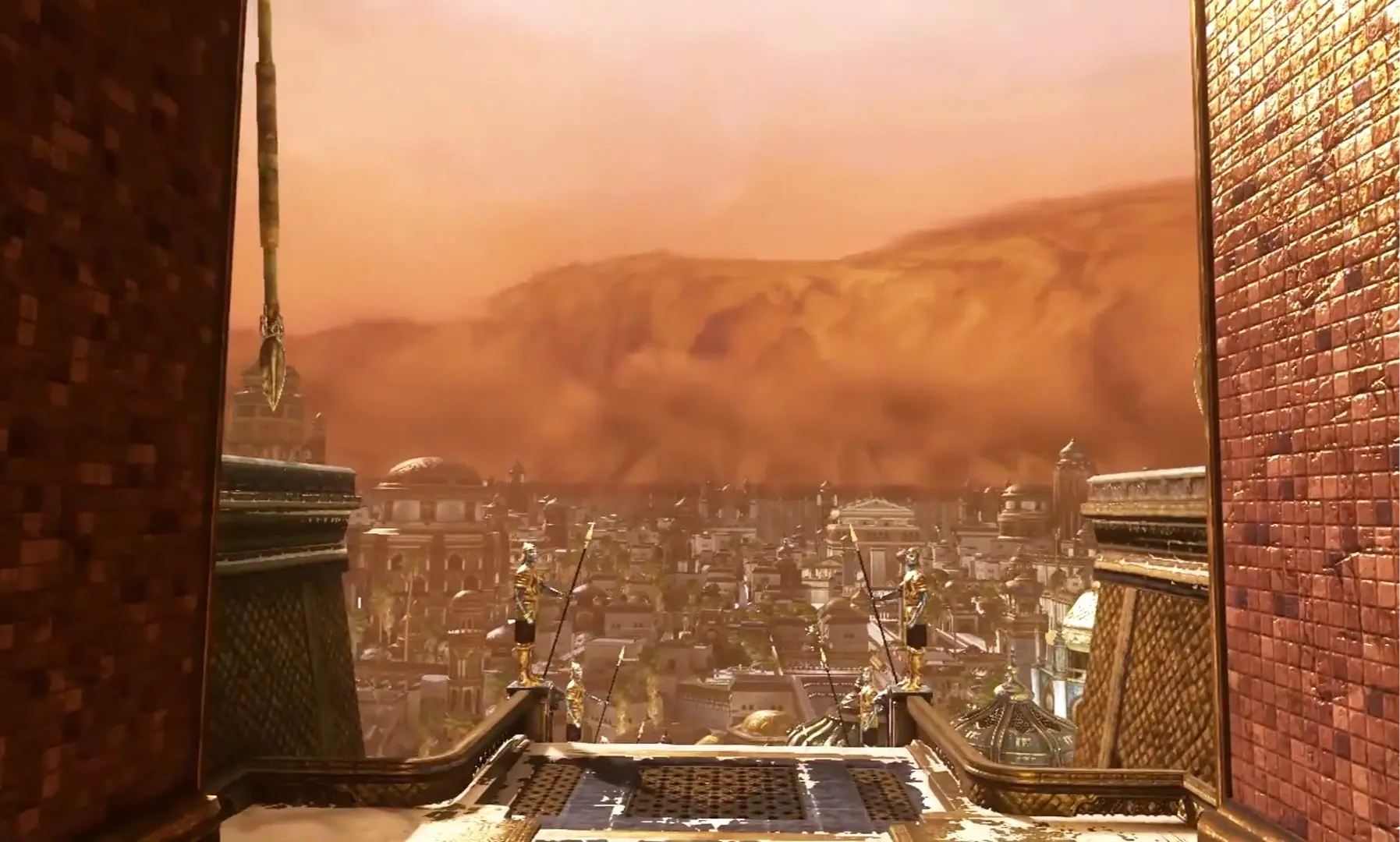
The plot revolves around the search for Iram of the Pillars, a legendary lost city in the Arabian Peninsula. The quest is personal for Nate and Sully, as it involves a mystery left behind by Sir Francis Drake and T.E. Lawrence (Lawrence of Arabia). They find themselves hunted by Katherine Marlowe, the head of a centuries-old secret society, and her ruthless lieutenant, Talbot. The game features a significant overhaul to the hand-to-hand combat system, allowing Nate to take on multiple enemies simultaneously and use his environment in even more creative ways. It also expanded the multiplayer experience with cinematic 'buddy' mechanics and map-altering events, ensuring that the Uncharted experience remained a staple of the gaming community for years.
Story
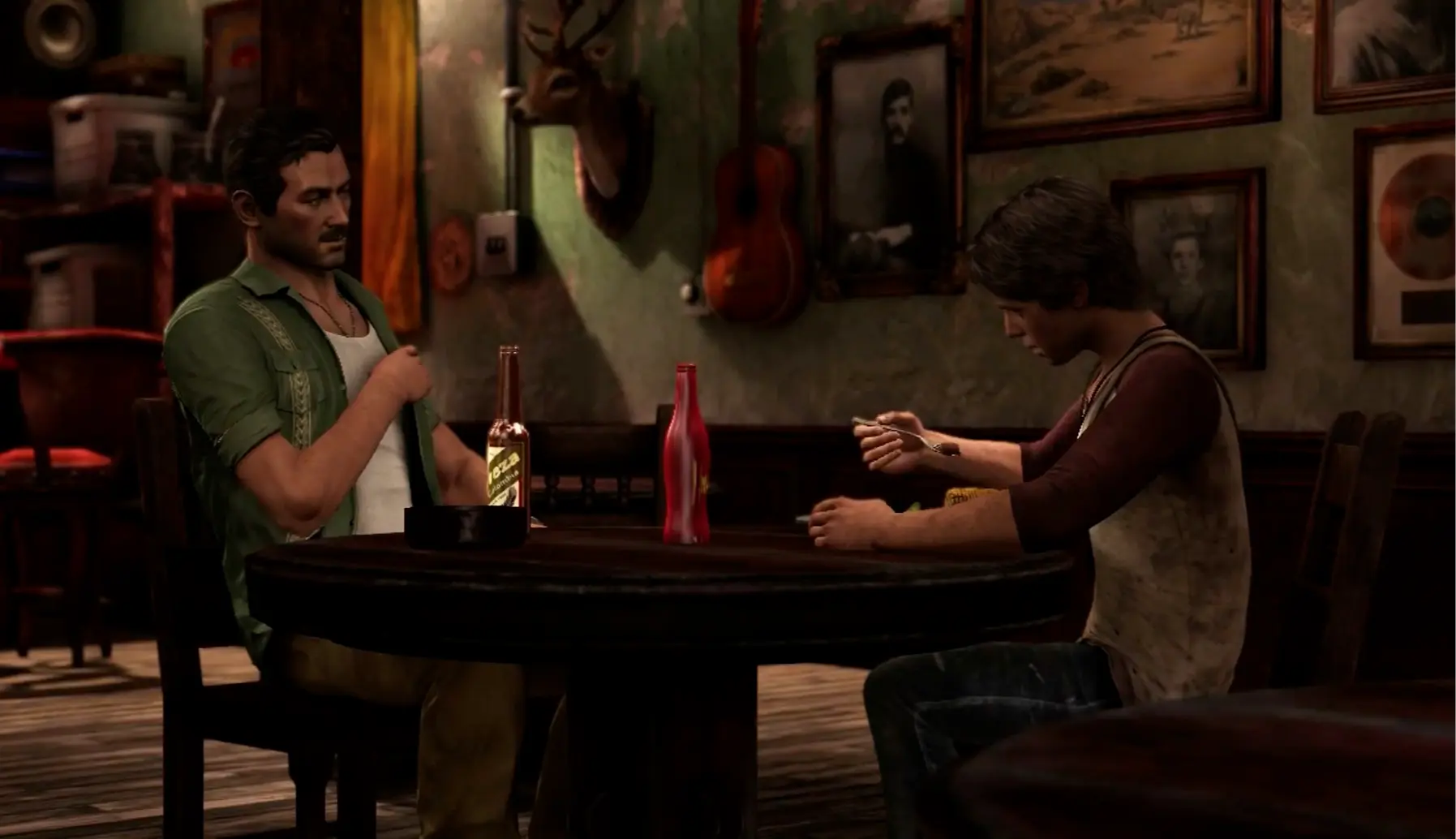
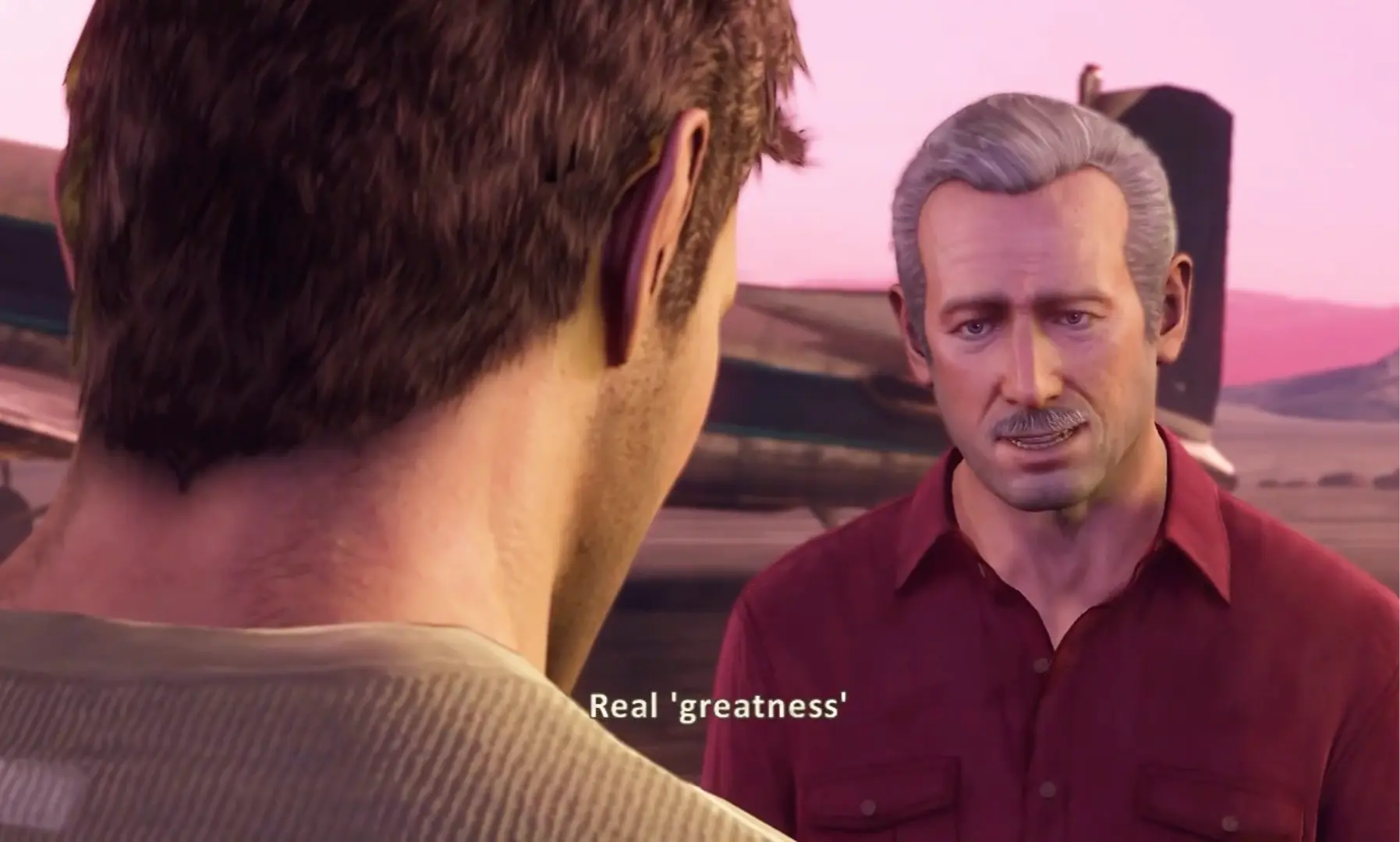
The narrative of Uncharted 3 is a deep dive into the origin of the bond between Nate and Sully. For the first time, we get to see the moment they met—a flashback to a young, runaway Nate in Cartagena, trying to steal a ring that supposedly belonged to Sir Francis Drake. This character arc recontextualizes their entire relationship, showing that Sully is more than a partner; he is the father Nate chose for himself. The story moves through London, France, Syria, and Yemen, as Nate becomes increasingly obsessed with outmaneuvering Marlowe’s secret society.
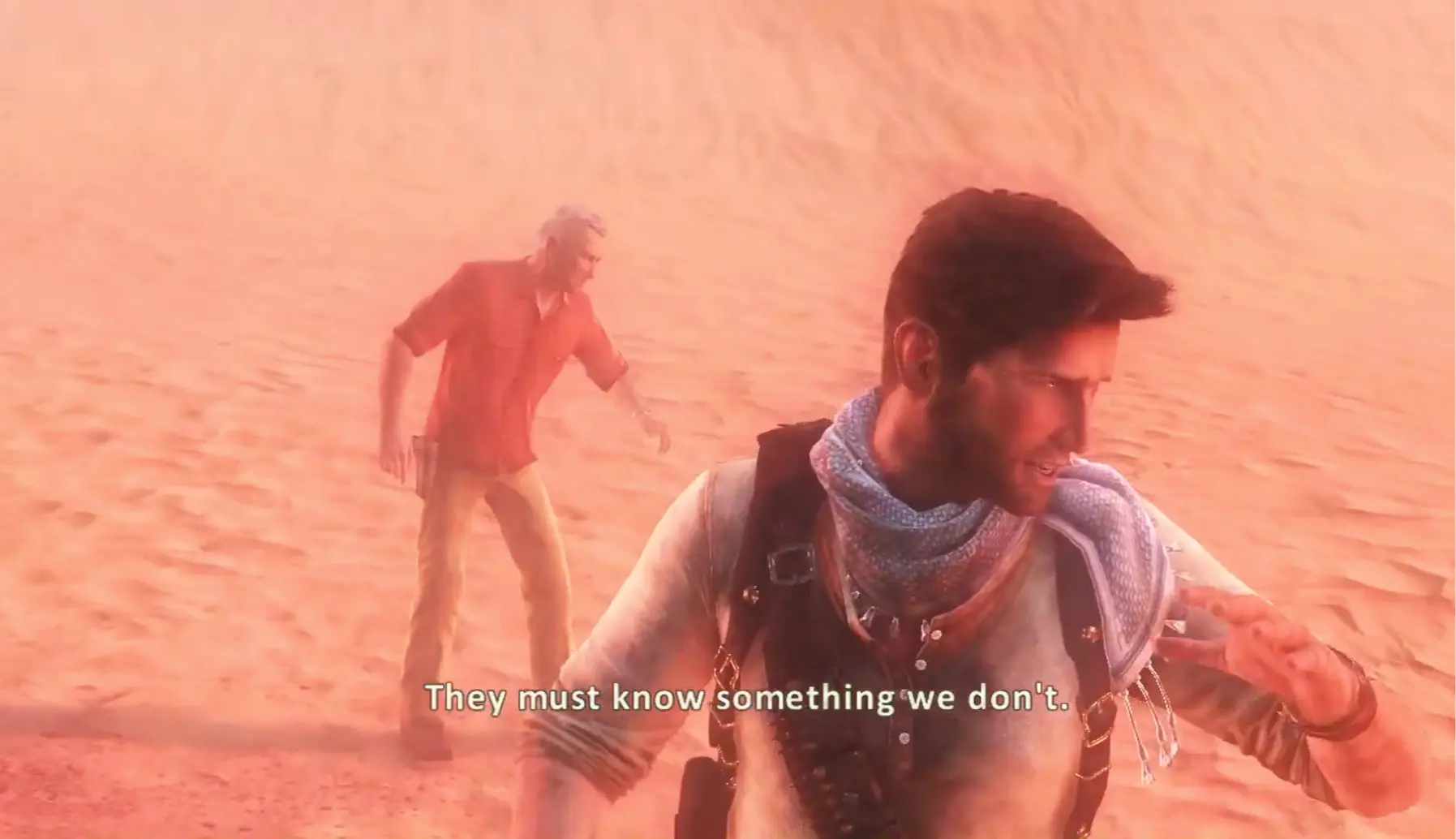
The title 'Drake's Deception' is a double entendre, referring both to the historical secrets Nate is unearthing and the lies he tells himself and his loved ones to justify his dangerous lifestyle. The return of Elena Fisher highlights the friction Nate's obsession causes; he is a man constantly choosing the myth over the reality of a stable life. The gut-punch moments occur in the desert, where Nate is separated from his friends and forced to face the harsh reality of his own insignificance against the vastness of the dunes. The story culminates in a hallucinogenic finale where reality and deception blur, forcing Nate to finally confront the cost of his legacy and decide what is truly worth saving when the sand begins to swallow everything.
Gameplay
Uncharted 3 gameplay is characterized by its 'Environmental Interaction' and improved melee mechanics. Nate can now fight three or four enemies at once, grabbing bottles to smash over heads, kicking enemies away while hanging from ledges, and using a new counter-system that feels fluid and visceral. The shooting mechanics remained tight, but the AI was vastly improved; enemies now flank more aggressively and use the environment to their advantage, forcing the player to be more mobile and tactical.
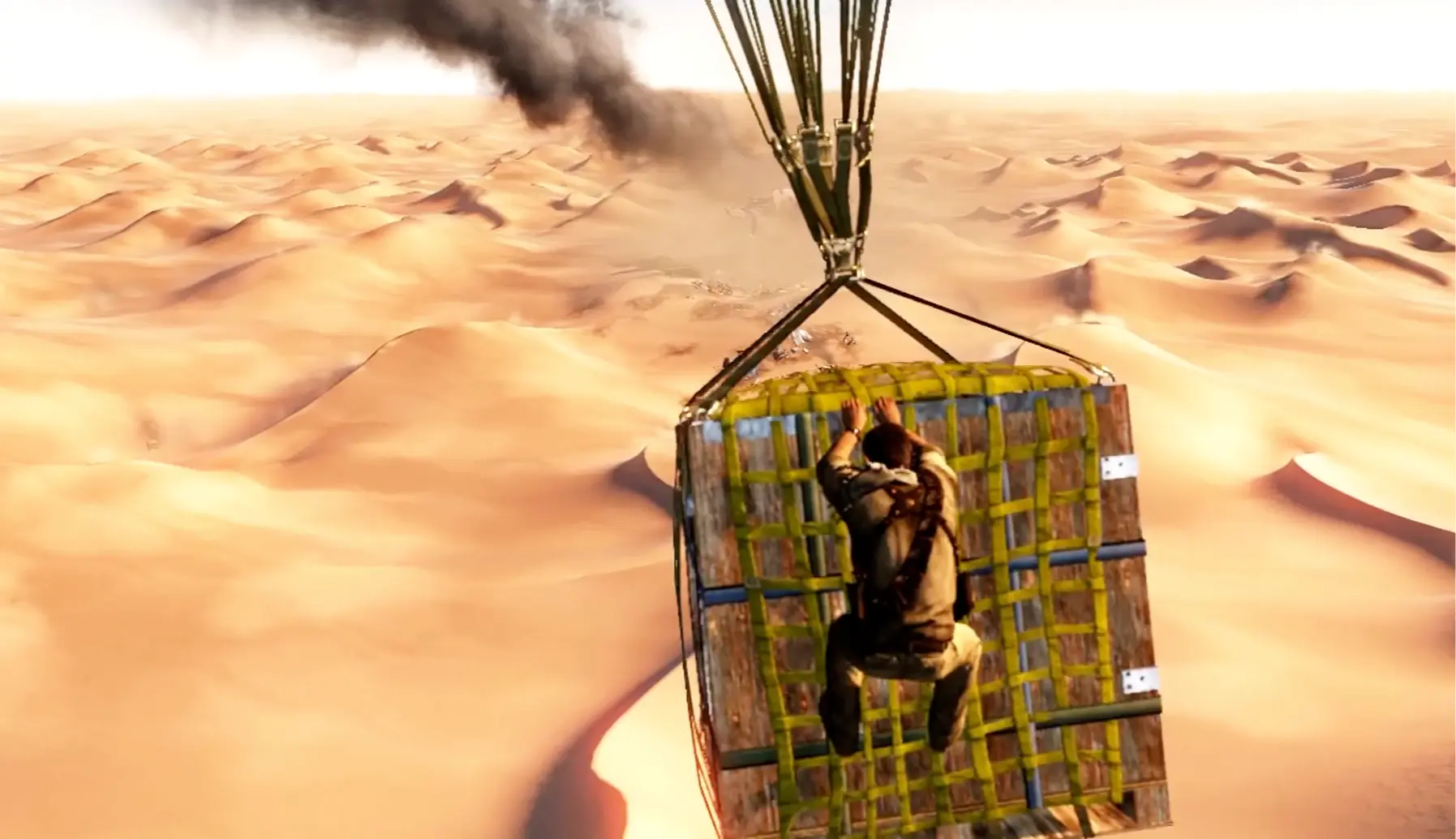
The set-pieces in this entry are some of the most famous in gaming history. The 'Cargo Plane' sequence—where Nate is sucked out of a plane mid-flight and must climb back up a dangling crate—and the 'Sinking Cruise Ship' are technical marvels. In the cruise ship level, the entire environment actually tilts and rotates in real-time as the ship floods, forcing the player to navigate corridors that have become vertical shafts. Traversal is more physical than ever; Nate reacts to the heat, the cold, and the exhaustion, stumbling in the sand and leaning against walls for support. The puzzles are more intricate, utilizing lighting and shadows to reveal hidden paths, reflecting the game's theme of deception and hidden truths. This synergy of physics, AI, and narrative-driven action creates a gameplay loop that is constantly surprising and consistently intense.
Atmosphere & Themes
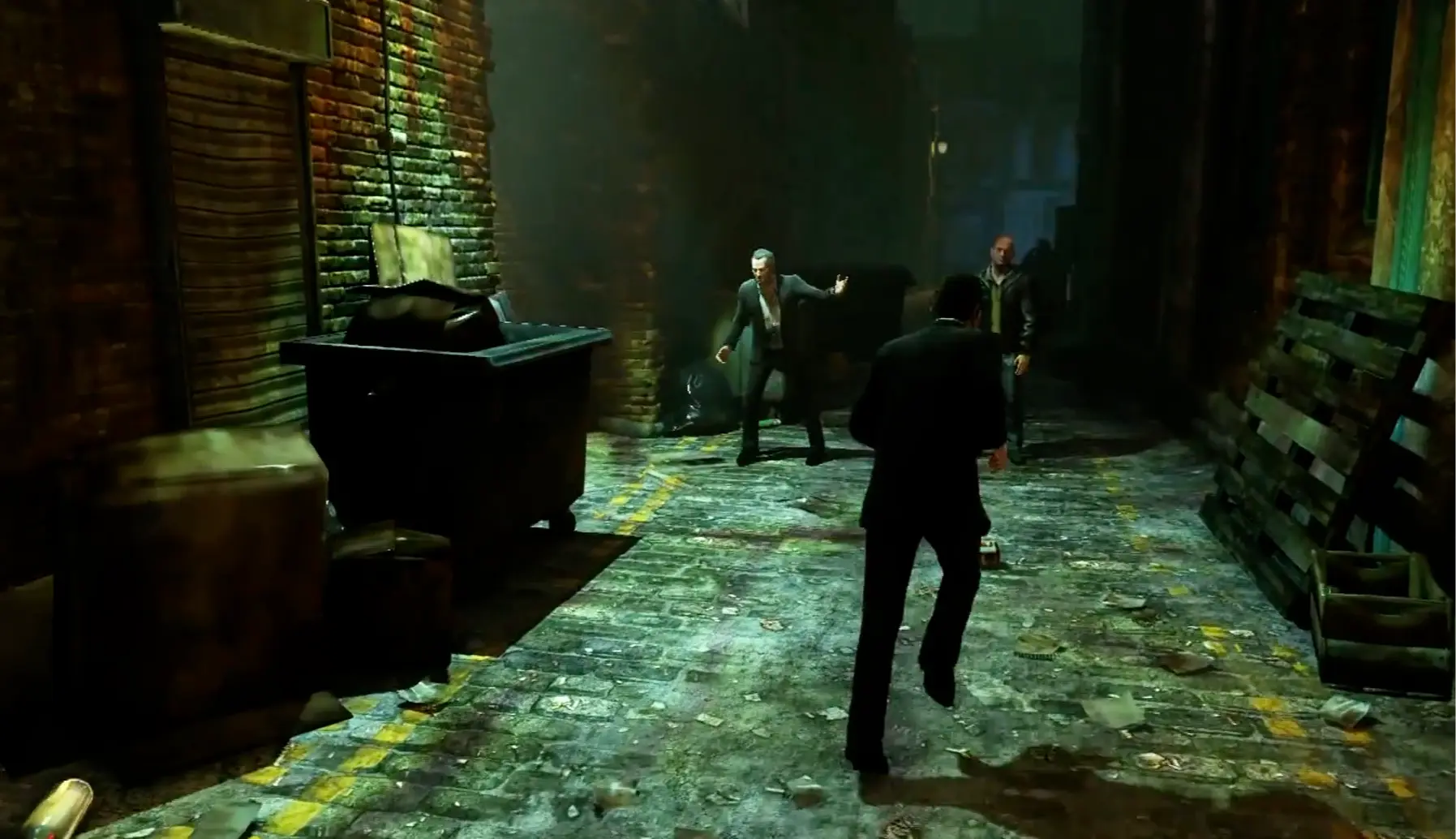
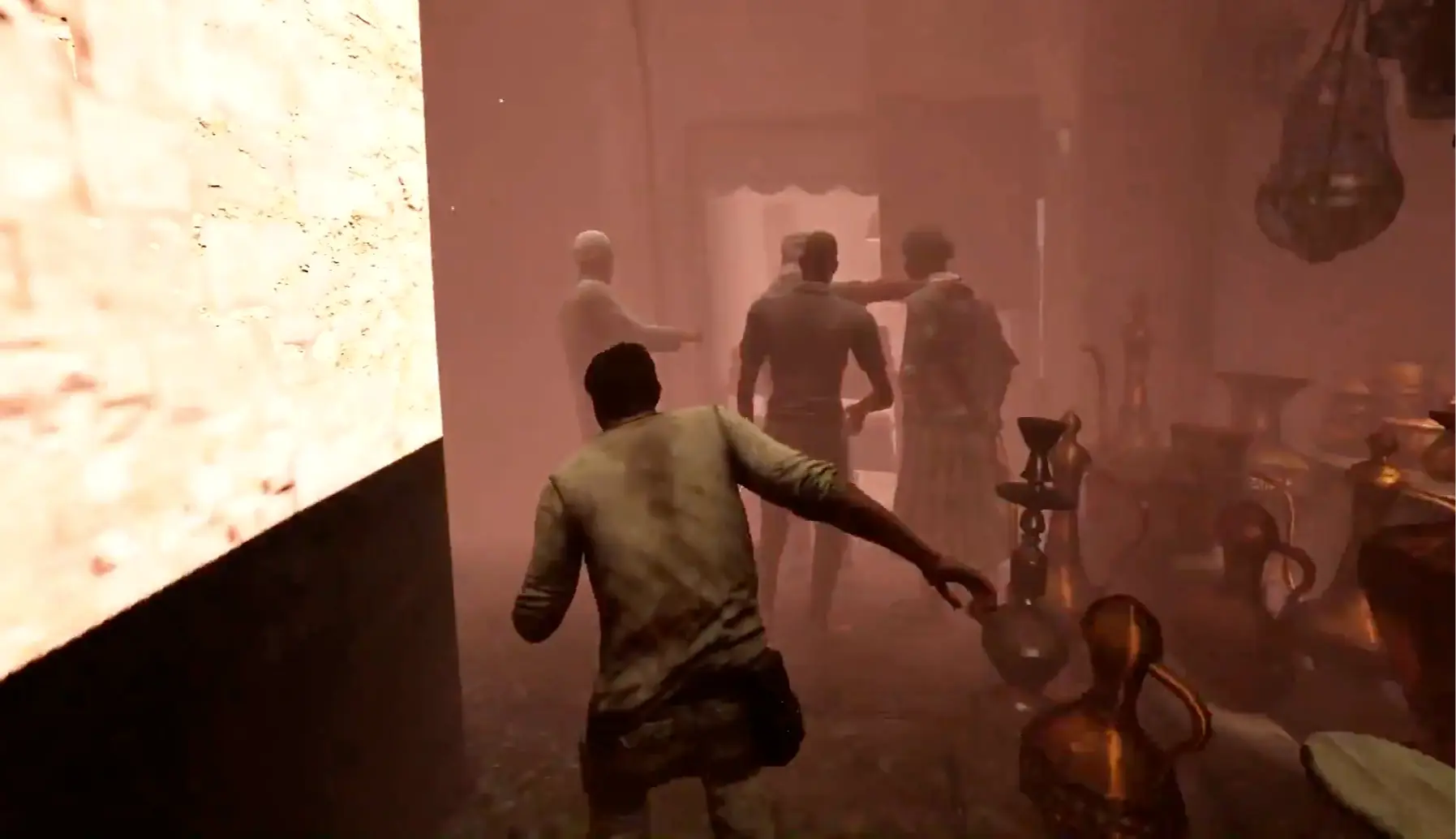
The atmosphere of Uncharted 3 is one of dusty majesty and haunting history. The game masterfully transitions from the rainy, neon-lit grit of London to the lush, decaying beauty of a French chateau, and finally to the endless, golden expanse of the Rub' al Khali. The sand technology was a focal point for the developers, and it shows; the way the dunes shift and wind carries the particles creates a sense of oppressive, beautiful isolation. The sound design is cinematic and grand, with Greg Edmonson’s score taking on an Arabian flair with sweeping strings and percussion.
Thematically, the game is about identity and legacy. It asks the question: can a name truly define a person? Nate has spent his life trying to live up to the 'Drake' name, but the game reveals that his identity is a construction of his own making. The theme of deception runs through every level—from the illusory puzzles to the hallucinogenic water of Iram. Marlowe represents a stagnant, elitist obsession with the past, while Nate represents the destructive potential of trying to outrun it. The most powerful theme is the cost of loyalty. Sully is willing to follow Nate into hell, but Nate has to realize that his pursuit of 'greatness' is a selfish act that endangers the only real family he has. This is why the game deserves to be overthought—it’s a study in how we build ourselves out of the stories we tell.
Conclusion
Uncharted 3: Drake's Deception is a triumphant conclusion to the original trilogy. It didn't just try to be bigger than Uncharted 2; it tried to be smarter and more personal. It proved that Naughty Dog could handle mature, emotional character studies without losing the thrill of a blockbuster set-piece. It is a game that hits you with a gut-punch of emotion just as often as it hits you with an explosion.
Whether you are revisiting it on the Nathan Drake Collection or experiencing the struggle through the desert for the first time, the game remains a peak achievement in third-person action-adventure. It is a reminder that the greatest treasures aren't hidden in forgotten cities, but in the people who stand by us when everything else is turning to sand. Nathan Drake’s third outing is a masterclass in heart and spectacle, a journey that finishes the trilogy with a sense of awe and a deep, resonant soul. The sands of time may shift, but the legacy of this game is carved in stone. It is time to uncover the truth one last time.