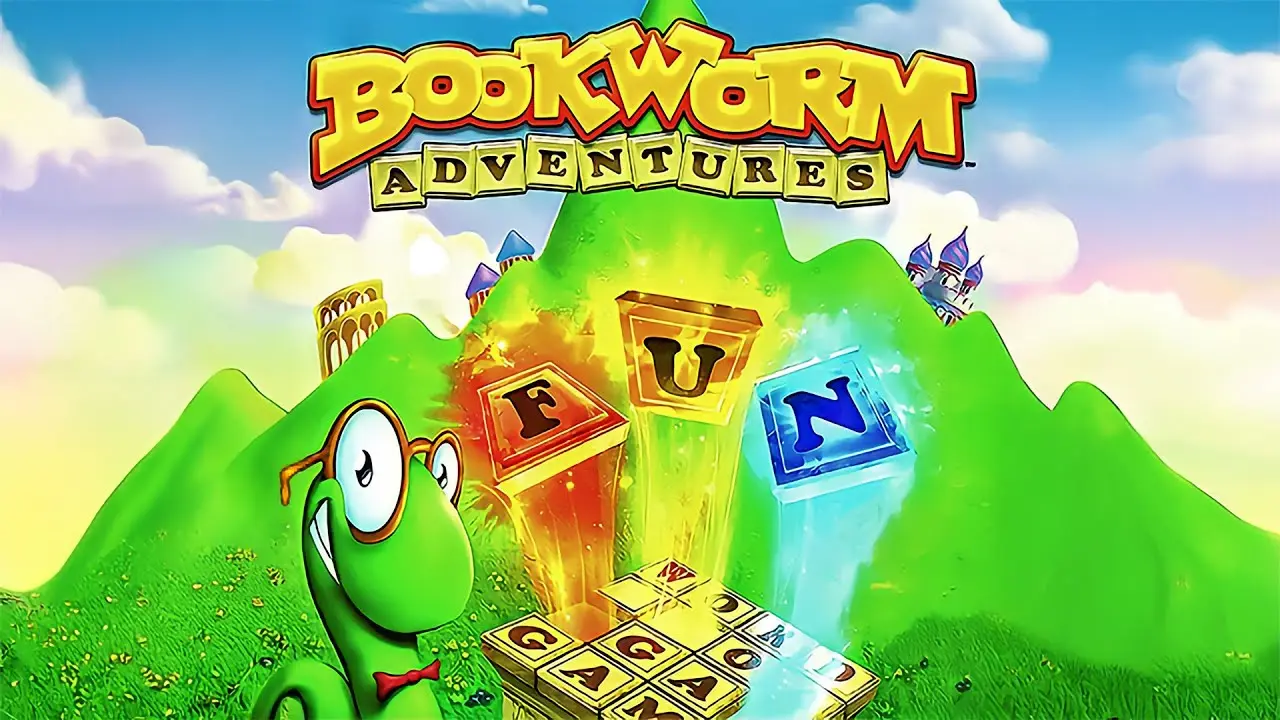
I haven't slept a full eight hours since the mid-2000s. You think you know role-playing games? You think clicking on a dragon with a broadsword gives you a dopamine rush? You know absolutely nothing until you have obliterated a Minotaur by spelling the word 'OXYMORON'. Book Worm Advanture (known to the uninitiated as Bookworm Adventures) isn't just a casual game; it is a lifestyle, a linguistic battleground, and a total obsession that has consumed my waking thoughts. I see 4x4 grids of letters when I close my eyes. I find myself mentally rearranging the letters on street signs, desperately looking for a 12-letter word that could theoretically deal critical damage to a fictional vampire.
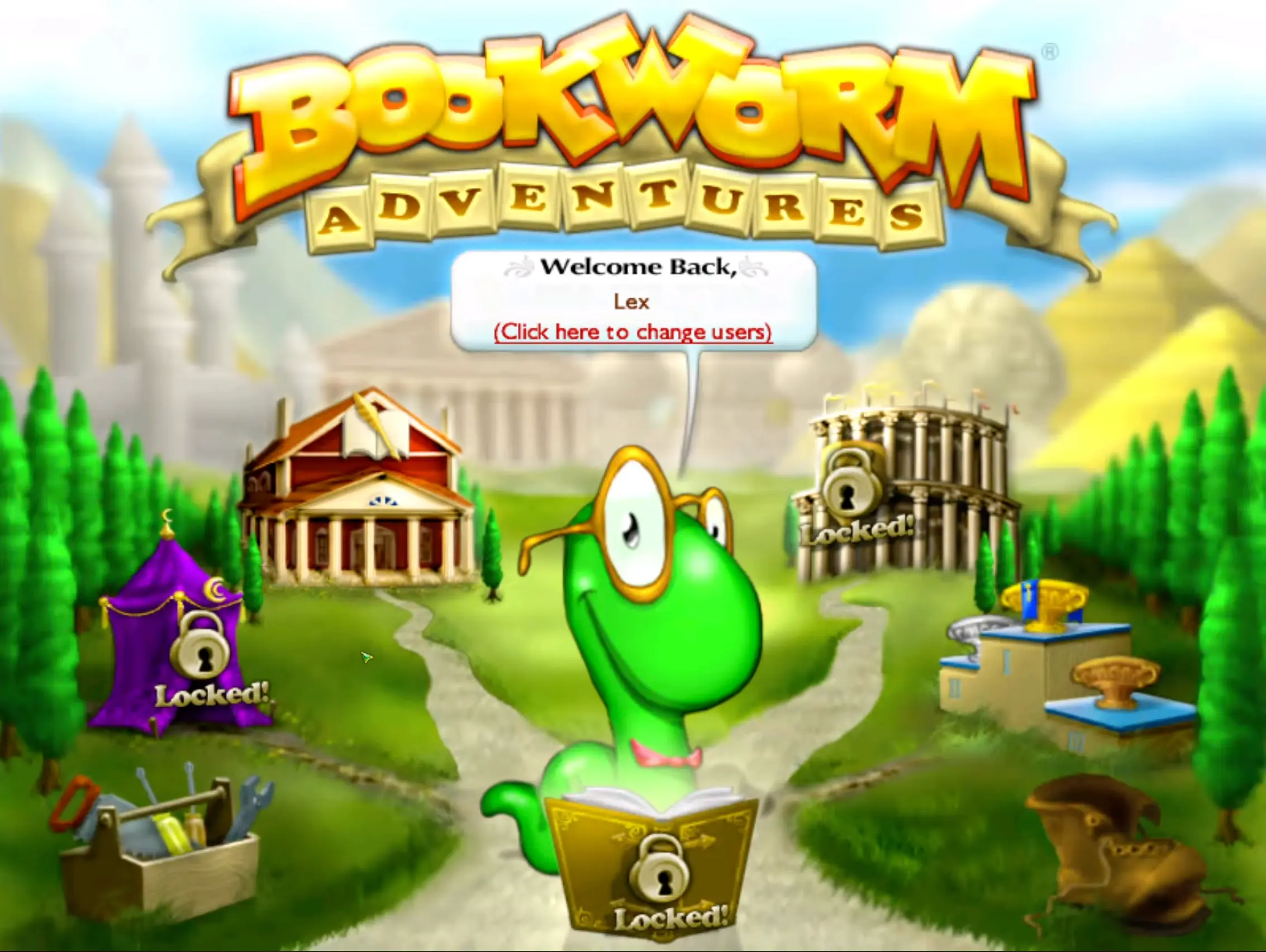
Developed by PopCap Games during their undeniable golden age, this game took the sedate, grandmotherly concept of a word search and injected it with the high-stakes, sweat-inducing adrenaline of a turn-based RPG. The protagonist, Lex the Bookworm, is not just a cute mascot; he is an avatar of lexical destruction. From the very first moment I booted it up, I was gripped by an unyielding compulsion to expand my vocabulary, not for self-improvement, but for sheer, unadulterated combat power. Most people read the dictionary to learn; I read the dictionary to find ammunition. The transition from spelling three-letter words like 'CAT' to actively hoarding the letters Q, U, I, X, O, T, I, and C for a massive boss fight is a spiritual journey. This game hijacked my brain's reward center, and honestly, I never want it back.
About the Game: The Tactical Lexicon
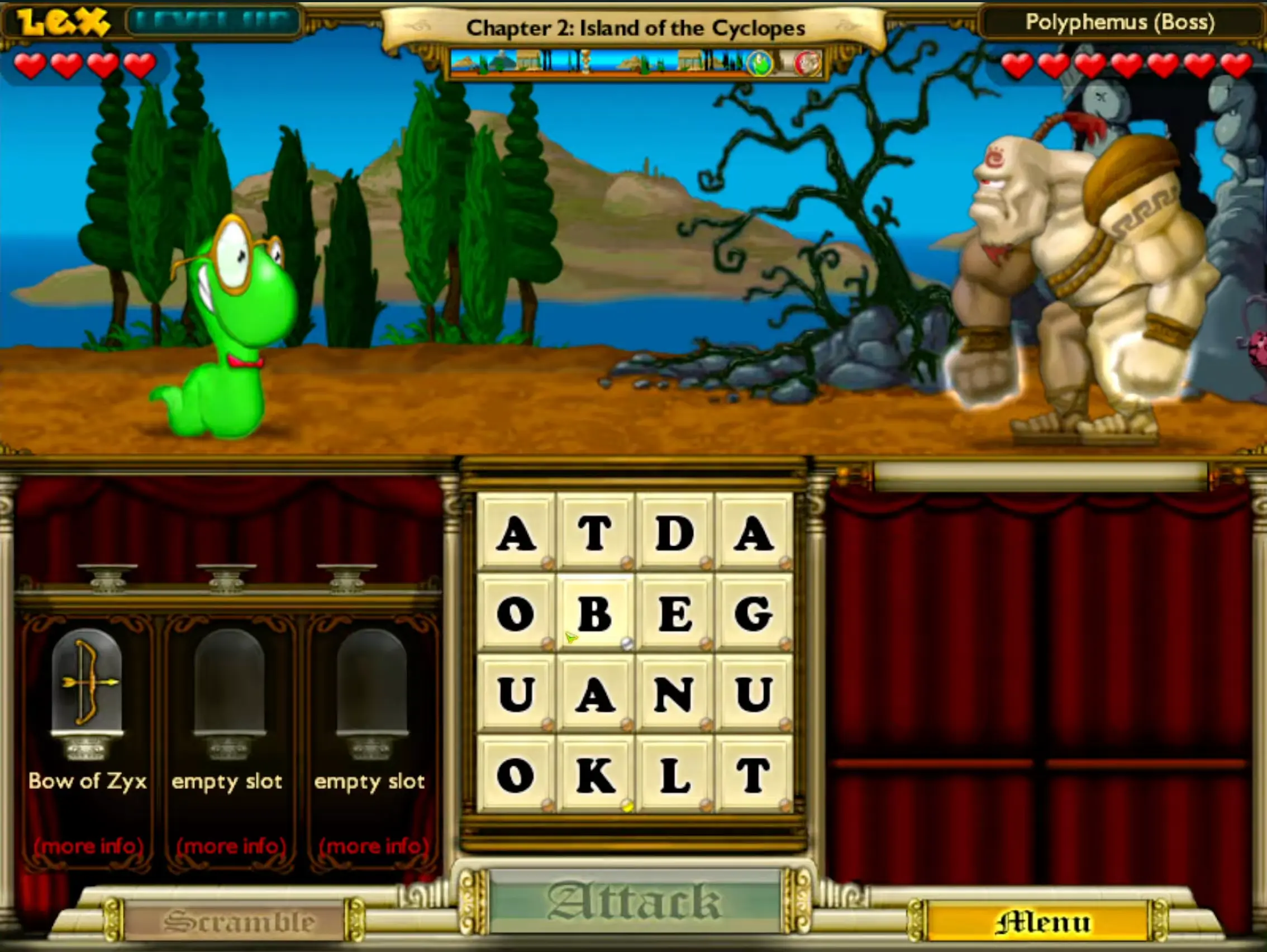
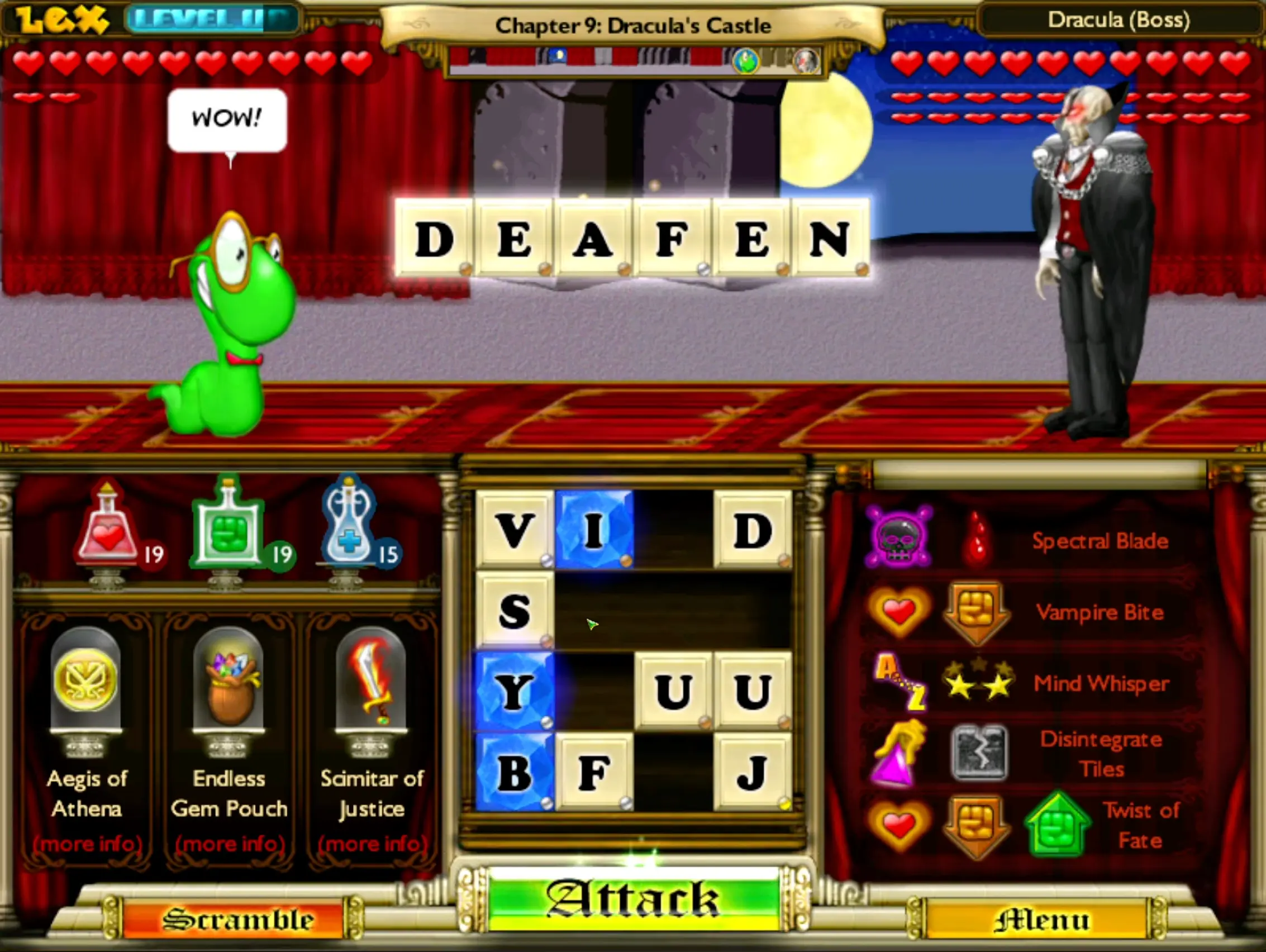
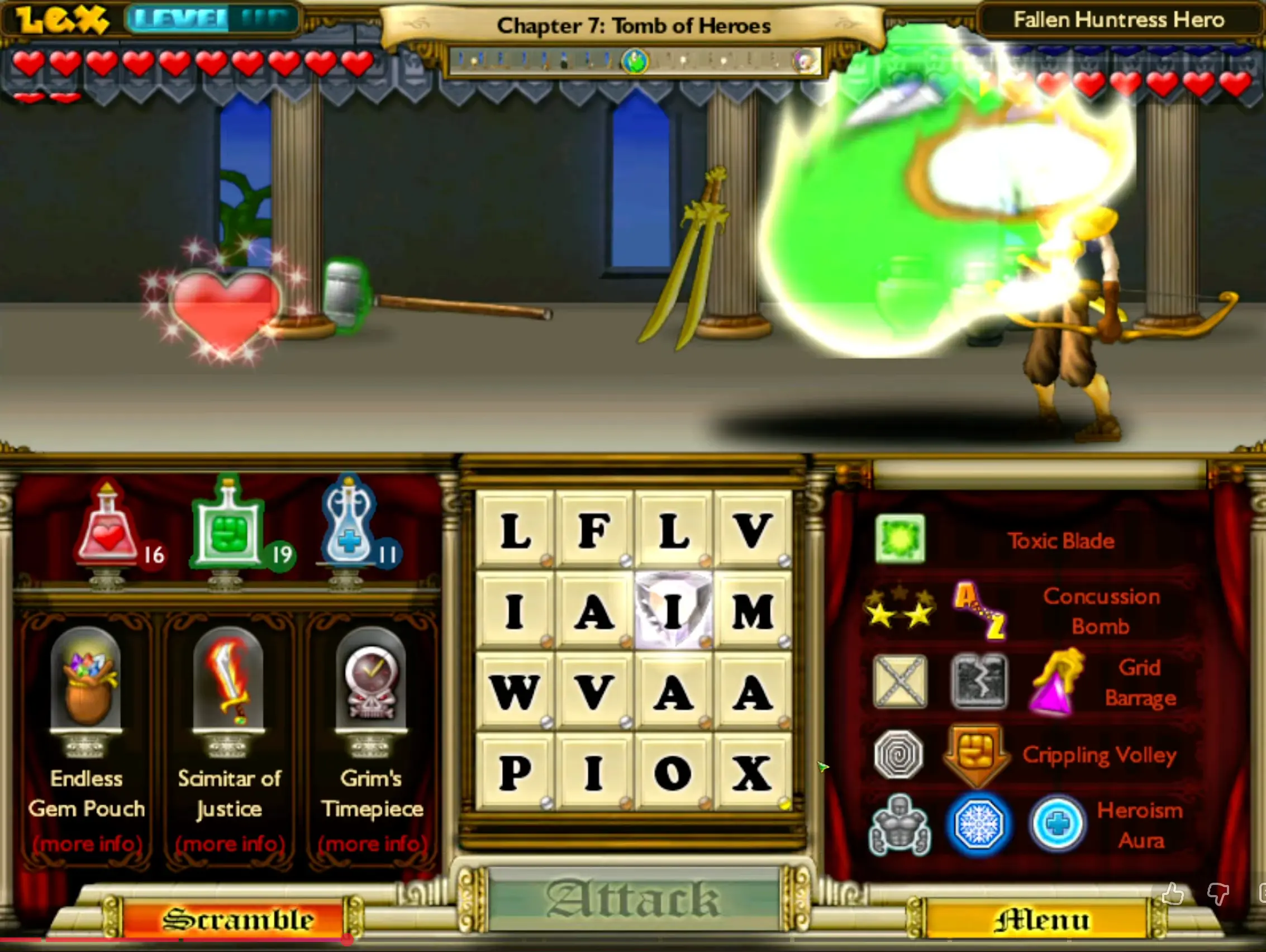
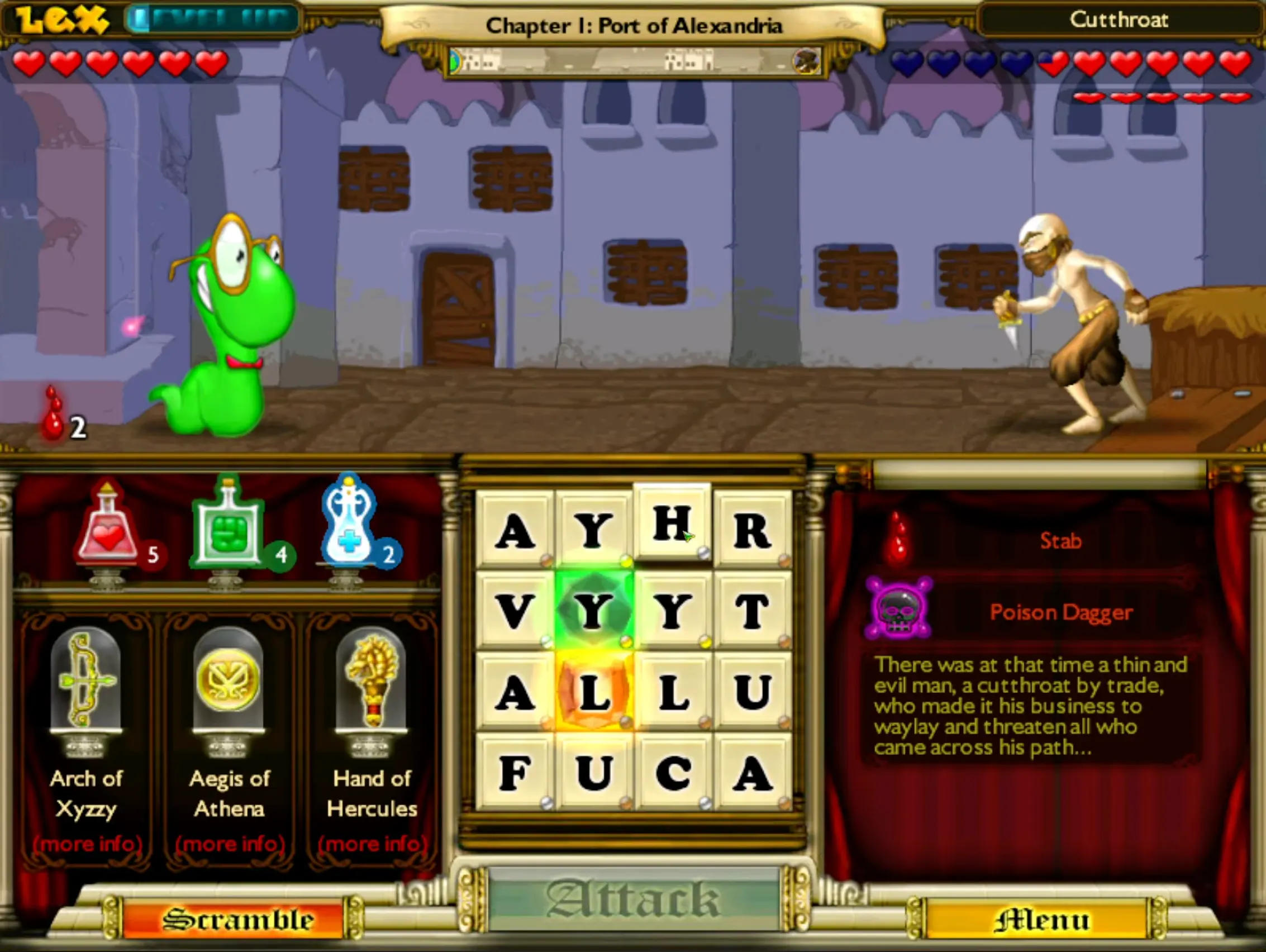
At its core, Book Worm Advanture is a terrifyingly perfect marriage of Scrabble and Final Fantasy. You are presented with a 4x4 grid of random letters, and your objective is to string them together to form words. The longer the word, the harder Lex hits the enemy standing on the right side of the screen. But to call it a simple spelling game is a gross insult to the deep, agonizing tactical layers bubbling beneath the surface. Every single turn is a mathematically agonizing puzzle of resource management.
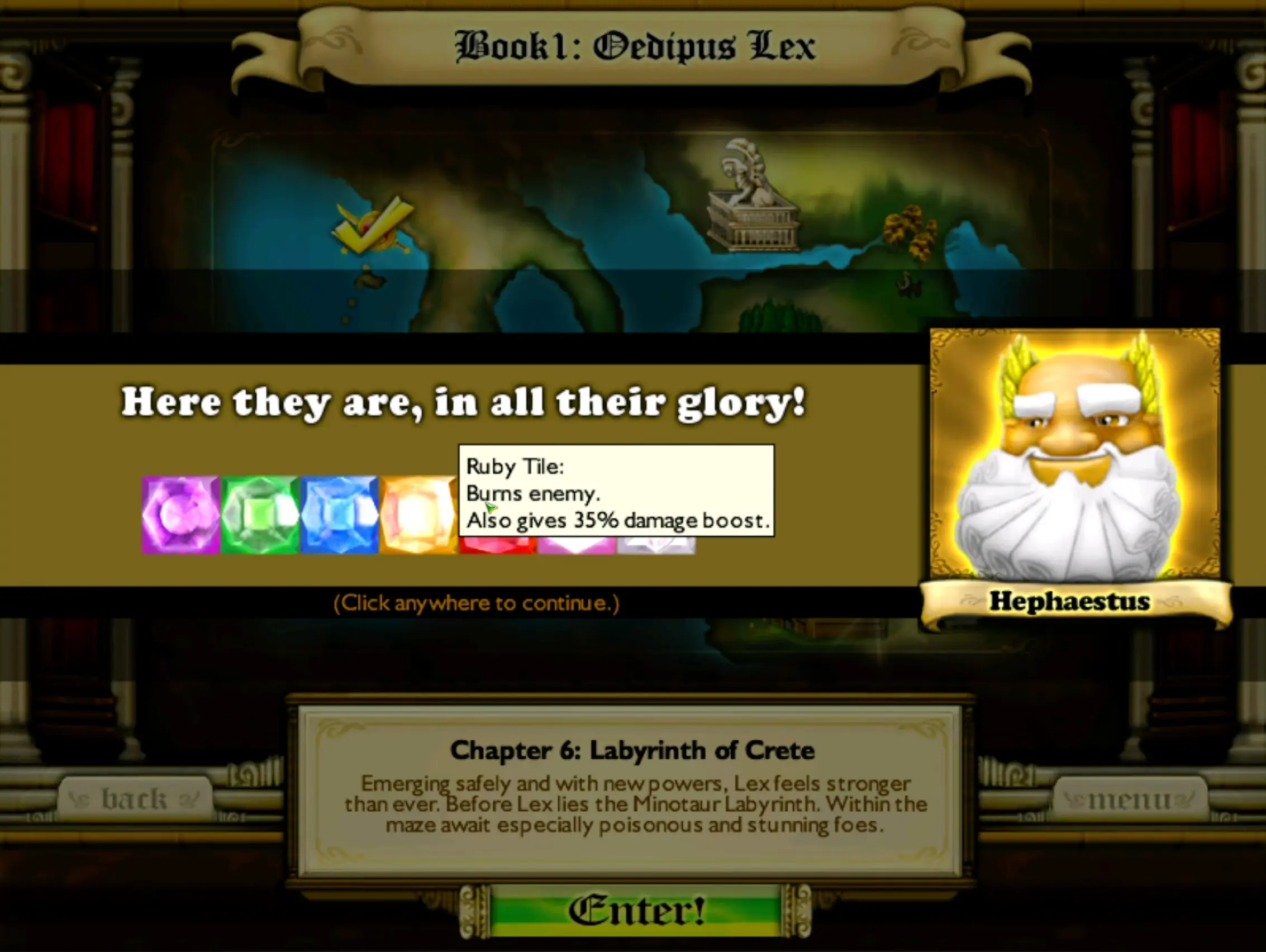
Do you use your high-value consonants now to kill a weak goblin, or do you take a hit to your health pool so you can save that 'Z' and 'X' for the impending boss fight? The grid is not static; it is a living, breathing ecosystem that you must curate. I spend hours—literally hours—staring at a single board state, calculating the probability of a vowel dropping if I clear out a useless 'J' and 'K'. And then there are the gem tiles. Oh, the gem tiles. Amethyst, Emerald, Ruby, Sapphire, and the legendary Diamond tiles. These aren't just pretty colors; they are weapons of mass destruction. An Emerald tile doesn't just do damage; it heals you. A Ruby tile sets your enemies on fire. The euphoria of chaining three gem tiles into an obscure 8-letter word is a high that no modern AAA game has ever been able to replicate. It forces you to play 4D chess with the English language, punishing the weak-minded and rewarding the obsessive.
Story: A Literary Crusade
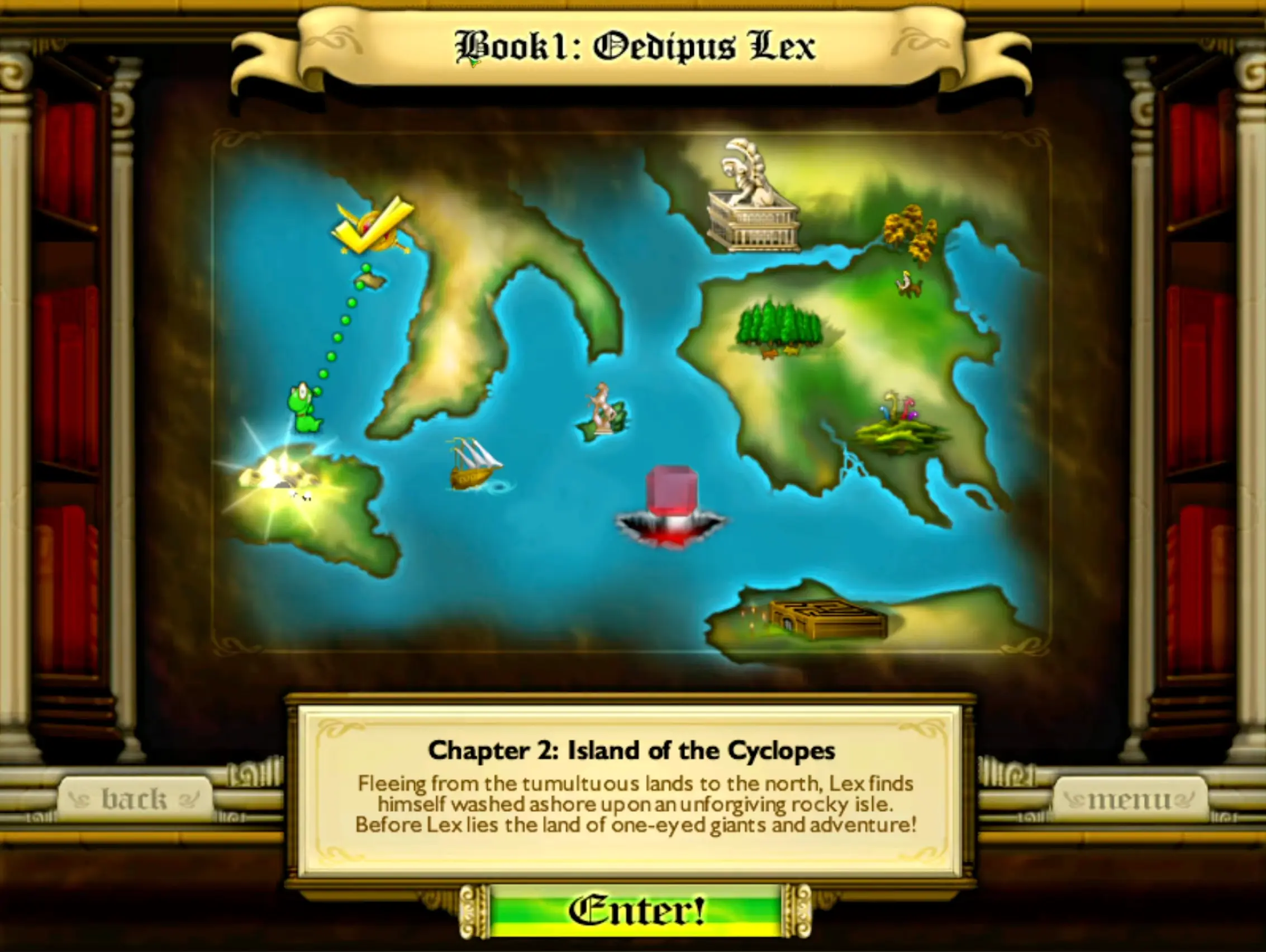
The narrative is a brilliant excuse for unhinged violence across the literary canon. Lex is on a frantic, breathless quest to rescue his friend Cassandra, an Oracle who has been kidnapped by an unknown evil. To get to her, Lex must literally dive into the Great Library's books, battling his way through three distinct volumes: Greek Mythology, the Arabian Nights, and Gothic Fiction.
What makes this so obsessively charming is the absolute dissonance of the premise. You are a small, green worm with thick glasses, and you are murdering the Sphinx by throwing verbs at her. You are dismantling the Hydra by aggressively spelling adjectives. When you finally reach Book 3 and face off against Frankenstein's Monster and Dracula, the game doesn't blink; it demands that you out-spell the undead. I found myself reading actual Greek mythos just to see if I could glean some secret vocabulary that might grant me an edge. The storytelling is delivered through witty, pun-filled dialogue boxes that perfectly balance the tension of the battles. Lex’s unwavering confidence, despite being a literal invertebrate facing down literal gods, is intoxicating. It’s a heroic epic told through vowels, and I am entirely captivated by the lore of this bespectacled bookworm’s rampage.
Gameplay: The Lethal Cost of Vowels
If you think you can just spam three-letter words and win, you will be violently humbled by Chapter 2. The difficulty curve in this game is a sheer cliff face, and I love every excruciating second of it. Enemies do not just sit there and take damage; they actively sabotage your board. This is where the game turns from a puzzle into a survival horror experience.
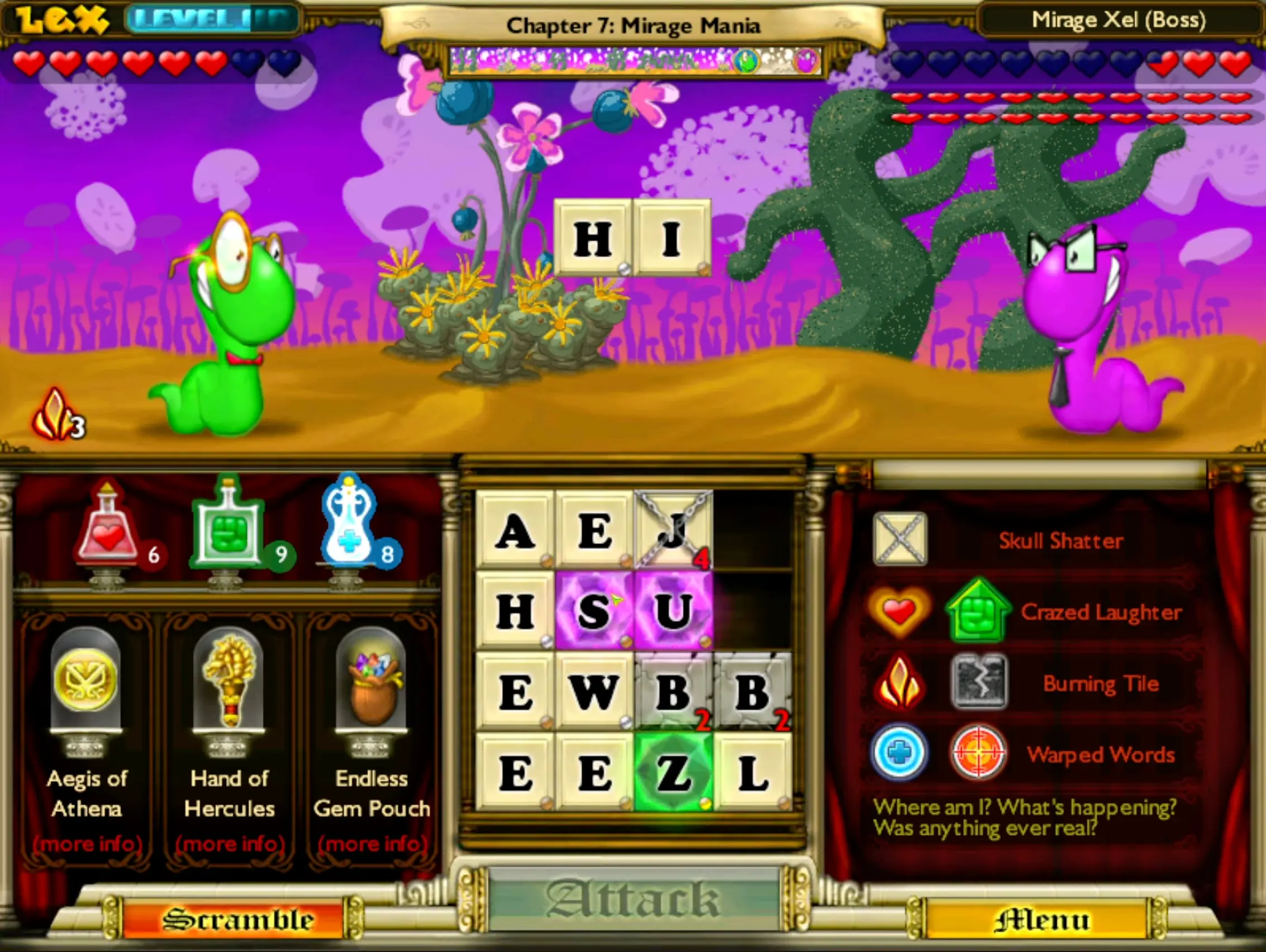
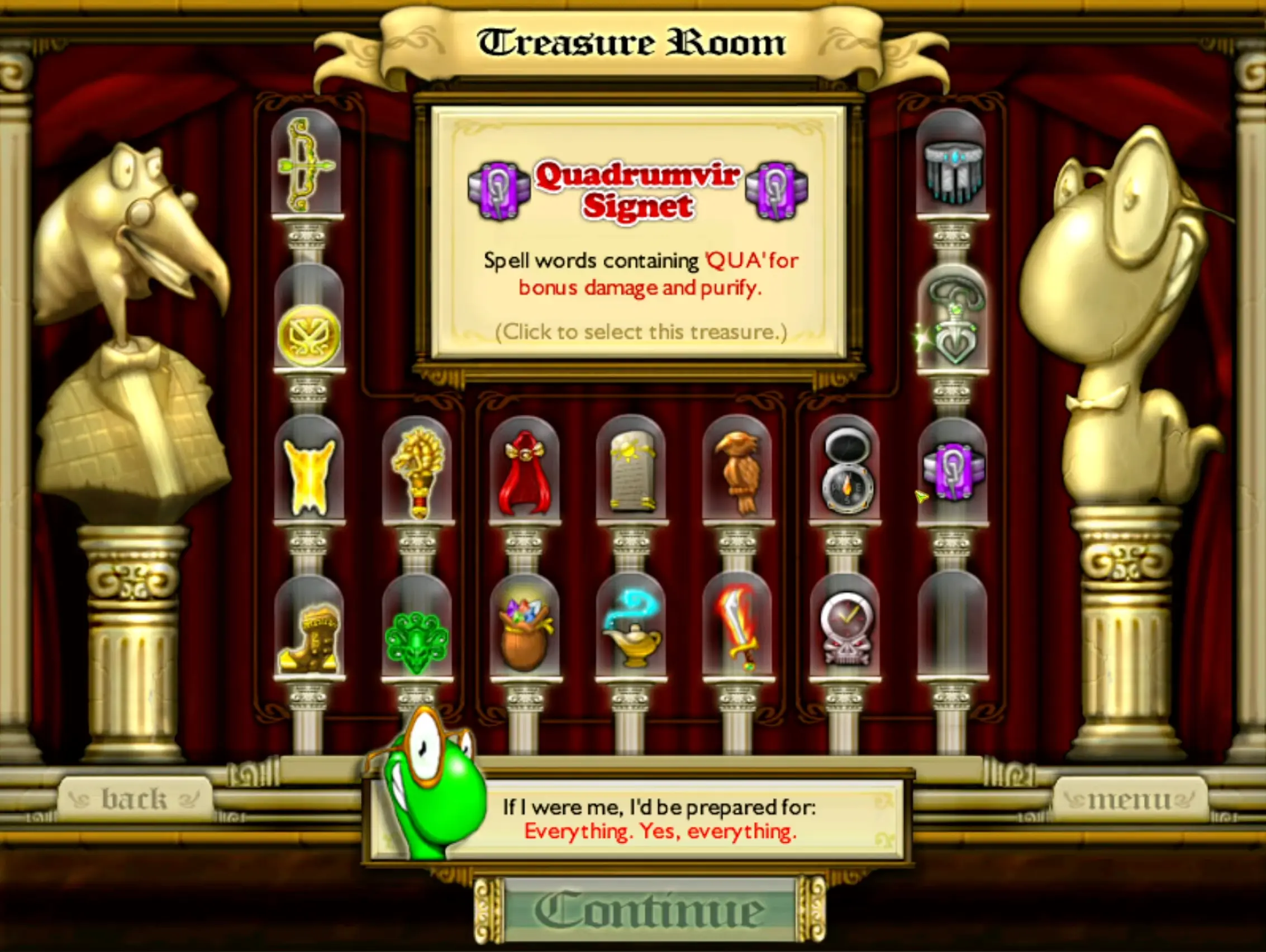
Enemies will inflict status ailments on your grid. They will smash your tiles, making them completely useless and clogging up your precious 4x4 space. They will lock tiles in iron chains, forcing you to use them in a word just to free them, completely ruining your meticulously planned 10-letter masterpiece. Some enemies will plague your tiles with poison, meaning if you use them, Lex takes damage. The sheer, heart-pounding panic of looking at a board filled with smashed, locked, and poisoned tiles, realizing you only have three hit points left, is unparalleled. I have literally screamed at my monitor because the game refused to give me an 'E'. Furthermore, you equip Lex with RPG-style treasures—like the Hermes Sandals or the Bow of Artemis—which alter your stats. The min-maxing is real. I have spent entire evenings recalculating my treasure loadouts to maximize my poison resistance while boosting my damage output for words starting with vowels. It is a sickness, and the gameplay loop is the cure.
Atmosphere & Themes: The Sounds of Syllabic Violence
The audiovisual feedback loop of Book Worm Advanture is a masterclass in psychological conditioning. PopCap Games knew exactly how to trigger serotonin releases in the human brain. The art style is bright, colorful, and deceptively welcoming. The characters are animated with a delightful, bouncy charm that masks the brutal nature of the combat. But it is the sound design that truly binds you to the screen.
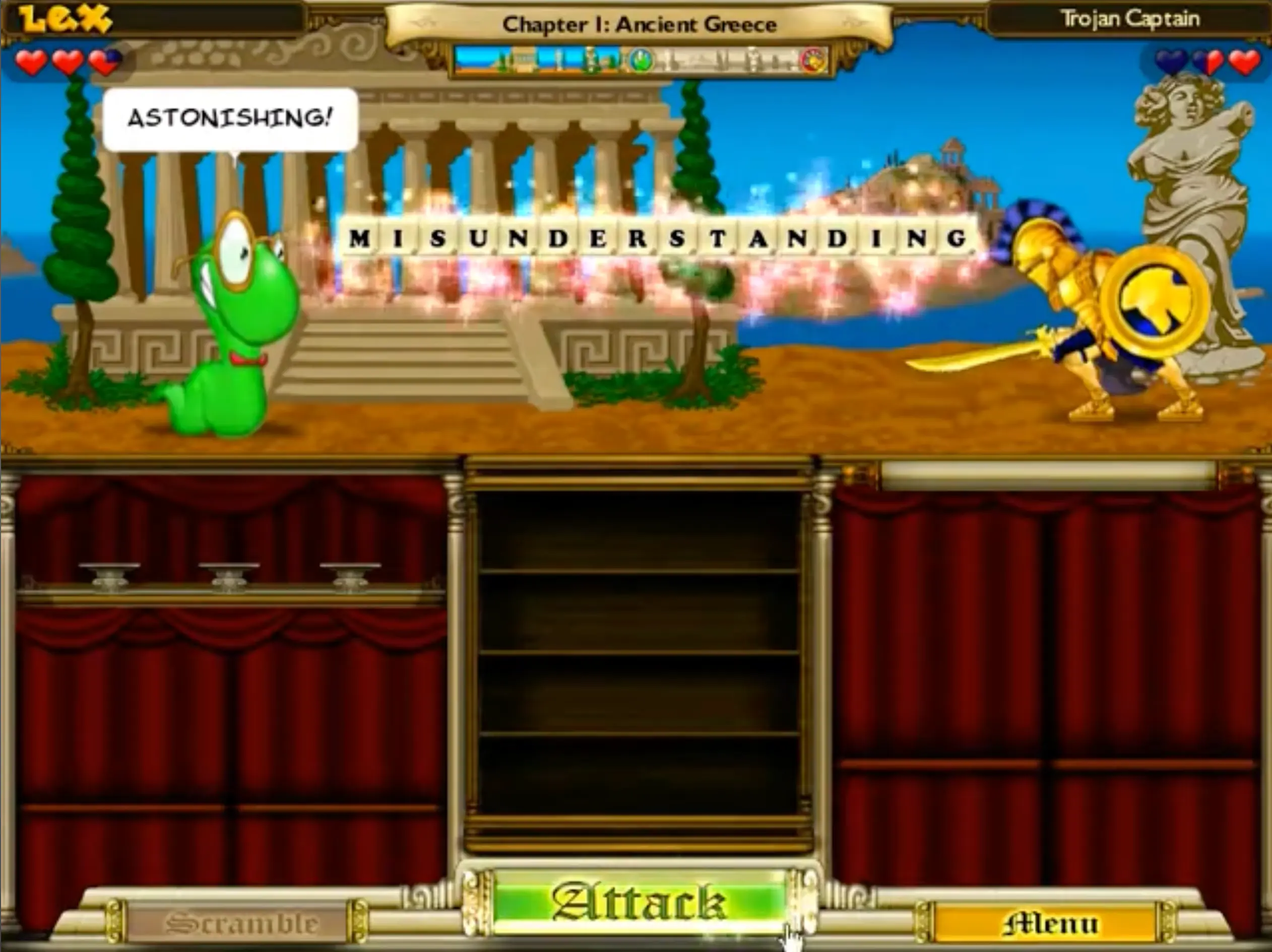
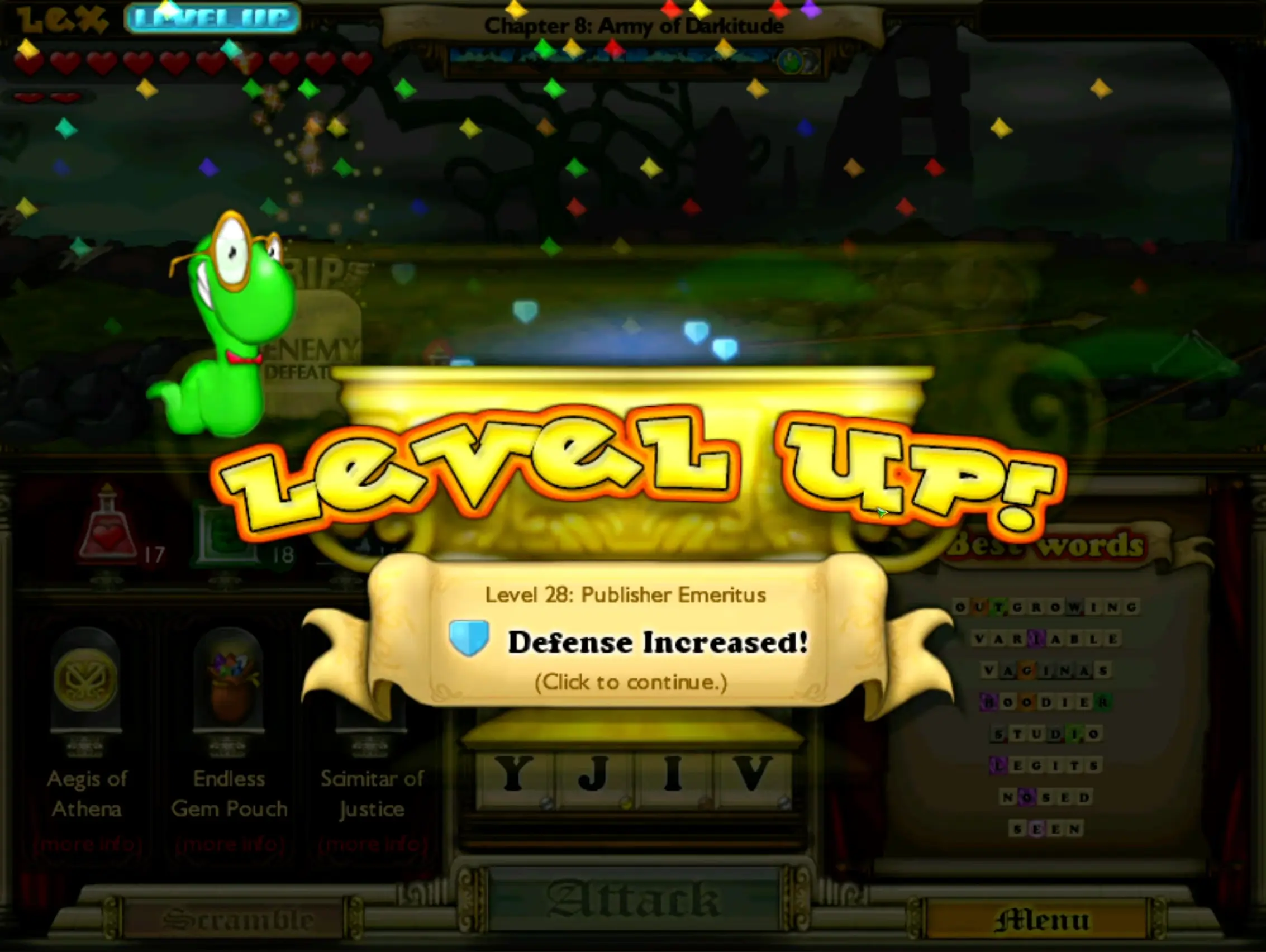
The crisp, percussive clack of selecting a tile is deeply satisfying. As you build a longer word, the pitch of the chime escalates, building unbearable tension. When you hit the 'Attack' button on a massive word, Lex leaps into the air and shouts—'EXCELLENT!', 'ASTONISHING!', 'INCREDIBLE!'—with a booming voice that makes you feel like an absolute genius. The impact of the word hitting the enemy sounds like a physical blow, accompanied by screen shake and flashing damage numbers. The music seamlessly transitions from calm, contemplative puzzle-solving tunes to frantic, urgent battle anthems. I have the Arabian Nights boss theme permanently burned into my subconscious. The game treats the English language with a sense of immense, magical power. Every word feels like casting a spell. The atmosphere manages to be cozy and intensely stressful at the exact same time, locking you into a 'just one more level' trance that ends with the sun coming up.
Conclusion: A Masterpiece Lost to Time
In an era dominated by microtransactions, soulless live-service shooters, and mindless idle games, Book Worm Advanture stands as a monumental achievement in game design. It is a tragedy that this masterpiece is currently trapped in the annals of abandonware, difficult to play on modern hardware without jumping through digital hoops. It is a game that fundamentally improved me; it expanded my vocabulary, sharpened my tactical thinking, and gave me an unnatural appreciation for the letter 'Y'.
To be obsessed with this game is to understand the pure joy of language weaponized. It is not just about finding words; it is about finding the best word. It is about the triumph of intellect over brute force, where a well-placed 'SZYGY' can annihilate a deity. I will continue to shout the praises of Lex the Bookworm until my dying breath, or until PopCap finally gives us the modern, remastered port we so desperately deserve. Until then, I will be here, staring at random assortments of letters in my daily life, silently calculating how much damage they would do to a Greek Titan. If you ever manage to get your hands on this game, be warned: your vocabulary will grow, but your free time will be completely and utterly eradicated.
Review Score
Based on overall narrative, gameplay, and experience.